虚云老和尚画传集(上卷)
《虚云老和尚画传》序
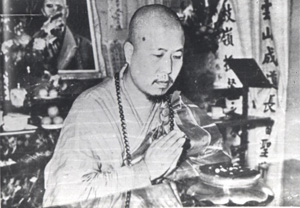
图片说明:上人瞻仰虚老舍利
《释迦如来应化事迹》一书问世久矣,为教门中之伟作,众生界之宝筏,人人乐读,个个愿观,容易明了;诚对机之善本,契理之妙论。
今为仰慕上虚下云老人道德、戒行、学问、智慧、苦行、愿力、实行、慈悲、喜舍、平等、布施、忍辱、精进、禅定诸波罗密门,一生之奇特事迹,堪为末法之指南,斯世纪之救星。故而不惜重资,聘专家绘画佛教人材,精美国画二百余幅。竭数寒暑之精思设计,今始告成问世。藉此将老人道德,推行于全世界。人手一编,家喻户晓,以此而发菩提心,以此而成无上道,以此而倒驾慈航,教化众生,皆得不退转于菩提觉位矣。
Preface
The Life Story of Shakymuni Buddha has long been circulating in the world, and it is considered a masterpiece within the Teachings, a precious raft upon which living beings can pass beyond this realm. Everybody likes to read it; one and all are delighted by the pictures that accompany the text. The book is easy to understand, truly a magnificent work that responds to potentials, a wondrous exposition that tallies with principle.
The author has long cherished a deep admiration for his teacher, Venerable Hsu Yun. This admiration extends to the Master's Way virtue, precept conduct, erudition wisdom, ascetic discipline, vow power and actual practice. It includes the Master's kindness, compassion, joy, and renunciation, his equanimity, giving, patience, vigor, Dhyana samadhi, as well as all the other Paramita doors. The numerous events that happened throughout his life can certainly act as a compass for those in the Dharma-ending Age, a saving force for this century.
Therefore, the author found an especially talented artist in Buddhist subjects, in preparing 200 scrolls, and after several years of careful planning and deliberation, this book has now been published. It is my hope that the Venerable Yun's virtuous conduct will be made known to the entire world. May many people through reading his life story be encouraged to bring forth the Bodhi resolve and accomplish the unsurpassed Way, and then, may they reverse the boast of compassion to come back and teach and transform living beings, so that together we attain irreversibility from the position of enlightenment.
观音前求子
云公老和尚。俗姓萧。乃梁武帝之后。世居湖南。湘乡。父玉堂。母颜氏。清道光初年。父以科举出身。宦于闽。年逾不惑尚无子。父母忧之。遂以虔诚恳切之心。进香祈子于城外之观音古庙中。
宣化偈曰:
积功树德植善因。虔心求子礼慈尊。
万虑澄清惟当念。一心不乱感而应。
Seeking a son before Avalokiteshvara Bodhisattva
The Venerable Master Yun's lay name was Hsiao. His ancestors, who came from Lan Ling (Fragrant hills ), were descendents of Liang Dynasty Emperor Wu, and had for generations dwelt at Hsiang-hsiang in Human province. His father's name was Yu T'ang and his mother was the Yen of the family. In the first year of the Tao Kuang reign period of the Ch'ing Dynasty (A.D. 1821), His father entered in to public service as a K'e Chu ( a grade in the Governmental Examination system) and became a public official in Fukien Province. When he was past forty years of age, he was still without a son. This grieved him and his wife, so with sincere words and sorrowful hearts, they offered incense and sought a son before the Avalokiteshvara Shrine in an ancient temple outside the city.
The verse says:
Amassing merit, establishment virtue, a wholesome seed was planted.
Sincere in heart, they sought a son and bowed to compassionate one.
Ten thousand anxious thoughts were stilled and only one remained.
Single mindedly unconfused, they effected a response.
重修寺院桥梁
玉堂夫妇顶礼菩萨。祈愿毕。参观寺容。发现殿宇竟已残颓。瓦破墙倾。圣像漏成汗流满面状。心颇不安。爰发愿重修。复见永春东关之桥。年久失修。行人感怀危险戒心。即雇工兴建寺桥。焕然一新。
宣化偈曰:
修福修慧修寺庙。修道修德修桥梁。
修因修果修诸己。修善修仁修自强。
Rebuilding the temple and bridge
After Mr. and Mrs. Hsiao prayed and made vows in their worship of the Bodhisattva Avalokiteshavara, they looked around the temple at the Buddha images. They saw that the main temple was ruined and useless; the tiles were broken and the walls had fallen over. Water from leaks sweat down the faces and bodies of the holy images, doing damage. Because this greatly troubled them, they resolved to repair the temple. They also saw that the Eastern Bridge of Yung Ch'un Chou had fallen into disrepair over the years. Those who used it were worried and wary of its danger. Thereupon Mr. and Mrs. Yu T'ang hired workmen to reconstruct and restore the temple and bridge.
The verse says:
Build up blessings, build up wisdom by building temples and shrines.
Build the way, build up virtue by building bridges, too.
Building causes builds effects. Build it within yourself.
Build the wholesome, build humaneness, build up your self-reliance.
同得奇异兆
一日玉堂夫妻。见寺桥工程完竣。甚悦。是夕同梦一着青袍。修髯之长者。头顶观音。跨虎而来。跃登榻上。惊醒互告。自是遂有娠。喜念佛。诵经拜忏等。亲近善知识。远离诸恶法。乐善不倦。
宣化偈曰:
跨虎入胎世间稀。顶上出现丈夫躯。
觉悟同伦常精进。普度含识不休息。
Seeing the same rare portent
One day, Mr. and Mrs. Yu T'ang were pleased to see that the construction of the temple and the bridge had been completed according to design. That evening they both dreamt of a dark robed, long-bearded sagely cultivator, who , astride a tiger and with Avalokiteshvara Bodhisattva atop his head, pounced upon the bed. Startled awake. They recounted their experience to each other. Afterwards, Mrs. Yu T'ang was pregnant. They happily recited the Buddha, and drew near Good ad Wise Advisors. Leaving evil dharmas far behind, they engaged in charitable deeds without weariness.
The verse says:
Astride a tiger, entering the womb, came one seldom found in the world.
Manifesting atop his head was the compassionate hero's form.
Enlightening five kinds of fellow-beings with ever-advancing vigor.
He went everywhere saving those with sentience, and never stopped to rest.
调佐泉州职
次年公父以政绩优异。服务尽职。廉洁明敏。造福人群。上级提拔。转调佐泉州。深达民心。宣德达情。化行俗美。尽力兴办福利社会事业。注重实际。不尚虚文。虽置身名利场中。而不为名利所摇动。奇哉。
宣化偈曰:
宦海浮沉何足言。荣辱名利任变迁。
沧海桑田尚无定。历史志书岂尽然。
Being transferred to assistant prefect in the Ch'uan Chou government
The following year, because of his outstanding achievements in government service, because he completely fulfilled his duties, because he was incorruptible and quick-witted, and because he brought happiness to the common people, the Master's father was promoted and transferred to Ch'uan Chou, where he became the assistant to the Prefect. Profoundly understanding popular sentiments, he won the hearts of the people, and instilled virtue in living beings. He influenced people so that the customs became lofty and wholesome, and tapped his strength to undertake endeavors beneficial to society. He was not fond of empty talk, and although he worked within the sphere of fame and profit, he was not in the least turned or motivated by them. He was truly a remarkable person.
The verse says:
Afloat on the sea or politics, how can it all be told?
In honor or shame, Profit or fame, he bore the shifts and
Changes at sea or in the mulberry fields - wherever he was found -
How could historical records and annals document it all?
菩萨诞生于世
岁次庚子七月卅日寅时。颜氏夫人产期已至。诞生公焉。公出世为一肉团〈八地菩萨方有此境界〉。母骇且恸。以为无复举子望。即气壅死。翌日有卖药翁访。遂破之得男婴。即云公诞生之情形。
宣化偈曰:
来本未来生无生。兜率内院降云公。
弥勒咐嘱兴佛法。释迦授记振宗风。
Witnessing the birth of a Bodhisattva into the world
The next year, between three and five a.m. on the 30th day of the seventh lunar month (August 26, 1840), Mrs. Hsiao went into labor and gave birth to the Master. He entered the world in a caul, a state had only by eighth stage Bodhisattvas, which caused his mother alarm. Thinking that there was no hope of her ever bearing children again, she died in grief. The next day, the family was visited by an old medicine peddler who, upon opening the mass of the flesh, removed a male child. These are the circumstances surrounding the birth of the Master Yun.
The verse says:
He came and yet did not come; he was born and yet not born.
From the court of Tushita Heaven, the Master Yun descended,
Instructed by Maitreya Bodhisattva to bring forth the Buddha's Dharma.
Shakyamuni Buddha predicted that he would save the schools' repute.
孩提时期
公庶母王氏抚育。清道光廿年一岁。渐长。游戏辄以聚土为菩萨像等拜之。读书课余喜阅佛经善书修身格言。有关身心性命之学。尤为好乐。此足征公得天独厚。赋性非凡。
宣化偈曰:
游戏读书露性天。好乐圣典岂偶然。
于斯已悟真俗谛。不二法门愿荷担。
Bringing up the child
The Master's stepmother, who was from the Wang family, took care of his upbringing. The 20th year of the Tao Kuang reign period in the Ch'ing Dynasty (1840) was his first year. When he played during his childhood, he instinctively made Bodhisattva images out of dirt and bowed to them. He was quite happy to peruse Buddist Sutras and works on morality, self-cultivation, and wise sayings . Studies concerning the moral conduct of body and mind especially interested him. His preternatural gifts were developed and subtle – not all common.
The verse says:
Whether playing or reading books, in all he did, his character and inclination were revealed.
The pleasure he took in the sagely scriptures-how could it be by any chance?
Just right here he awakened to the Actual and mundane Truths.
And thus he vowed to undertake the Non-Dual Dharma-door.
兼祧娉二室
道光三十年庚戌公父回泉州。祖母周年老。望见孙媳之心甚切。以公兼祧继叔为定二室。一为田氏。一为谭氏。二室皆湖南湘籍。仕宦于闽。本为世交。复成亲眷。循父母之命。媒妁之言。订婚纳礼矣。
宣化偈曰:
宜尔室家叙天伦。幽娴贞静女中英。
净业圆修法伴侣。无人无家无色空。
Betrothals to two girls aimed at carrying on the lineages of two families
In the 30th year of the Tao Kuang reign period (1850), when the Master was eleven years old, his father returned to Ch'uan Chou. The aging grandmother of the Chou clan was determined that her grandson would have a wife. In order to continue his uncle's lineage as well, the Master was to become heir to two lineages, and so it was that one woman from the T'ien family and one from the T'an family were promised in marriage. Both families, originally from Hsiang-hsiang County in Hunan Province, were Mandarins residing in Fukien Province and had remained friends for generations. All of the relatives and in-laws approved of the fathers'choices. So following the orders of his parents and the words of the matchmakers, he was betrothed.
The verse says:
It is proper and fitting that families should accord with natural relations.
Quiet and graceful, chaste and tranquil, they were exceptional women.
Pure in action, perfecting cultivation, they were comrades in the Dharma,
Without any selves, without any home. without any form or space.
巨鲸朝法驾
咸丰元年二月因事。公父赴台湾。公亦偕往。乘小洋船航至茫茫无际大海。突见如山横阻之巨鲸。长达数里。众皆畏之。同声称念南无大悲观世音菩萨名号。须臾见其鲸尾没于海中。
宣化偈曰:
天龙恭敬不为喜。巨鲸朝拜亦平常。
愚者无知称为怪。知者有眼穷法源。
A huge whale yielding to the Dharma boat
In the second lunar month of the first year of the Hsien Feng reign period (1851), the Master's father went to Taiwan to transact some business, and took his son, then twelve, with him. They boarded a small ocean-going vessel and sailed into the open sea where they soon encountered a monstrous whale, which looked as broad as a mountain. All on board became alarmed and all together they began to recite the name of the greatly compassionate Avalokiteshvara Bodhisattva (Kuan Yin). In a short time, the whale sank into the depths.
The verse says:
If the dragons of heaven make obeisance, it is nothing to delight in.
How much more is the submission of a giant whale just a common affair.
Foolish people do not know and think of this as strange,
While those who understand have eyes and tap the Dharma's source.
初见佛法僧三宝
公年十三岁。祖母周太夫人弃世。公随父扶柩回乡安葬。请僧作佛事。公初见佛即拜。看经则喜。睹僧恭敬。一切法器把玩不舍。若有感悟而不自知之状态。
宣化偈曰:
永言孝思古今传。慎终追远报恩虞。
仰承三昧加持力。河沙罪业悉消蠲。
First meeting with the Triple Jewel —
the Buddha, Dharma, and Sangha
When the Master was thirteen, his grandmother Chou died and he accompanied his father to escort the coffin back to Hsiang-hsiang County for burial. The Sangha was invited to perform Buddhist rites. Upon first seeing an image of the Buddha, the Master immediately bowed; the sight of the Sutras elated him and when he met the Sangha, he acted with deference. He tried each of the ceremonial instruments and did not want to stop playing them. It was as if he had suddenly come to an understanding, and yet he himself did not appear to be aware of it.
The verse says:
Eternal words and filial thoughts are transmitted from past to present.
He carefully performed ancestral rites, sincerely repaying compassion.
Relying upon samadhi's power of aiding and maintaining,
Offenses as numerous as Ganges sands were completely wiped away.
看香山传发心出家
公家中藏有古书甚丰富。检阅中得香山传一册。内容乃言观世音菩萨之事迹。读后所受影响甚深。于是决意将来出家修道。不羡紫绶之荣。不求朱门之富。淡泊以明志。清高而立行。
宣化偈曰:
发菩萨心悟本然。胸怀壮志凌霄汉。
而今亦有香山传。如公之志望后贤。
Reading the Story of Incense Mountain and resolving to leave the home-life
The storerooms of the Master's house were full of very old books. Looking them over, he found a volume called the Story of Incense Mountain, which described the life of Avalokiteshvara Bodhisattva (Kuan Yin). Upon reading it, he was deeply influenced and was determined to go forth from home in the future to cultivate the Way. He did not long for the honor of the Purple Cord (of an official), nor did he wish to have a red door indicative of wealth. He decided that a life of simplicity would exemplify his resolution to practice pure and lofty ideals.
The verse says:
Resolving his thoughts on the Bodhi mind, he understood what is basic.
This ideal he firmly embraced, beyond the rise of galaxies.
Now there is a sequel to the Story of Incense Mountain,
By which others will be inspired to seek sagehood in the future.
南岳古刹进香
壬子岁八月随叔父蒲堂。进香南岳衡山诸名胜。古刹朝拜菩萨。每有所至。则恍若旧地重游。夙昔所识之家门者。然以此推之。公或宿世生中。主化南岳。教诸众生。咸令发心精进勇猛求无上道。
宣化偈曰:
南岳衡山妙高峰。历代相传出圣僧。
三生石伴谁识谁。万劫生中亲复亲。
Offering incense in the ancient monasteries of Nan Yo
In the eighth lunar month of the cyclical year Jen Tuz (1852), the Master, at thirteen, joined his Uncle on a pilgrimage, visiting temples. He offered incense at all of the famous places of Heng Shan, Nan Yo Mountain, and bowed to the bodhisattva in the ancient shrines. As if he were roaming through familiar ground, he was happy wherever he went, and was attracted as if seeing relatives whom he had known in the past. Who knows? Perhaps in a previous life, the Master was at Nan Yo Mountain, teaching and causing living beings all to resolve themselves on vigorously and courageously seeking the Unsurpassed Way.
The verse says:
Nan Yo (Southern Peak), Heng Shan Mountain-that marvelous towering peak-
Is where the successive transmission produces sagely monks.
The granite friends of the past, present, and future-who recognizes them?
Within the lives of ten thousand kalpas, relatives return to relatives.
父命修习外道
咸丰三年公父测其报出世意。遂请外道术师教其在家炼吐纳术。免其日后出家。但公生具择法眼。不乐于此。盖外道与佛教大有背道而驰。隔靴搔痒。公天生纯孝。父命不违。姑权迁就而已。
宣化偈曰:
三千旁门逞绝技。九六外道显玄妙。
谁知公具择法眼。是非邪正立划焉。
Being ordered by his father to practice other religions
In the third year of the Hsien Feng reign period (1854), when the Master was fourteen, his father, hoping to prevent him from leaving the home-life, engaged a Taoist sorcerer to tutor him at home in the devices of alchemy, exhalation and inhalation. From that time on, he was prevented from leaving the home-life. However, the Master's innate Selective Dharma Eye would not let him be content with this situation. He saw that the externalist teaching was inferior to Buddhism's great renunciation and wished no part of it. He thought the externalist teaching was about as effective as scratching an itch through one's boot. But the Master was sincerely filial and didn't disobey his father's commands. He remained tolerant and compromising.
The verse says:
Three thousand extraneous doors reveal their special skills.
Ninety-six other religions display their wonderful metaphysics.
Who would have guessed that the Master had the Selective Dharma Eye,
And so could distinguish clearly right from wrong, improper from correct.
潜然离家不果
公年十七已被困习外道三年矣。心中怅甚。常思出家为僧。一日乘叔外出不觉之际。潜逃往南岳。古刹中剃度出家。岂料于迂回歧途中。遭叔父使人所截回。私愿未果劝送归家。
宣化偈曰:
脱俗离尘效希达。孰意崎岖径路狭。
更无宝骥天王助。终被截回仍归家。
Attempting to leave home secretly, he was unsuccessful
When the Master was seventeen years old, he had already undergone the hardships of practicing Taoism for three years and was indeed disappointed. He constantly thought about leaving the home-life and joining the Buddhist Sangha. One day he took advantage of his uncle's absence to furtively flee to Nan Yo. His intent was to shave his head in an ancient temple and officially leave the home-life. Little did he know that on a winding mountain path he would encounter envoys sent by his uncle to intercept him and escort him back. His aspiration was not realized and he was reproved and brought back home.
The verse says:
Renouncing the vulgar and leaving the dust, he strived to be like Siddartha.
Who would have guessed that the rugged mountain had a path steep and narrow!
Moreover, he lacked the Precious Thoroughbred and the aid of the Heavenly King,
So in the end he was overtaken and went back home again.
谈法度双妻
公至家中。恐公再度出走。乃送公及其从弟富国至泉州。公父乃迎娶田谭二氏为公完婚。而公已空色相。无我无人欲念毫无。心清体净。故虽同居而无染。更为二氏广说佛法。化度其为佛徒。
宣化偈曰:
双宿双栖顺世俗。一心一意求菩提。
夫无染缘妻净侣。在尘出尘调御师。
Speaking Dharma to cross over his two wives
When the Master arrived home, it was feared that he would again escape, so he was sent with his first cousin Fu Kuo to Ch'uan Chou. His father formally received brides from the T'ien and T'an families for the Master, and the Master's marriage was completed. The Master, however, had already realized the emptiness of form. He held no view of a self or of others and had not the slightest thought of desire. He was clear of mind and pure in body. Therefore, although they dwelt together, he remained undefiled. Moreover, the Master extensively explained the Buddhadharma for the two women so that they became disciples of the Buddha.
The verse says:
In living and dwelling together, he complied with the vulgar world,
But with single-minded, lone intent, he sought enlightenment.
Since there was no defilement, his wives were pure companions;
Both in the world and beyond it, he was a Master Tamer.
离俗偕从弟
公与从弟富国手足情深。兄友弟恭。富国对佛法亦素有研讨。故与公志同道合。趣味相投。是以于十九之年探悉福州鼓山之旅程。偕富国同往。别时作皮袋歌一章赠田谭二氏。
宣化偈曰:
佛化堂弟度阿难。公偕富国上鼓山。
殊途同归一鼻孔。彼丈夫兮我亦然。
Being accompanied by his cousin Fu Kuo, he leaves laylife behind
Between the Master and his first cousin Fu Kuo was a deep bond of brotherly friendship and respect. Fu Kuo also had previously explored the Buddhadharma and had the same aspiration as the Master, so they amicably traveled the Path together. In his nineteenth year, the Master, accompanied by Fu Kuo, started the journey to Ku Shan (Drum Mountain) in Fu Chou to leave home. Before leaving, he wrote the "Ode to the Skinbag" which he left behind for the T'ien and T'an women.
The verse says:
The Buddha instructed his first cousin, crossing Ananda over.
The Master brought along Fu Kuo and ascended Ku Shan Mountain.
Although from different walks of life, they shared the same intent.
How like the courageous heroes of old was the Master Yun!
受具足宝戒
至鼓山涌泉寺。礼常开上人为披剃师。依妙莲和尚圆受具足戒。名演彻又名古岩号德清。自出家受戒潜修秘行。穷究教理大乘起信论等典籍。择其要者而修之。撮其精者服膺之。
宣化偈曰:
受戒即入诸佛位。持戒清净如月圆。
身口意业无瑕疵。舍我云公其谁担。
Receiving the invaluable complete precepts
Upon reaching Yung Ch'uan (Bubbling Spring) Monastery on Ku Mountain, he bowed to the High Master Ch'ang K'ai (Eternally Open) as his teacher under whom he donned the monastic robes and shaved his head. He received the complete Bhikshu precepts under the auspices of the Venerable Master Miao Lien (Wonderful Lotus) and was given the names Yen Ch'e (Extensive Penetration) and Ku Yen (Ancient Cave) as well as the designation Te Ch'ing (Pure Virtue). After leaving the home-life and receiving the precepts. he withdrew and began cultivating in seclusion. He exhaustively investigated the principles of the Shastra entitled The Arising of Faith in the Mahayana as well as various Sutras, trying to select and embody their essential points.
The verse says:
He received the precepts and immediately entered the position of all the Buddhas.
Maintaining the precepts purely and clearly, just like the round full moon,
His karmas of body, mouth, and mind were free from flaw or blemish.
Who else besides our Master Yun is able to be like that?
置身岩穴潜修
是时公父在泉州。遣多人到处寻访。富国自受戒后即束装就道。行脚参方不知其踪迹。而公则放下身心隐居后山。人迹罕至。虎狼时出深山穷谷岩穴洞中。饥食树毛松子。渴饮清泉溪水。
宣化偈曰:
岩穴苦修耐岁寒。谋道忘食衣不全。
虎狼同游为法护。万佛宝忏拜三千。
Settling in a cliff cave and cultivating in seclusion
At that time, the Master's father at his home in Ch'uan Chou enjoined a number of men to search for the Master. After receiving the precepts, Fu Kuo packed up and began his explorative journey on foot. It is not known where he went in his travels for study. The Master had put down his body and mind and sequestered himself on the back side of a mountain. The people who came to see him were few indeed; however, there were tigers and wolves who came from deep in the mountains and valleys to the caves on the cliff. The Master ate pine nuts when hungry, and when thirsty drank pure spring water.
The verse says:
Ascetic cultivation in a cave on a cliff, he endured the years of cold.
For the sake of the Way, he neglected eating; his robes were ragged and torn.
Tigers and wolves came to his side and protected the Dharma for him.
He bowed the Ten Thousand Buddhas' Repentance three thousand times.
受命服务常住
公年二十三岁礼忏已三载。僧来告云。萧大人已告老还乡。妙老和尚深赞公之苦行道心。然需福慧并重。事理兼明拜忏乃慧边事。任责常住服务僧坊。为大众谋利益即福边事。
宣化偈曰:
十方常住三宝尊。百般职务各尽心。
福慧兼修培自性。贤圣同居号丛林。
Being ordered to serve the Eternally Dwelling
When the Master was twenty-three years of age, he had completed three years of bowing the repentance ceremony. One day a Sangha member came and said, "Your father has resigned his post because of his age and has returned home. The Venerable Master Miao Lien applauds your austerities and determination on the Path of cultivation. However, he says one must have both wisdom and blessings and one must understand phenomena as well as noumena. On one hand, bowing the repentance ceremony as you have done leads to wisdom, but on the other, you should attain blessings by undertaking the responsibility of serving those of the monastery, that is, of benefitting everyone and the Triple Jewel."
The verse says:
The Eternally Dwelling of the ten directions is the honorable Triple Jewel.
Performing his duties for the sake of all, he always did his best.
The Master cultivated both blessings and wisdom, enriching the self-nature.
Where worthy sages dwell is called a Buddhist monastery.
勤劳种菜供僧
公任水头已即改充当菜园之园头。凡一切蔬菜种植必细心研究其种籽良否。地质肥沃否。栽秧压蔓合时否。栽者培之。倾者扶之。并以大悲圣水灌溉园蔬作食此菜者速得无生。
宣化偈曰:
服劳执役任园头。以身示范启颛蒙。
当知今日人天师。功在鼓山老圃中。
Tirelessly laboring to raise vegetables to offer to the Sangha
The Master undertook the responsibilities of water boy, and then became the gardener. It was necessary for him to examine each vegetable plant to see whether or not it was well hoed, fertilized, and ready to be transplanted or not. He bolstered the plants and braced those which fell over. He irrigated the vegetable garden with water sanctified by the Great Compassion Mantra, so that those who ate these vegetables would quickly realize the unproduced.
The verse says:
He toiled in service attending to the tasks of vegetable gardening.
An exemplar of the regulations, he was an inspiration to the ignorant.
You should know that today's teachers of gods and men
Are supported by the gardener of Ku Shan Mountain.
行堂
诸方丛林清规。上殿过堂。列为要务。如来亦重食时。故着衣持钵入城乞食。我国气候冷暖不匀。故僧制过堂食斋。而有行堂之苦行单。皆为真发菩提心者争而任之。以期结十方缘。
宣化偈曰:
普贤大士调众味。观音菩萨任天厨。
文殊弥勒同应供。清净大海饭食忙。
Serving as attendant of the hall
The pure rules of eating in the formal style are an important concern of all Buddhist monasteries. When the Tathagata wished to eat, he donned his robe, took his bowl, and entered the city to make his begging rounds. However, since the conditions and climate of China are not the same as those of India, the Sangha members practice abstention in their eating and accord with the regulations of the formal style. The Master undertook the difficult duties of being the monastery's steward. With his mind set on enlightenment, he waited on tables in order to bear his share of responsibility. During this time he tied up conditions with many beings of the ten directions.
The verse says:
Great Bodhisattva Universal Worthy blends the myriad flavors,
As Kuan Yin Bodhisattva manages the heavenly kitchen.
Manjushri and Maitreya Bodhisattvas together respond to offerings,
While the sea-like assembly of Bodhisattvas are engaged in taking their meal.
逆来顺受如如
虚云老和尚画传集
A Pictorial Biography of the Venerable Master Hsu Yun
上宣下化老和尚著述 by the Venerable Master Hsuan Hua
逆来顺受如如
乃谒月朗和尚。询山中事后。即请代职。公不允。亦不言堕水事。祇求在堂打七。该寺家风严峻。请职拒就者。以慢众论。于是表堂打香板。公顺受不辞。而病益烈。流血流精不止。以死待之。
宣化偈曰:
横逆相加处泰然。受辱不怨古圣贤。
放下身心求诸己。根尘识境立消蠲。
Remaining thus, thus unmoving he accepts adversity
The Master called on the Abbot Yueh Lang who, after inquiring about the others on the mountain, requested that the Master assume a staff position for the forthcoming meditation session. The master politely declined, not mentioning his fall into the river. He asked just to be allowed to take part in the meditation. The rules in this monastery were very strict. The refusal to accept responsibility is considered an insult to the members of the monastery. Therefore, the Master was beaten with the incense board in the hall. He quietly accepted this punishment, but his sickness was aggravated. Blood and semen drained from his body. The Master silently awaited his own death.
The verse says:
Against overbearing the odds and adversity, calm and composed he remained.
He accepted insult without complaint or resentment, just as the ancient worthies before him.
By putting down both body and mind, he sought within himself;
The roots, dusts, and consciousness, all disappeared.
看破放下自在
虚云老和尚画传集
A Pictorial Biography of the Venerable Master Hsu Yun
上宣下化老和尚著述 by the Venerable Master Hsuan Hua
看破放下自在
在禅堂精勤参究。澄清一念。放下身心。二十余日。众病霍然。旋采石矶。住持德岸。送衣物来供。见公容光焕发。大欣慰。乃举公堕水事告众。众皆钦叹。禅堂内职。不令公轮值。甚得用功。
宣化偈曰:
内无身心外无苔。菩提非树镜非台。
悟得本来无一物。此身便是活如来。
Gaining self- mastery, he sees through everything and puts it all down
The Master worked persistently during the session, and with the lucidity borne of single- mindedness, he saw through both the body and mind. In twenty days, he was completely cured of all illness. When Abbot Te An (Virtue of the Other Shore) of the temple near the Ts'ai Shih Jetty arrived with offerings of clothing and supplies, he was greatly surprised to see the Master so radiant. He told the assembly about the Master's fall into the water. Thereupon, the Master was commended and excused from staff responsibilities of running the Ch'an hall. This freed him to work even harder.
The verse says:
Within, there is no body or mind; outside, there are no objects.
Bodhi is not a tree, and the mirror lacks a stand.
If one enlightens to the basic fact that originally there isn't a thing,
Then the body is transformed and becomes a living Tathagata.
洞澈内外光明
虚云老和尚画传集
A Pictorial Biography of the Venerable Master Hsu Yun
上宣下化老和尚著述 by the Venerable Master Hsuan Hua
洞澈内外光明
万念顿息。工夫落堂。昼夜如一。行动如飞。一夕放晚香时。开目一看。忽见大光明如昼。内外洞澈墙垣。见香灯师小解。西单师在圊中。远及河中行船。两沿树木。种种色色。悉皆了了见。
宣化偈曰:
无无亦无湛然空。空无所空内外通。
行人欲识真消息。制之一处死复生。
Being permeated by light inside and out
His numerous thoughts had suddenly ceased, and the Master's spiritual skill began to develop. When walking, he felt as if he were flying; night and day had merged into one. After meditating one evening, the master opened his eyes, and suddenly, everything both inside and out the monastery walls was penetrated with the brilliance of daylight. He was able to see the Verger urinating outside and the guest monks in the washroom. Off in the distance were the boats plying on the river, and he could see the trees on both banks, among many other things; all with perfect clarity.
The verse says:
Nothing, nothing and nothing again-still, lucid and empty.
But the emptiness lacks that which is emptied; in and out are the same.
If you wish to know this true bit of news, cultivators of the way,
Direct your efforts toward one single goal, and after death, come alive again.
询问香灯西单师
虚云老和尚画传集
A Pictorial Biography of the Venerable Master Hsu Yun
上宣下化老和尚著述 by the Venerable Master Hsuan Hua
询问香灯西单师
是时正喝三板。翌日询问香灯师及西单师。果然如夜所见。然毫不错。以故证实。为真见不虚。但公知是境。不以为异。不着诸境界。仍一心穷究。念佛是谁。绵绵密密。参悟话头。不间断。
宣化偈曰:
如猫捕鼠勤警策。如龙养珠紧加涵。
如鸡伏卵绵密密。如鹄中的意穿穿。
Asking the Verger a question
The signaling boards had just been struck three times. The following day, the Master asked the Verger and guest monks about their activities at the particular time the previous time. Their descriptions were not a bit off, and this actually proved that the Master had indeed seen these events take place. But he knew that this occurrence was only a mental state, and that it was not at all rare. He did not become attached to this achievement, but continued his single-minded investigation of the topic, "who is mindful of the Buddha?" over and over again, he delved into this topic without interruption.
The verse says:
Just like a cat stalking a mouse, he kept a cautious lookout;
Like a dragon chasing after a pearl, intent on seizing it,
Or like a chicken who sits on her eggs, he waited constantly.
To hit the bull's-eye right in the center was his firm resolve.
杯落地顿断疑根
虚云老和尚画传集
A Pictorial Biography of the Venerable Master Hsu Yun
上宣下化老和尚著述 by the Venerable Master Hsuan Hua
杯落地顿断疑根
腊月八七第三晚。六枝香开静。当值斟开水。溅公手。茶杯落地。一声破碎。顿断疑根。庆快平生。如从梦醒。自念往缘依稀。若不堕水大病。顺逆知识摄化。那有今朝。因述偈曰:
杯子扑落地。响声明历历。
虚空粉碎也。狂心当下歇。
又曰:
烫着手。打碎杯。家破人亡语难开。
春到花香处处秀。山河大地是如来。
宣化曰:大丈夫能事毕矣。
When a cup falls to the floor, he severs the root of doubt
During the twelfth lunar month, on the third evening of the eighth week of the session, after six hours of sitting meditation, the attendant made his rounds, filling up the tea cups. The Master's hand was burned by spilling boiling water, and his cup fell to the floor. At the sound of the crash, the root of his doubt was instantly severed. He was joyous beyond words at having fulfilled his lifelong ambition. It was as if he had just awakened from a dream, and he observed how the conditions of the past unravel. If he had not fallen into the river and become gravely ill, if he had not met good advisors who plied him with both adversity and felicity, how would this present experience have been possible?The Master's verse explanation says:
When a cup fell down and struck the floor,
The sound of the crash was distinctly heard;
Emptiness was pulverized
And the mad mind stopped on the spot.
Another verse by the Venerable Master Hsu Yun says:
The hand let go-the cup was shattered.
Family broken up, people have died-there's no way to talk about such things.
Spring arrives, flowers are fragrant, and everywhere is infused with splendor. The mountains, rivers, and great earth itself are just Tathagatas.
典座
典座师为僧坊大众服务。必任劳任怨忍辱第一般若妙智。亦不可少知群众之口味。节常住之金钱。供养心殷先人后己爱习物质。检视新陈。慎因果于毫厘。分功过于一念。岂可忽诸。
宣化偈曰:
天厨妙供味清香。禅悦为食乐汪洋。
法喜充满周沙界。食已经行退密藏。
Serving as verger
The verger ministers to the members of the monastery. He must be able to patiently bear hard labor and enmity alike, become foremost in subtle prajna wisdom, and be familiar with the varying tastes of the assembly at large. He must be frugal with the Permanently Dwelling's money, and, with a sense of reverence, place others before himself. He should always be careful with material objects. He must check the left-overs and see how much new food needs to be cooked, being attentive to cause and effect in the most minute detail. How could the Master as verger be indifferent to the merit or demerit of any single thought.
The verse says:
The heavenly kitchen's wonderful offerings are savory and pure.
The feast consists of delight in dhyana, an expansive sea of bliss.
The joyous Dharma completely fills and encircles dust-motes of worlds.
After the banquet is over and done they withdraw and stroll around.
眷属亦出家
公父还乡后念妻早丧。忆子逃亡。忧患成病而逝世。庶母王氏受刺激。遂率二媳出家为尼。王氏法名妙净。田氏法名真洁。谭氏法名清节。一心忏悔多生业障。舍弃染缘。求往极乐见弥陀。
宣化偈曰:
人间眷属佛国魔。由来大圣多坎坷。
迨至彼岸回头看。返迷归觉谢提婆。
His relatives also choosing to leave the home life behind
After the Master's father returned to Hsiang-hsiang, he thought about the early death of his former wife, and he grieved about his son's leaving home. Because of these melancholy thoughts, he became ill and left the world. The Master's step-mother Wong was moved by his death, and led the Master's two wives to go forth from home as Bhikshunis with her, which all of them did. His step-mother Wong was given the Dharma name Miao Ching (Wonderful Purity); his wife T'ien was named Chen Chieh (True Purity); and the Dharma name of his wife T'an was Ching Chieh (Pristine Chastity). They single-mindedly repented of their numerous karmic obstacles, let go of the threads of defilement, and sought rebirth in the Land of Ultimate Bliss in order to see Amitabha Buddha.
The verse says:
Mortal kinsmen and relatives are the demons of Buddhalands.
They were the very reason for the Sage's trouble and adversity.
After arriving at the other shore, with a turn of the head he perceived this. Inverting confusion, he returned to awaken, thanks to Devadatta.
不贪名闻利养
公于涌泉寺任职四年。皆苦行单事。即常住供众的钱亦不接受。每日祇食粥一盂。而身体则颇健康。斯时山中有古月禅德。为众中苦行第一之榜样。时向过访深谈发愿效法古德。
宣化偈曰:
出类拔萃回不同。岂是肉眼能认清。
富贵功名置度外。利养毁誉不动心。
Not being greedy for fame, profit, or offerings
The Master held posts for four years at Yung Ch'uan Monastery, undergoing austere practices and serving others. He would not accept money offered to the assembly and the Permanently Dwelling. Although he ate but one bowl of rice gruel a day, his health was excellent. At this time the Venerable Master Ku Yueh (Ancient Moon), who dwelled in the mountains, was the foremost exemplar of ascetic cultivation. Visiting him and engaging in profound conversation, the Master resolved to emulate the Venerable Yueh.
The verse says:
Above his peers in a class by himself, far and away quite different;
How could the common fleshly eye perceive this?
He placed himself outside of wealth, honor, merit, and fame.
Nor could his mind be moved by offerings, praise or slander.
苦行修禅习定
公年二十七岁。立志苦修。誓了生死。念及玄奘法师。昔未赴印之前。先自煆炼。行路断食等工作。如此精进。心向往之。职责虽尽。道业未成。决意辞职。归洞参禅。过茹松毛。饮泉水之生活。
宣化偈曰:
高僧行愿惊鬼神。金石为开一念贞。
辞职隐穴习静虑。戒定薰修慧日明。
Practicing austerities and cultivating Dhyana samadhi
During his twenty-seventh year, the Master resolved to practice austerities and vowed to end birth and death. He thought of how in the past Dharma Master Hsuan Tsang, before going to India, first forged his own discipline with practices such as fasting and walking long distances. The Master had a propensity for that sort of vigor. Although he had fulfilled the requirements of his office, he had not yet completed his karma in the way. Having made up his mind to complete it, the Master resigned from office. He returned to the cave to sit in dhyana, and subsisted on pine nuts and spring water.
The verse says:
The eminent monk's practices and vows alarm the ghosts and spirits.
The sincerity of one true thought breaks apart even stone and metal.
Resigning from office he withdrew to a cave to practice still contemplation.
In precepts and samadhi he steeped himself, while the sun of his wisdom grew bright.
深山居处寂静
二十八岁至三十岁时。皆居岩洞采山草叶充饥。不食人间烟火。初时屡现胜境。而不着境。一心正观念佛。日久身轻体健。步履如飞。耳聪目明。可察秋毫。二瞳炯然。人见以为魅。怖而疾奔。
宣化偈曰:
穴居野处原始风。少欲知足无所争。
不语观心何生住。逍遥三界任西东。
Dwelling in the deep mountain stillness
From his twenty-eighth to his thirtieth years, the Master dwelt in a cliff cave, gathering mountain grasses and herbs to satisfy his hunger. He did not partake of the cooked food of others. At the outset, a glorious state of being often appeared, and yet he did not become attached when he was in such a state. He properly and single-mindedly recited the Buddha's name. As the days passed, his body became lighter, and he was quite robust. It was as if he were flying when he walked. His hearing was acute and his eyes could clearly discern the most minute detail. The pupils of his eyes glowed so that when people saw him, they thought he was a goblin and took to their heels in fright!
The verse says:
Dwelling in a wilderness cave in a primitive way,
Knowing contentment, his desires were few-there was no wrangling.
He did not speak but observed his mind-how it arises and dwells.
Roaming through the triple world, he ventured east and west.
道引善知识
公超然物外。无挂无碍。信步遨游。至温州一山岩栖止。有禅者至。顶礼求教。惶愧无以应。勉曰。愚痴无知。不明开示。彼询修行多久告之。禅者曰。天台华顶融镜老人。乃今唯一善知识。
宣化偈曰:
歧路指迷化高贤。若非净居即天仙。
知识曰善尤第一。遥示天台华顶前。
Finding a guiding advisor
The Master had transcended the corporeal and was unfettered and unobstructed. He freely wandered about until he reached a cliff hut in Wen Chou, where he stayed. A dhyana adept arrived one day and seeking his instruction, made obeisance. Unable to answer his query, the Master was ashamed and said tensely, "I am stupid and have no knowledge. I cannot give instruction." The dhyana adept then inquired how long the Master had been cultivating and the Master told him. The Ch'an monk then said that the Venerable Yung Ching (Interpenetrating Mirror) of Hua Ting (Flower Peak), T'ien T'ai mountain, was the sole knowledgeable advisor of the present-day.
The verse says:
Setting him straight off a confused path, a lofty sage appeared.
If he wasn't a god of the pure heavens, then he was a rsi (immortal).
There was a knowledgeable advisor who was said to be the best,
Spreading wide the T'ien T'ai school the Good Advisor stayed at Hua Ting Peak.
就有道而正焉
时同治九年庚午。公卅一岁。行至天台华顶龙泉庵。参礼融镜老法师。良久曰。汝像僧道俗何等。如此怪样。答曰僧。问受戒乎。答已受具。问谁教汝如此。答效法古人。曰汝知持身。未知持心耳 。
宣化偈曰:
天台华顶龙泉庵。顶礼融镜拜老参。
感谢昔日摩诃衍。成就现在大觉仙。
Approaching the Orthodox Way
In the ninth year of the T'ung Chih reign period (1870), the Master was thirty-one years old. He traveled to Lung Chuan (Dragon Spring) Temple on Hua Ting Peak of T'ien T'ai Mountain, where he bowed in reverence to the Venerable Dharma Master Yung Ching. After a long pause, Master Ching said, "You have such a strange appearance. Are you a member of the Sangha? A Taoist? Or a layman"
The Master answered, "A Sangha member."
The Venerable Ching further asked. "Have you received the precepts?"
The Master replied, " I have received the Complete Precepts. "
Who taught you to practice in this manner?" asked the Venerable Ching.
"I am emulating the method used by the ancient cultivators," said the Master.
The Venerable Ching replied, "You know how to sustain your body but you do not yet know how to guard your mind."
The verse says:
Hua Ting Peak's Dragon Spring Temple is found on T'ien T'ai Mountain.
There the Master bowed in reverence to the honored expert Ching.
We should be grateful for the Mahayana of days gone by,
For it brought about the accomplishment of this greatly enlightened sage!
改头换装习天台
公被老人痛下钳锥直透到底。复请示。师曰教听则住。不听任去。曰特来亲近焉敢不听。师即赠以衣履。令剃发沐浴。作务去。并教看“拖死尸是谁”话头。进饮食。学天台教观。勤劳作务。
宣化偈曰:
航海梯山访明师。披星戴月参善知。
改头换面还本体。一心专看谁拖尸。
Rectifying his appearance, changing clothes, and practicing the T'ien T'ai Teaching
The Master was painfully pierced to the heart by the Venerable Ching's remark and again requested instruction. The Elder Master replied, "As long as you listen to and obey my teachings, you may stay. If you do not, however, you will be required to leave."
The Master said, "Coming here specifically to draw near to the Venerable Master, how could I dare to be heedless?" Then, giving the Master robes and shoes, the Venerable Ching told him to shave his head and take a bath. He gave the Master work to do and taught him to look into the hua t'ou (meditation topic) "Who is dragging this corpse?" The Master diligently labored, ate and drank like the rest, and studied the contemplative teachings of the T'ien T'ai school.
The verse says:
Crossing the sea and scaling the mountains, he called on a lucid teacher.
Donning the stars and wearing the moon, he visited a sage.
Changing his head to restore his face, he sought to return to the basic substance.
With a single mind, he investigated "Just who is dragging this corpse?"
般若堂习禅制
镜老人时有启发。法师年逾俫期。戒律精严。宗教并通。令公多参讲座。以利游方。命往国清禅寺。参学禅堂制度。至方广寺。习法华经。卅四、五岁二年。住国清寺。习经教。时至茅庵伴镜老人。
宣化偈曰:
十方聚会般若堂。习学无为见性王。
还佛场中考功过。谁得心空及第归。
Training under the Chan rules of the Prajna Hall
At that time, the Venerable Master Ching gave instructions to the Master to develop his understanding. The Venerable Ching, who was over eighty years of age, maintained the moral code strictly, was conversant with the Teachings, and had penetrated the practice of Ch'an meditation. He would often have the Master attend the Sutra lectures. Since it was beneficial to visit other monasteries. he told the Master to go to Kuo Ch'ing Dhyana Monastery and participate in the Ch'an system of meditation practiced there. He also advised the Master to go to Fang Kuang (Expansive) monastery to study the Dharma Flower Sutra. From age thirty-four to thirty-five, the Master stayed at Kuo Ch'ing Monastery and studied the teachings of the Sutras. On occasion, he would visit the Venerable Master Ching at his hut.
The verse says:
The assembly of the ten directions gathers in the Prajna Hall,
Practicing the unconditioned to see the supremacy of the nature.
Within the Buddha Selecting Hall they are tested for success.
Those who attain the mind's emptiness are ranked as number one.
朝南海普陀山
光绪元年乙亥。公三十六岁至高明寺。听敏曦法师讲《法华经》毕。与镜老人谈数夕。珍重而别。下山经雪窦。到岳林寺。听《弥陀经》毕。即渡海。朝普陀山。遍礼当时诸善知识。在法雨寺度岁。
宣化偈曰:
南海普陀落伽山。观音化度水晶天。
善男信女来朝拜。送至八百迎一千。
Making a pilgrimage to P'u T'o mountain
In the first year of the reign period Kuang Hsu, the cyclical year I Hai (1875), when the Master was thirty-six, he arrived at Kao Ming (Lofty Light) Monastery. After listening to Dharma Master Mim Hsi (Clever Brilliance) expound the Dharma Flower Sutra, he spent several evenings speaking with the Venerable Master Hsi, and then, bidding him farewell, took his leave. Descending the mountain, he passed through Hsueh Tou and arrived at Yo Lin (Mountain Peak Grove) Monastery, where he listened to an explanation of the Amitabha Sutra. The Master then crossed the ocean to visit P'u T'o Mountain, where he bowed to all the Knowledgeable Advisors at the monasteries there. He spent New Year's at Fa Yu (Dharma Rain) Temple.
The verse says:
At Nan Hai, Potala Mountain Monastery,
Kuan Yin Bodhisattva crosses over beings at the Celestial Crystal Palace.
Virtuous men and faithful women come to bow in respect;
While eight hundred people are going over, a thousand are coming back.
因为是果如是
公在普陀。遍观寺刹。时十月潮涌大鱼。留千步沙中。长数十丈眼如盆。渔人割腹。露小木舟两只。人发饰物等若干。该鱼盖以横行海滨。害人为因。受报为果。今被潮驱。或为龙王斩首示众。
宣化偈曰:
金枪马麦佛尚然。吾公遇鱼有妙玄。
如是因果如是报。天网恢恢疏不偏。
Thus is the cause; thus is the effect
On P'u T'o Island, the Master extensively visited monasteries and temples. During the tenth month of that year, the tide washed up a huge fish, which was left in the sand a thousand paces from the water's edge. It was hundreds of feet long, its eyes being as large as tubs. The fishermen cut open its belly to reveal two small wooden boats. There were also a number of hair ornaments among other personal effects. The fish used to terrorize the sea coast, harming all creatures in sight. As a retribution for its misdeeds, it was washed ashore by the tide. Perhaps this was a gesture by the dragon king to serve as a warning to would-be offenders.
The verse says:
Receiving the Horse Feed and Spear retributions, even the Buddha was thus repaid.
Our Master Yun encountered a fish fraught with edifying mystery.
Such is the cause, such is the effect, such is the retribution.
The celestial net, all-embracing, spreads forth impartially.
潮音洞见金龙
又大潮来时。滔天波浪中。潮阳洞前来一龙。鳞甲金色。四足全身。及尾皆见。惟不见首。其尾似鱼尾。久之乃没。此龙之来。或知大德高僧莅止。故而出现。以示迎迓。藉伸护敬永作卫灵。
宣化偈曰:
潮阳洞前见金龙。全身金色四足清。
问尔为何来显现。祇缘彼岸有至人。
Seeing a golden dragon at Ch'ao Yang Cave
Moreover, at that time, a golden-scaled dragon rose out of the tremendous breakers which swell from the sea in front of Ch'ao Yang Cave. Although its entire body, four legs and fish-like tail were all visible, its head was not. After a while, it submerged. Perhaps this dragon appeared, sensing that a highly virtuous, eminent Sangha member had arrived, and came out to welcome him. It was an immortal guardian spirit who showed its respect by extending its protection.
The verse says:
Out in front of Ch'ao Yang Cave, he saw a golden dragon,
Its entire body of golden hue, its four legs in evidence.
Why indeed, I ask you, came this apparition?
Just because a sage now dwells on this shore.
阿育王寺拜舍利
朝普陀竟。回宁波经阿育王寺。备火食。三元一月。拜舍利两藏用报父母劬劳之恩。相传育王所供舍利。乃释迦牟尼佛之真身。故人多发愿拜舍利。至天童寺。听讲《楞严宗通》毕。离去。
宣化偈曰:
舍利真身如来存。留与斯世种福人。
不勤耕田何收获。栽培灌溉莫偷闲。
Bowing to the relics at King Ashoka Temple
After his pilgrimage to P'u T'o Mountain, the Master returned to Ning Po, where he passed through King Ashoka Temple. He arranged for provisions at a cost of three yuan per month. Making obeisance to the relics and the two Pitikas (Mahayana and Hinayana), he sought to repay the toilsome labor and kindness of his parents. The sharira enshrined by King Ashoka are reputed to be those of the True Body of Shakyamuni Buddha, and therefore many people come to make vows and bow before the relics. The Master went on to T'ien T'ung Monastery, and after hearing an exposition of the Analytical Commentary on the Shurangama Sutra, continued on his way.
The verse says:
Within the Real Body's sharira, the Tathagata is abiding.
They remain in the world and are conferred upon people who plant blessings.
If one does not plough one's own fields, how can one reap a harvest?
Irrigate well, nourish and enrich, and do not steal time for leisure.
守戒律不欺暗室
拜舍利后乘船赴杭。朝三天竺各圣境。礼天朗长松。当搭船。时在三伏。人多船小。共宿一舱。与公为邻铺。乃一青年女。夜深熟睡有人抚摸。惊醒视之。为裸体女。即趺坐持咒。唉。可不慎欤。
宣化偈曰:
同舟共济遇摩登。不料金刚道业深。
跏趺端坐心止水。任尔变化没奈何。
Upholding the moral precepts, he was not misled in the dark room
After paying his respects to the relics, the Master took a boat to Hangchou and visited the various sacred areas of San T'ien Chu Mountain. He bowed to Dharma Masters T'ien Lang (Bright Sky) and Ch'ang Sung (Tall Pine). The Master then boarded a boat. It being summer, the small boat was so crowded that all those aboard had to sleep in common quarters. Adjacent to the Master was a young woman. Late at night when he was sleeping soundly, he felt someone touching his body. Waking with a start, he saw the naked girl and immediately sat upright in the full-lotus position and recited mantras. Beware!
The verse says:
Traveling on the very same boat, the Master met Matangi's daughter.
Unexpected was his Vajra-strength and so deep his karma in the Way,
That he sat upright in the Lotus posture, his mind like motionless water;
Whatever the transformation, it could not do anything to him.
杭州遍礼名胜
杭州西湖风景。世界知名。过去七佛于此演化。历代祖师于此宏宗。故有佛地之称。佛弟子必往参方。朝礼诸名胜。晋宝掌和尚。乃三天竺之开山祖。唐乌巢。宋永明。明莲池。均有古迹。
宣化偈曰:
杭州佛化大行开。西湖美景夺天才。
古今知识参不尽。移风易俗称善哉。
Paying homage at the holy sites in Hangchou
The famous scenery at Hsi Hu (West Lake) in Hangchou is known throughout the world. It was here that the Seven Buddhas of Antiquity taught and lectured and the generational patriarchs propagated their schools, hence it is termed "the place of the Buddhas." Buddhist disciples certainly make pilgrimages to the sacred places here to pay their respects. The Venerable Master Pao Chang (Jeweled Palm) of the Chin Dynasty who was the founding patriarch of San T'ien Chu Mountain, Master Wu K'o (Crow's Nest) of the T'ang Dynasty, Master Yung Ming (Eternal Brightness) of the Sung Dynasty, and Master Lien Ch'ih (Lotus Pool) of the Ming Dynasty all visited here in the past.
The verse says:
At Hangchou the Buddhas teach, explaining their great practices.
The beautiful West Lake scenery vies with that of the heavens.
Ancient and modern Wise Advisors are so many that one can visit them without end.
Improving customs and changing habits is lauded "good indeed!"
朝礼西天目山
西天目为浙省名山。佛法最兴宗匠迭出。如元朝高峰原妙禅师为开山。中峰国师继之。清玉琳国师发扬光大。丕振宗风。此处有倒挂莲花。乃高峰妙禅师对治睡魔。跌而被护之胜境。
宣化偈曰:
昔日高峰志冲天。誓死不被睡魔缠。
抖擞精神习大定。韦陀护法超万千。
Making obeisance at Hsi T'ien mountain
Hsi T'ien Mu is a famous mountain in Chekiang Province. The Buddhadharma flourished and many great masters came from here, such as the Yuan Dynasty Dharma Master Yuan Miao (Wonderful Source) of Kao Feng (Lofty Peak) who first settled on the mountain, and National Master Chung Feng (Middle Peak) who succeeded him. It was here that National Master Yu Lin (Jade Grove) of the Ch'ing Dynasty extensively propagated and spread the reputation of his school. It is also the site of the renowned cliff "Inverted Lotus". where Dhyana Master Miao of Kao Feng overcame a sleep demon - where he fell and was saved.
The verse says:
Master Kao Feng one day in the past wished to soar to the heavens,
And vowed to his death that he would not be tied by the demon of sleep.
So rousing his vital energies, he practiced a grand samadhi,
And the Dharma Protector Wei T'ou's protection of him transcends 10,000,000 kalpas.
常州天宁寺参学
江苏常州天宁禅寺。乃中国佛教著名之十方大丛林。寺产极多。财源丰富。禅教并行。唱念第一。斯时清光和尚主化。学者不远千里而来亲近。云公时年卅九岁。亦来习禅制过冬。
宣化偈曰:
天宁古寺有道风。地灵人杰藏象龙。
十方学者同聚会。参禅学教演梵音。
Taking part in a study at T'ien Ning Monastery in Ch'ang Chou
The T'ien Ning Monastery in Ch'ang Chou County of Chiangsu Province is a large Buddhist Way Place known throughout China. The monastic property and wealth were plentiful and its blessings abundant. Both the Ch'an and teaching schools were practiced there, and it was foremost in recitation. The Venerable Master Ch'ing Kuang (Pure Light) was the Abbot at this time. Students who were a thousand miles away did not consider it far to come to draw near to him. In his 39th year, the Master arrived at the monastery to undertake the regulations of Ch'an meditation and passed the inter there.
The verse says:
The ancient T'ien Ning Monastery was said to possess the Way.
Its setting was magical and people heroic, and elephants and tigers were hidden there.
Thus the students from all ten directions gathered together
To sit in Ch'an and study the teachings expressed in pristine voice.
镇江焦山大水
焦山位于镇江中心清流激湍中。形如蹲伏巨狮。山上建有慧居禅寺。住持为大水和尚。乃当时得道高僧。公四十岁时来此亲近。时有清朝宫保彭玉尘。督水师驻防。屡邀公谈佛法甚敬信。
宣化偈曰:
镇江焦山大水师。慧居禅寺海众知。
将军护法敬三宝。缘公法化破障执。
Meeting the Venerable Master Ta Shui of Chiao Shan Mountain on the Chen River
Chiao Mountain is situated in the midst of the flowing rapids of the Chen River and has the shape of a large crouching lion. The Hui Chu (Abiding Wisdom) Dhyana Monastery is located on the mountain. Its Abbot was the Venerable Ta Shui (Great Waters) who was an eminent Sangha member of that era and one who had attained the Way. When the Master Yun was forty years of age. he arrived there to draw near to the Venerable Master, At that time. P'eng Yu Lin (a director of the palace police force in the Ch' ing Dynasty) was staying at the monastery and requested the Master Yun to speak the Dharma. P'eng was deeply respectful and sincere.
The verse says:
Of Chiao Mountain on the Chen River, the Venerable Master Ta Shui,
And the Hui Chu Dhyana Monastery, everyone far and wide has heard.
A Dharma Protecting military general paid reverence to the Triple Jewel.
Affinities with the Master's teaching broke his obstructive attachments.
金山江天禅寺
即俗称金山寺。乃禅宗门庭。龙象会聚。明眼高僧。代不乏人。唐朝有法海和尚卓锡。宋有佛印禅师与东坡论义。坡败输玉带。至今尚存寺中。公四十一岁来此亲近观心和尚。新林。大定。等上座。
宣化偈曰:
金山钟灵隐高僧。禅宗棒喝立家风。
念佛是谁谁是念。黑气筒破出樊笼。
Arriving at Gold Mountain's Chiang T'ien Dhyana Monastery
Commonly called Gold Mountain, this monastery is known as the headquarters of the Ch'an sect. Dragons and elephants as well as discerning, eminent Sangha members assemble here. Throughout the ages, there never has been a lack of people to staff it. In the T'ang Dynasty, the Abbot was the Venerable Master Fa Hai (Dharma Sea). Ch'an Master Fwo Yin (Buddha Seal) of the Sung Dynasty defeated Su Tung P'o here in debates and the jade belt which the latter forfeited remains at the monastery to this day. When the Master Yun was forty-one, he arrived here to personally meet the Venerable Masters Kuan Hsin (Contemplate the Mind), Hsin Lin (New Grove) and Ta Ting (Great Samadhi), among other senior-seated bhikshus.
The verse says:
Chin Shan's efficacious atmosphere concealed eminent Sanghans.
The stick and shouting of the Ch'an sect have well-established repute.
Who is mindful of the Buddha? Who is it who recites?
When the black energy barrel is burst open, one is liberated from the cage.
扬州高旻寺跑香
三汊河高旻寺专修禅那道场。宗门作家多从此冶出。规矩森严。龙盘虎卧。虽住海众数百而不闻少许噪杂声。洵为清净兰若。辛巳岁。公来当参学。礼朗辉和尚精修静虑。功夫相应。
宣化偈曰:
抖擞精神号头陀。不舍昼夜演摩诃。
般若堂中观自在。选佛场里看阿谁。
Walking and sitting meditation at Kao Min Monastery in Yang Chou
Kao Mm Monastery, at San Che (Three Creeks) River, was a Bodhimanda at which Ch'an meditation was exclusively practiced. The majority of experts in this field have emerged from this "foundry." The regulations were strictly adhered to there, making dragons coil up and tigers lie down. Although the members of the vast assembly numbered several hundred, never was the slightest stray voice or sound to be heard. It was a pure Aranya in every respect. In the year 1882, the Master came here to participate and bowed to the Venerable Master Lang Hui (Dazzling Brilliance). Because he vigorously cultivated still contemplation, he made progress and gained skill.
The verse says:
"Rousing one's essential energies" refers to the ascetic practices.
Not giving up day and night is just the Mahayana.
Within the Prajna Wisdom Hall, contemplate sovereignty.
And at the Buddha Selection Field, see who is successful.
发大愿朝清凉山
公出家二十余年。道业未成。劬劳未报。故发愿再朝南海。由法华庵起香。北礼五台清凉山。三步一拜。初有遍真觉乘。山遐秋凝四禅人。附香每日行拜不远。附香者渐生退心。难矣哉。
宣化偈曰:
难行能行是真行。难忍能忍是真忍。
难修能修是真修。难受能受是真受。
Making serious vows to go on a pilgrimage to Ch'ing Liang Mountain bowing once every three steps
The Master had by now left the home-life for more than twenty years, but he had not yet completed his karma in the Way. He had not repaid his parents' kindness, and so he vowed to again make a pilgrimage to Nan Hai. From Fa Hua Temple all the way to Ch'ing Liang Peak at Wu T'ai (Five Peaks) Mountain, he made one full prostration every three steps. At the outset, four Ch'an monks, P'ien Chen (Pervasive Truth), Chiao Cheng Enlightened Vehicle, Shan Hsia (Distant Mountains) and Chiu 'ing Autumn Freeze accompanied the Master. But the daily progress - walking and bowing - was slow and they gradually had thoughts of withdrawing. It was not easy going.
The verse says:
Being able to do what is troublesome is true action.
Being able to bear the unbearable is true forbearance.
Being able to practice the difficult is true cultivation.
Being able to take what is unpleasant is true endurance.
渡海至湖州
过海登岸。仍是三步一拜。日日如是。风雨无阻。夜中明月当空。万籁俱寐时。亦向前叩拜。然行路也不多。如是日复一日渐渐而进。至浙江北部湖州。乃暂时停止拜香。略为休息数日。
宣化偈曰:
玄奘取经赴西乾。云公报恩礼北巅。
殊途同归大行力。躬行实践化有缘。
Crossing the sea and arriving at Hu Chou
After crossing the sea and arriving on the shore, the Master continued to bow once every three steps. Despite the wind and rain, he did so day after day without interruption. During the night under the bright moon, when the myriad sounds were hushed, he moved along, continuing to bow. Thus the daily distance he traveled was not great, and yet day after day he gradually made progress. Upon his arrival at Hu Chou, in the north of Chekiang Province, he temporarily stopped bowing to rest for several days.
The verse says:
Hsuan Tsang brought back Sutras from his journey to the Western Region.
By bowing his way to the northern moutains, the Master requited his parents' kindness.
On different roads to the same destination, they display great power in their practice.
By personally traveling with real strides, they taught those with affinities.
长拜过苏州
从湖州复起香叩拜如前。沿途人见之咸生敬仰。人人合掌念佛。或随喜礼拜。抵苏州城。信仰三宝善男信女甚多。皈依者亦复不少。三三五五恭敬欢迎。络绎不断。一时传为奇闻焉。
宣化偈曰:
善财南参越百城。烟水依稀判鸿濛。
公朝五台湖苏界。善男信女匍匐行。
Continuing to bow at length and passing through Su Chou
Leaving the city of Hu Chou, the Master again began by first offering incense and then continued to bow. When people along the roadside saw him, they were all respectful, placing their palms together and reciting the Buddha's name. Some happily followed along, bowing behind the Master. Reaching Su Chou, the Master encountered many cheerful men and faithful women who believed in the Triple Jewel. A considerable number of these people received the three refuges from him. All types of people respectfully welcomed him and at that time the wonderful news of his arrival continued to spread quickly.
The verse says:
The Youth Good Wealth visited the south, more than one hundred cities.
Through mist and waters, he pursued the great and mysterious.
As the Master journeyed to Wu T'ai Mountain through the regions of Hu and Su Chou,
Good men and faithful women went down on their hands and knees.
常州分别独向前
自普陀山法华庵起香之四禅人。中途觉得艰难。屡告退。公婉词劝之。令勿生退志。至此四人决意告别。公观其退意已定。只可听之。嘱呼世尊雪山修道。四从者尚皆辞去。道侣不易也。
宣化偈曰:
大任降世苦其行。饿其体肤劳其筋。
无党无偏无依赖。自行自拜自登程。
Parting company at Chang Chou and going on alone
The four Ch'an monks from Fa Hua Temple on P'u T'ou Mountain, who carried incense for the Master, began to feel the adversities and difficulties of the journey, and often spoke of returning. The Master exhorted them with kind words so that they would not speak of losing their resolve. At that, the foursome decided they would definitely part company with him. Upon hearing their staunch intent to withdraw, the Master did nothing but listen. Alas! Even when the World Honored One cultivated in the Himalayas, his four attendants also left him. To have companions along the Way is not easy at all.
The verse says:
Shouldering a great mission, he underwent bitter suffering.
He endured hunger and continued to strain his muscles.
He was impartial and free of bias since he had no point of dependence.
Isolated in practice, bowing by himself, he forged ahead.
南京礼懒祖塔
金陵牛头山。昔唐贞观时。懒融禅师结茅于山。用功修道。虎狼出没其间。各不相扰。四祖道信禅师。遥观山现紫气瑞云而来。访之。见懒师示其明心见性妙理。成道塔在。公特往拜之。
宣化偈曰:
观是何人心何物。虎狼围绕师作怖。
上座犹有这个存。座书佛字悟未悟。
Bowing to the stupa of Patriarch Lan at Nan Ching
On Niu T'o (Ox Head) Mountain in Chin Ling (Golden Earth) during the Chen Kuan reign period of the T'ang Dynasty, the Ch'an Master Lan Yung built a hut. He exerted himself in his cultivation of the Way, neither disturbing or being disturbed by the tigers or wolves which frequented the area. When the Fourth Patriarch Dharma Master Tao Hsin (Faith in the Way) observed this mountain from afar, clouds of purple energy radiated there. When he reached the mountain, he called on Master Lan, who revealed to him the mind's brilliance and the wonderful principle of seeing the nature. The stupa which commemorates his accomplishment of the Way still exists, and the Master Yun made a special point of bowing to this stupa.
The verse says:
Who is it who contemplates? And what sort of thing is the mind?
As tigers and wolves encircled him, the Patriarch expressed fear.
"Venerable Elder," said Master Lan, "do you still have this?"
The Patriarch, writing "Buddha" on the rock and inviting the Master to sit, replied when the Master refused, "You haven't awakened beyond that?"
狮子山寺过年
江浦县狮子岭。在浦口镇。西北方七十余里。岭上有一大茅蓬。住居十方参禅行者。道风甚笃。盛名远播。老参上座源源而来。参方者不可胜数。公亦顺道而至。恰逢过年时期留度岁。
宣化偈曰:
狮子山寺狮子居。龙象藏处龙象栖。
大冶洪炉同锻炼。高僧大德从此出。
Passing the New Year at Shih Tzu Shan Monastery
On Shih Tzu Peak in Chiang P'u (Extensive River) County, over seventy miles to the northwest of the tower of P'u K'ou (Flowing Mouth), was a large grass hut. Within it dwelt well-seasoned cultivators of Ch'an meditation who were renowned for possessing the Way. Old Ch'an adepts and senior monks arrived in an unending stream, their number uncountable. The Master Yun also followed the path to that place. He spent New Year's there.
The verse says:
The Lion Mountain Monastery is where the lions dwell,
While dragons and elephants sequester themselves in dragon and elephant abodes.
Fused together in the cosmic furnace, one is wrought and forged.
Great and virtuous eminent Sanghans often emerge from here.
从狮子岭再拜
经苏北入河南省。过凤阳。毫州。昊陵嵩山。少林寺。至洛阳白马寺各地。是年四十四岁。晦明风雨无间。如是行拜。一心称念南无大智文殊师利菩萨名号。苦乐饥饱不动于衷。置之度外矣。
宣化偈曰:
达磨面壁熊耳山。竺法摩腾白马传。
如今仍有神光否。为法断臂红雪潮。
Starting to bow again on Shih Tzu Peak
The Master then passed through Su Pei and entered Hunan Province, passing through Feng Yang, Hao Chou, Hao Ling (High Mound), Sung Shan (Eminent Peak), and Shao Lin Monastery among other places, before reaching White Horse Monastery in Lo Yang. He was now forty-four years old. The Master continued to walk and bow in the same manner as always, both night and day, through wind and rain. Single-mindedly, he recited the name of the greatly wise Manjushri Bodhisattva. By neither suffering nor bliss, starvation nor repletion was he moved within, because he had removed himself from these influences.
The verse says:
Bodhidharma faced the wall in Bear's Ear Mountain Cave.
Kashyapa-Matanga and Gobharana founded White Horse Monastery.
Is there not now yet another Bhikshu Shen Kuang
Who severs his arm in search of the Dharma, turning the snow to red?
寄宿小旅店
十二月末拜至黄河铁卸渡。经过光武陵。是处无寺院。不得已寻旅店投宿过初一。行脚滋味异常辛苦。朝拜山川更为艰难。笔者亦曾亲尝其味。饱历风霜。自东北迢迢万里访明师。
宣化偈曰:
行脚参方受苦辛。朝山拜顶磨性真。
露宿霜眠无所住。披星戴月降其心。
Staying overnight at a small inn
At the end of the twelfth month, the Master, continuing his prostrations, reached the T'ieh Hsieh crossing of the Yellow River. He passed by the tomb of Kuang Wu (Bright Warrior), where there were no monasteries, and so there was no choice but to spend the evening at an inn. This was on the first day of the new year. The walking from then on became extraordinarily bleak and bitter, and making prostrations while climbing mountains and crossing rivers was even more difficult. The writer has also had this experience in the past, coming afar from Manchuria, traveling thousands of miles in search of a clear teacher.
The verse says:
He explored the country traveling by foot and underwent bitter suffering.
By visiting mountains and making obeisance, his character was improved.
He rested on dew and slept in the mist and had no place of dwelling.
Garbed in the stars and capped by the moon, he overcame his mind.
过黄河遇白雪
初二日过黄河泊岸。天即黑矣。无处投宿。只可在岸边。摆小生意之茅草棚中趺坐待旦。夜静冷凛及天明。白雪漫漫一望无际。化为银装世界。深盈尺不辨方向。无路可通枯坐念佛。
宣化偈曰:
黄河白雪草茅棚。趺坐观心寒冷侵。
瑞雪飘飘银世界。虽然有我却无人。
Crossing the Yellow River and encountering snow
On the second day of the month, the Master crossed the Yellow River and upon arriving at the other shore, he realized night was falling fast. Having no place to sleep, he was compelled to pull up into full-lotus posture in a small thatched lean-to he found near the river bank. There he waited for morning, trembling and shivering through the still, cold night. As it grew light, everywhere he looked he saw vast drifts of sparkling snow, which transformed the countryside into a silvery world. Realizing that its depth would prevent him from keeping his bearings, he knew there was no way to get through it. So the Master sat quite still and recited the Buddha's name.
The verse says:
At the Yellow River he met a blizzard and stayed in an open straw hut.
Assuming full-lotus, he regarded the mind; the bitter cold attacked him.
Silvery snow was whirling and swirling, enveloping the world.
Although he was a person, he had no self at all.
忍冻饿感文吉
草棚无遮障。内外洞然。蜷伏一隅。雪花满天飞。饥寒交加奄然一息。正念现前。至三日渐昏迷。初六日午后雪止。微见日影。然已病莫能兴矣。初七日来一丐者。致问公不能言。煮黄米粥令食。
宣化偈曰:
铺地盖天雪为毡。老人独卧非孤寒。
知音丐者来慰问。雪中送顿黄米餐。
His enduring of cold and hunger prompts the appearance of Wen Chi
The straw hut offered no protection since it was open to the elements. The Master huddled up into a corner while the flying snowflakes filled the sky. His very life lingered between waves of cold and hunger. Still, he managed to sustain proper mindfulness. But as the third day approached, he gradually lost consciousness. The snow stopped on the afternoon of the sixth day of the month. He was so severely ill that he could not move to take advantage of the faint rays of sun he saw. On the seventh, a beggar came along and asked the Master a question, but received no reply. The beggar then cooked some yellow rice gruel which he fed to the master.
The verse says:
Bedding on the ground with the sky as a roof, he used the snow as a blanket.
The Venerable Master rested by himself but was not alone in the cold.
A beggar who came and knew his sound cared for the Master's health.
With snow all around he prepared a meal made of yellow rice.
来自五台回长安去
食讫得暖气复生。问何来。曰南海。问何去。曰朝五台。公问丐者贵姓名。曰姓文。名吉。问往何处。曰来自五台。回长安去。既是五台寺中有来往否。丐者莞尔曰。人皆识我文吉苦恼者。
宣化偈曰:
受苦了苦死复生。享福消福富又贫。
文殊菩萨妙吉至。救苦救难救痴迷。
Returning from Wu T'ai to Ch'ang An
The Master ate the rice gruel which warmed him and restored his health. The tramp asked, "From where have you come?" The Master said, "Nan Hai." "And where are you going?" The Master replied, "I'm making a pilgrimage to Wu T'ai Mountain." The Master then asked the beggar his name. His reply was that his surname was Wen and his personal name was Chi. "Where do you live?" asked the master. "I'm returning from Wu T'ai Moumain to Ch'ang An." said Wen Chi. "Since you are from Wu T'ai Mountain," asked the Master, "do you know people in the monasteries there?" The beggar smiled and said, "They all know me there as Wen Chi the Miserable."
The verse says:
To endure suffering puts an end to suffering; life turned back his death!
To squander one's blessings exhausts those blessings; the rich turn to poor.
Manjushri Bodhisattva arrived with miraculous auspiciousness.
He rescues people from hardship and suffering and lifts them out of confusion.
机锋话头是什么
问五台路。曰由孟县至代州峨口。秘魔岩僧清一。善持戒。问几远。曰二千零。天晴取雪煮粥。指釜问。南海有这个么。曰无。吃什么。曰水。釜雪溶水。丐指曰是什么。公无语默然不知所对。
宣化偈曰:
南海这个有也无。所吃何物水缘熟。
复问水是何物也。公难应对语默如。
Asking the piercing question, "What Is It?"
The Master then asked about the road to Wu T'ai Mountain. Wen Chi told him that from Meng Hsien, he would pass through Tai Chou and then O K'ou (Lofty Mouth), where there was a bhikshu in Pi Mo (Hidden Demons) Cavern named Ch'ing Yi (Primal Purity). He was one who well upheld the moral precepts. "How far is Wu T'ai Mountain from here?" asked the Master. "Two thousand li," said Wen Chi. At daybreak, Wen Chi took some snow to make gruel. Pointing to it in the pot, he asked, "Do you have this in Nan Hai?" "No," replied the Master. "Then what do you drink there?" "Water." By that time, the snow in the pot had melted into water. The beggar pointed to the pot again and said, "Well, then, what is this?" The Master was speechless and did not know what to answer.
The verse says:
"Do you have this in Nan Hai, friend, or is it not to be found there?"
"If not, then what is there to drink?" he pressed, as the water's cause ripened.
"I wish to ask you once again, just what is this water?"
Although the Master should have answered, he couldn't say a word.
恢复精神再拜香
问拜名山何求。曰生不见母。用报亲恩。曰负行李路远。天寒何时能达。劝你不必拜香了。公曰誓愿早定。不问年月远近。丐曰难得。现无路可寻。向我来足迹行罢。有小金山。即孟州。遂揖别。
宣化偈曰:
百折不挠铁石心。举世无比沙澄金。
祇报亲恩余不需。三步一拜又起程。
Regaining his essential energies, he continues bowing
Wen Chi asked, "Why are you making this pilgrimage to the famous Wu T'ai Mountain?" The Master said, "I never saw my mother, for she died after giving birth to me. I am doing this to repay the kindness of my parents." "You have a pack on your back, the road is long and the weather is bitterly cold. Do you ever expect to reach your destination? I urge you to discontinue your bowing." The Master answered. "My vows have already been made. I am not concerned with how far I must go. or when I will arrive." Wen Chi said, "Determination such as yours is hard to come by. There are no roads clear now for travel. Why don't you follow my footprints in the snow? First, you will come to Hsiao Chin Shan (Little Gold Mountain) and then Meng Chou." He then took his leave.
The verse says:
Not bothered by hundreds of bad breaks and troubles, he was of iron resolve.
The world is without a man of his equal: he brought forth gold from sand.
Seeking to repay the kindness of his parents, everything else lacked importance.
So every three steps he bowed to the ground, resuming his pilgrimage.
依足点再精进
公依文吉所指来时脚印。循序而进。雪虽深厚。拜不如前。寻领足点。礼之向前精进行二十里。抵小金山挂单。公之所遭遇。一字不提。翌日又起香拜二十里。过孟县至怀庆 ( 即沁阳也 ) 。
宣化偈曰:
领礼足迹向前参。不知不觉小金山。
连续精进至孟庆。千辛万苦总不言。
Following the footprints with renewed vigor
The Master followed the tracks of Wen Chi, as he reversed his journey. Since the snow was quite deep, the Master could not bow as before, but he paid his respects while looking at each footprint. He traveled twenty miles in this way. Upon reaching Hsiao Chin Shan, he spent the evening at the monastery there. The Master did not even mention a word of the hardships he had encountered during his travels. The following day he resumed his bowing and proceeded another twenty miles through Meng Hsien to Huai Ch'ing (Cherished Joy).
The verse says:
Paying his respects while looking at the tracks, the Master progressed in his journey.
Absorbed in his work, he made his way and arrived at Hsiao Chin Shan.
With constant effort and energy, he got to Meng and Ch'ing.
Of the numerous hardships he underwent, not a word did he speak.
老耆德林欢迎
途次将至洪福寺山门。有老耆德林师。见公在雪中兴拜而来。向前迎接。曰请上座。师传进寺休息。唤徒将行李搬入寺中。殷勤招待。沐浴更衣。饮茶食饭后。问上座何处拜。曰普陀山。
宣化偈曰:
德林老宿接德僧。欢迎赞叹待上宾。
殷勤招待茶饭后。请问上座何处临。
Being received by the Elder Master Te Lin
As the Master approached the gates of Hung Fu (Overflowing Blessings) Monastery, the Elder Master Te Lin saw him bowing along the snowy road. He went out to greet him and said, "Would the Venerable Master care to rest here in our monastery'?" He told a disciple to bring in the Master's bag. The Elder Master was impressed and treated his guest with deference. The Master bathed and changed clothes. After tea and food had been served, the Elder Master asked him, "From where did you come?" "Potala Mountain." said the Master.
The verse says:
The Elder Master Te Lin received the virtuous Bhikshu.
He welcomed and praised the Master Yun as a very important guest.
The Elder Master was greatly inspired and treated him with deference.
After refreshments, he politely asked, "Where is the Master going?"
对座谈心叙旧
至此已两年矣。谈次知公出家鼓山。籍湘乡。德老不觉泪下。曰予有同参三人。一衡阳。一福州。伴朝山。同住林下。三十年分手后。消息断绝。今见上座。恍如同参。不觉动念。予年八十五矣。
宣化偈曰:
向对谈心有前因。溯往追来泪潸然。
老僧为何不放下。想起同参未了缘。
Chatting about old times
Two years had now passed since the Master began his journey. When the Elder Master Te Lin learned that the Master had left the home-life at Ku Shan (Drum Mountain) Monastery and that he was a native of Hsiang-hsiang, his tears flowed unbidden. He said, "I had two companions, one was from Heng Yang and the other from Fu Chou. We made a pilgrimage to the mountain and lived together in a grove. Some thirty years later, we went our own ways and I have not seen or heard of either of them since. Seeing you has reminded me of them. Ahh, I'm already 85 years old!"
The verse says:
The hearty chat of the monks had its prior causes.
Recalling the past and pursuing the future, the Elder Sanghan's tears came down like rain.
Why was it that the old cultivator couldn't put it down?
Reminiscing about old friends with whom he shared unfinished affinities.
留公过年再去
德老请公留寺过年。意极恳切。正月初二日。由洪福寺起拜香。抵怀庆府。复回寺寄宿。初三告别。德林老人。大哭不舍。珍重后期而别。此老因公。苦行特殊。故尔一哭再哭。挽留至诚也。
宣化偈曰:
离合悲欢世俗情。德公哀泣迥不同。
道义知音何处觅。白发苍苍叹无成。
Being invited to pass the new year
The Elder Master Te Lin invited the Master to spend New Year's at the monastery. His offer was extended with the utmost sincerity. On the second day of the first month, the Master started bowing again. From Hung Fu Monastery he went to Huai Ch'ing Prefecture. He then returned to the monastery to stay the evening. On the third day, he took formal leave of the Elder Master Te Lin, who cried profusely because he did not want to lose the Master's company. After they bid one another farewell, the Master departed. Moved by the Master's outstanding asceticism, the Elder Master, having sincerely asked him to stay, cried and cried again.
The verse says:
Both the sadness of parting and the joy of meeting are emotions of the mundane world.
But the Elder Master Te Lin's sadness was not of that kind.
How often is one who understands the meaning of the Way, and "knows one's sound" to be found?
His hair was white with advancing age; he sighed at his lack of success.
小南海不挂单
公年四十五岁。离洪福寺。是日至府城内。到小南海挂单。竟被拒留宿。即复出城外宿于路边。是夜腹痛甚剧烈。初四日仍拜行。晚发冷病。初五日起痾痢疾。每日仍勉强拜。毫无怠意。
宣化偈曰:
顺逆境界皆精进。苦乐病疾仍拜香。
一念真诚圣默佑。万缘放下自荷当。
Deciding not to stay at Hsiao Nan Hai Monastery
At that time the Master was 45 years of age. The night after he left Hung Fu Monastery he sought to spend the evening at Hsiao Nan Hai Monastery but was refused lodging there. He went back outside the city walls, and spent the night next to the road. During the night the Master developed severe stomach cramps. On the fourth day of the New Year he continued to bow, but in the evening he began shivering. On the fifth he was afflicted with dysentery. In spite of all this difficulty, he forced himself to continue bowing without the slightest indolence.
The verse says:
In smooth or obstructing situations, he always progressed with vigor.
Whether happy, sad, well, or sick, he continued to make prostrations.
With a single truly sincere thought, one gains the aid of sages.
And when one lets go of the myriad states, one becomes totally self-reliant.
黄沙岭古庙重病
至十三日抵黄沙岭。顶破庙无遮蔽。已不能行。歇下。不进饮食。日泻数十次。起动无力。过往无人。瞑目待毙而已。然无悔念也。由此可见。公一生之自强不息精神。难行能行。愿力坚固。
宣化偈曰:
带病拜香是勉强。卧薪尝胆吴越王。
瞑目待终真放下。全无悔意坦荡荡。
Becoming stricken with illness at an ancient temple on Huang Sha Ling Mountain
The Master reached Huang Sha Ling on the thirteenth. On the mountaintop, he found the ruins of an ancient temple, which offered no shelter because the roof was broken. Since he could no longer walk, the Master stopped here. He had not been eating but defecated frequently. Because he was totally devoid of strength to get up and leave that deserted area, the Master closed his eyes and waited for death to come. He did not regret any of his actions. One can see quite clearly that during his whole life, his best efforts never subsided. He was able to accomplish difficult tasks because his vows were solid and firm.
The verse says:
Although he was sick, he forced himself to continue making prostrations.
He lay down on the straw and tasted bile like the King of Yueh.
Closing his eyes, he waited for death, having truly put it all down.
With no regrets for the vows he had made, he remained in the vastness of peace.
病危文吉又来
十五日病危。深夜见西墙下。有人燃火。疑为匪类。细视之乃文吉又来。喜极。呼文先生。彼执火照曰。大师父你怎么还在这里。公告以经过。文吉坐公身边安慰。以杯水令饮。身心清净。
宣化偈曰:
吉人天相语不虚。病危待毙见文吉。
慧炬照破千生障。法水洗除万劫迷。
As his illness grows serious, Wen Chi returns
By the fifteenth, the Master was gravely ill, but then he spied a man kindling a fire by the western wall of the ruins. He assumed it to be an outlaw, but upon closer scrutiny, he realized that Wen Chi the Beggar had come again. The Master, very happy to see him, called out, "Mr. Wen Chi! Mr. Wen Chi!"
Wen Chi held up a burning stick and said, "Master, what are you doing back up in here?" The Master related all he had gone through. Wen Chi sat at the Master's side, making him comfortable and had him drink a cup of water. The Master then felt pure in body and clear of mind.
The verse says:
The propitious man with heavenly traits did not speak empty words.
Gravely ill and waiting for death, the Master saw Layman Wen.
The torch of wisdom illumines and smashes the obstructions of thousands of lives,
As the Dharma water cleanses and rids one of a myriad aeons' confusion.
文吉为涤秽服
十六日文吉将公数日所污秽之衣服。换洗干净。给药水一杯。服后十七日病退。食黄米粥二碗。遂大汗轻松。十八日病瘥以。公揖谢曰两度危疴。都蒙救济。感恩不尽。文曰。小事一段。
宣化偈曰:
担粪除秽涤凡尘。大智若愚秘度人。
药水服后进黄米。周身大汗甘露淋。
Wen Chi washing the Master's dirty clothes
On the sixteenth, Wen Chi washed the Master's clothes which had become soiled through those many days of illness. After changing the Master's clothing, he gave him a cup of medicine to drink. By the seventeenth the Master's health started improving and he ate two bowls of yellow rice gruel. He felt light and rested after sweating profusely. He was completely recovered by the eighteenth, and wishing to thank Wen Chi, said, "You have twice saved me from serious illness. My gratitude to you is endless. Wen Chi replied, "This is a small matter."
The verse says:
Getting rid of the odorous filth, he wiped up the mundane dust.
Those of great wisdom appear as if foolish and quietly rescue people.
After taking the medicine the Master could eat a little yellow rice gruel.
His entire body profusely-he was soaked with a fine sweet dew.
文吉护法拜香
公问文何来。曰长安。何去。曰五台。公曰惜予病。否则同行。文曰你去岁至此时。行路不远不必拜一样。公曰为报父母罔极恩。虽死不变。文曰难得愿替负行李。公愿分功。曰顺便。勿尔。
宣化偈曰:
欲报劬劳礼五台。一病再病度二灾。
幸而妙吉施甘露。死又复苏满愿怀。
Wen Chi becoming the Master's Dharma Protector
The Master asked where Wen Chi had come from. "Ch'ang An," was the answer. "And where are you going?" asked the Master. "Wu T'ai Mountain," "Unfortunately I am still sick," said the Master, "otherwise we could travel together." Wen Chi said, "You know. you've not traveled very far in the last year. You do not have to bow once every three steps." The Master replied. "I wish to repay the debt of gratitude which I owe my parents. I would not change my vows. even if I were to die in the process of fulfilling them." Wen Chi said, "A man of your resolve is rare indeed. I would like to carry your bags for you." The Master told him that he would give half of the bowing merit to him. But Wen Chi replied, "I just happened along, you don't have to."
The verse says:
He wished to repay his parents' toil by bowing to Wu T'ai Mountain.
Serious illness afflicted him twice, and twice he was delivered.
How fortunate that Wonderfully Auspicious came to give him sweet dew!
It was as if he'd died and then returned to fulfill the vows he embraced.
减轻负荷倍速
十九日扶疾起香。从是荷物作食。皆由文吉负担。公忘止真存。病愈体强。由朝至暮。可拜四十五里。朝朝如是参拜。不知不觉。亦无疲劳辛苦。至三月底。到太谷县。离相寺。而四相顿空。
宣化偈曰:
心止念绝真富贵。私欲断尽真福田。
人我双忘真平等。劳苦均空真愿王。
Doubling his pace once his load is lightened
Although the Master was still somewhat ill, he started bowing again on the nineteenth. Since Wen Chi took both the jobs of cooking and carrying the bags, the Master's extraneous thoughts had ceased; he was able to dwell in the True. His sickness left him and his body gradually became stronger. Day after day he bowed from sunrise to sunset, covering about fifteen miles per day. Although he was unaware of it, he was not plagued with fatigue. In the third month he arrived at Li Hsiang (Leaving Marks) Monastery in T'ai Ku (Great Valley). The Four Marks were suddenly empty.
The verse says:
When the mind stops and thoughts cease then one is truly honored.
Completely ending selfish desires is the real field of blessings.
If views of "self" and "others" are gone, then there is actual equality,
To put an end to toil and suffering is a true king of vows.
离相分手真离相
进寺见知客。领文吉问曰“这位是你甚人。”告以故。知客厉声曰。不达时务。饥荒朝甚山。什么大老官。要服侍。俗人不留。公欲去。知客曰。谁叫你来。文曰。我去不久行李有人代你送上山的。即去。
宣化偈曰:
不达时务朝甚山。此地不挂俗人单。
文吉当下离相去。不久有人送上前。
Saying good-bye at Li Hsiang: he truly leaves appearances behind
The Master entered Li Hsiang Monastery to see the Guest Prefect, who looked at Wen Chi and said, "Who is that?" The Master told him, and the Guest Prefect replied harshly, "You don't have any sense at all! You don't have any sense of appropriate timing. The middle of a famine is not a good time to go on a pilgrimage! And with a man to wait on you, yet! What sort of important official do you think you are anyway? Laymen absolutely cannot stay here." Wen Chi said to the Master. "I am leaving. hut someone will soon come to take your bags up the mountain for you." He then departed.
The verse says:
"You don't have any sense at all! Making a pilgrimage in a famine, indeed!"
"Here you'll find that laymen cannot lodge at Buddhist Monasteries."
So Wen Chi simply walked away from "Leaving Appearances" Temple.
"Soon there will be someone coming to take your bags up ahead."
寻文吉月下拜香
文吉走后。知客改容曰请进。送单炕上。斟茶食面。殷勤倍至。公念文吉。遂告辞。各旅店找寻文吉。不见踪迹。时四月十八夜。皓月在天如昼。公欲追文吉。趁月光向前急拜。生火患□热。
宣化偈曰:
前踞后恭磨性天。虽留久位亦缘悭。
一心追赶文吉伴。月下拜香紧策煎。
Bowing along in the moonlight, he searches for Wen Chi
After Wen Chi departed, the Guest Prefect's manner changed. "Please come in." he said, and showed the Master to a k'ang (heated brick high bed). He then prepared some tea and noodles. His attitude was completely different; he was polite and attentive. But the Master was thinking only about Wen Chi and immediately took formal leave of the monastery. Going to all the inns in town, he searched for the beggar, but there was no trace of him anywhere. It being the eighteenth of the fourth month, the moon was bright, so that evening was almost like daylight. The Master took advantage of the moonlight to continue bowing briskly along, in an attempt to overtake Wen Chi. This accelerated pace caused him to develop a fever.
The verse says:
The one who was at first arrogant and then respectful polished his nature.
Although invited to stay, he felt the affinities to be too sparse.
The only thought that the Master had was to catch his companion Wen Chi.
So bowing along on that moonlit night, he became quite agitated.
拒绝与欢迎者
鼻流血不止。二十日至黄土滩。白云寺。知客见公口流血。不留强一宿。二十一日进大原城。至极乐寺。饱受责骂。不挂单。二十二出城礼拜。遇青年僧文贤。特别欢迎。竭诚恭敬。住十日行。
宣化偈曰:
一番寒冷一番春。方受白眼遇垂青。
拒留欢迎公亲历。试问动心不动心。
First being rejected and then being received
The Master had by now developed an incessant nose-bleed. He reached Pai Yun (White Clouds) Monastery in Huan T'u T'an on the twentieth. When the Guest Prefect saw the Master's bloody mouth, he did not allow him to stay there. On the twenty-first, the Master entered the city of Ta Yuan (Great Source) and went to Chi Le (Ultimate Bliss) Monastery, where he received considerable verbal abuse. He did not stay there. On the twenty-second, he left the city and continued bowing. He then encountered a young Sangha member named Wen Hsien, who warmly received the Master with sincerity and deference. The Master stayed ten days.
The verse says:
Passing through the freezing cold, he then encountered spring.
After glares and ridicule, he was looked upon with favor.
The Master himself experienced both rejection and warm reception.
I ask you now, was he moved, or did his mind move not?
恭送十里惜别
文贤送衣物旅费。公概不受临行代携行李。相送十余程洒泪而别。时乃五月。初一日也。向忻州前进。谚曰有道人人亲。有德处处尊。文贤大师。挽留公久住不住。益见公之行愿不变。
宣化偈曰:
修道原来不恋情。淡然无味白水心。
万物静观皆自得。四时佳兴与人同。
Respectfully accompanying the Master for ten miles and then departing in sorrow
Wen Hsien (Erudite Worthy) offered the Master clothes, provisions and money for traveling expenses, all of which he refused. When he left, Wen Hsien accompanied him, carrying his bags more than ten miles. Weeping, he returned. It was the first day of the fifth lunar month and the Master headed for Hsin Chou (Happy County). There is a proverb that says, "People draw near men of the Way and honor those with virtue." The Venerable Wen Hsien was unable to detain the Master for very long. From this, we can see that the Master did not waver in fulfilling his vows.
The verse says:
A true cultivator of the Way does not yearn after emotions.
His mind became like ordinary water-insipid and flavorless.
Contemplating the myriad things in stillness with self-mastery,
View the splendid turnings of the four seasons shared among us all.
官人代送衣单
一日早在途中拜香。后来一马车。缓行不越前。公觉而避之。官下车问。大师在路拜什么。告以故。官亦湘人。谈甚畅洽。又曰我住峨口白云寺。朝台必经路。衣单代你先送到。公谢之去。
宣化偈曰:
湘省官人识大德。愿送衣单白云居。
从此轻便向前拜。洪愿将遂畅心怀。
An official offering to take his bags
Early one morning when the Master was bowing along the road, a horse-drawn carriage came up from behind. The carriage moved slowly without overtaking him. The Master moved out of the way, but the vehicle came to a stop and an official got out and asked, "Why is the Venerable Master prostrating himself on the road?" The Master told him. The official was also a native of Hsiang-hsiang, so they chatted pleasantly. He told the Master, "I am presently staying at Pai Yun Monastery in O K'ou, which is on the route to Wu T'ai. I can take your bag there for you if you wish." The Master accepted, thanked him, and they parted.
The verse says:
The official born in the county of Hsiang recognized Great Virtue
And offered to take the Master's bag to Pai Yun Monastery.
After this the Master traveled light and continued bowing along.
His remarkable vow was nearing completion, and the joy in his heart was great.
营长恭迎于白云
仍拜香无耽误。五月中到白云寺。代送衣单者。即该营营官也。甚欢迎请至营部。优礼待之。休息三日。告辞。送路费礼物不受。于是官者。特派专人。又将其衣单先送上山去。公仍三步一拜。
宣化偈曰:
三步一拜始至终。万苦千辛秋复冬。
三年有成功果满。万行齐修遍大中。
Being respectfully received by a major at Pai Yun
The Master continued bowing, and without further delay, arrived at Pai Yun Monastery in the middle of the fifth lunar month. The official who had taken his bag for him was an army officer. He cordially welcomed the Master and invited him to his headquarters. The Major treated him with great respect, and the Master rested there for three days. Upon his departure, the Major presented him with gifts and traveling money, but the Master politely refused them. The Major then sent an attendant to carry the Master's bag up the mountain. The Master continued bowing every three steps.
The verse says:
The Master was bowing every three steps from the start right through to the end.
He underwent the myriad sufferings as autumn turned to winter again.
After three full years he neared success; the fruit was ripe and full.
When the myriad practices are complete then all worlds are pervaded.
遍礼古迹名胜
公礼白云寺。起香拜上山。到圭峰山。秘魔岩。狮子窝。龙洞等处。山水奇迹。说之不尽。公以拜香故。未能领略耳。五月末。拜至显通寺。兵弁已将衣单送来。下山去矣住下到附近。各刹进香。
宣化偈曰:
圭峰近靠秘魔岩。狮子窝藏狮子贤。
龙洞相传隐龙母。五台名胜说不完。
Paying his respects to the ancient shrines
The Master left Pai Yun Monastery and bowed his way up the mountain to Pi Mo Cave, Shih Tzu Cave, and Lung (Dragon) Cave, as well as other places on Kuei Feng (Honored Peak). The breathtaking scenery there was indescribably magnificent, but since the Master was bowing, he paid no heed to it. At the end of the fifth lunar month, he reached Hsien T'ung Monastery where his bag had been brought by the soldier, who then went down the mountain. The Master stayed in Hsien T'ung Monastery and offered up incense at all the temples in the area.
The verse says:
The Pi Mo Cave is adjacent to the lofty Kuei Feng Peak.
Inside the Shih Tzu Cave is hidden the Lion Worthy One,
And it's been said that Lung Cave harbors a dragon mother.
The power spots on Wu T'ai Mountain are more than can be spoken.
文殊化身文吉
逢人即问。文吉住居何处。竟无人知其为何许人也。后遇一老僧。询之亦不知。告以往事情形。老僧曰。据大德所云。此文吉者。即文殊菩萨化身也。公闻之如梦方醒。即至诚礼谢菩萨。
宣化偈曰:
文殊化身即文吉。相处三月竟不识。
若非今日老僧指。几乎几乎交臂失。
Realising that Wen Chi is a transformation body of Manjushri Bodhisattva
The Master asked people whom he met where Wen Chi lived, but no one even knew who he was. Later, the Master met an elder Bhikshu who said, "According to what the Venerable Master has told me, this Wen Chi is a transformation body of Manjushri Bodhisattva." When the Master heard that, it was as if he suddenly awakened from a dream. Immediately he bowed to the Bodhisattva in sincere gratitude.
The verse says:
A transformation body of Manjushri: that's who the beggar Wen Chi was! They were together for three full months yet the Master failed to recognize him.
He didn't know until the elder Bhikshu pointed it out to him:
He had been within arm's reach of bowing to Manjushri himself!
始向东台拜香
二十二日起香。拜两日至东台顶。月明星辉。入石室中上香朝夕礼诵。禅坐七日。在东台拜时。觉得身心舒畅。仁慈之心勃发。刚毅之气益固。得未曾有。静虑相应。妙湛明澈。悟发本源。
宣化偈曰:
东方阿閦部金刚。青龙古佛大道场。
药义将军时呵护。消灾延寿增吉祥。
Bowing to the East Peak of Wu T'ai Mountain
On the twenty-second, the Master started bowing again and in two days reached the summit of East Peak. The moon was bright and the stars twinkled. He entered the room within the stone to offer up incense, bow, and recite Sutras and Mantras. He then sat in meditation for seven days. While bowing on the East Peak, the Master felt joyous and relaxed in body and mind. He had quite suddenly developed a compassionate and patient mind, and his already firm resolve became even more solid. He gained what he never had before: a response from having stilled his intellect. He had awakened to the original source that is miraculously still, bright, and subtle.
The verse says:
Off to the East is the Vajra division of Akshobhya Tathagata,
Where the ancient Green Dragon Buddha has his awesome Bodhimanda.
The Yaksha generals of the East fearlessly protect it,
While Medicine Master Who Destroys Calamities and Lengthens Life provides auspiciousness.
再循四台遍拜
下台拜那罗延窟。所带裹粮已尽。六月初一。回显通寺。初二起香拜华严岭过夜。初三拜北台。在中台过夜。初四拜西台过夜。初五回显通寺。初七拜南台在南台打七。功夫更觉相应。
宣化偈曰:
南方佛陀部宝生。中央佛部遮那尊。
西方弥陀莲花主。北方羯磨法王身。
Traversing the Four Peaks, he pays his respects
The Master descended the mountain and paid his respects at Naranya Cave. It was the first day of the sixth lunar month and the provisions he had been carrying were now gone. He went to Hsien T'ung Monastery, and then on the second, he began to bow again, going to Avatamsaka Mountain, where he spent the night. On the third, he bowed up to the North Peak and spent the evening on the Central Peak. On the fourth, he bowed from there to the West Peak which is where he spent the night. He returned to Hsien T'ung Monastery on the fifth, and on the seventh, he bowed from there to the South Peak. There, he sat in meditation for seven days. His efforts once again evoked a response.
The verse says:
The Southern quarter is the division of Production of Jewels Buddha.
And the Eastern region's Buddha is Akshobhya Honored One.
In the West is Amitabha Buddha, the Lord of the Lotus Division. Accomplishment Buddha in the North rules there as Dharma king.
五台山大佛会
十五回寺参加六月大佛会。至是为超生父母。三年愿毕。除疾病风雨困阻外。一心正念。礼拜历尽艰难。每藉境验心。愈苦愈安。悟古人云。消一分习气。得一分光明。忍十分烦恼。证菩提。
宣化偈曰:
消一分习一分明。忍十分恼证十分。
此中体验真消息。端倪在我不在人。
Joining the Great Buddha Assembly on Wu T'ai Mountain
On the fifteenth, he returned to the monastery to take part in the assembly. By now, after three years, his vow to cross over his parents had been fulfilled. His vow had taken three years to complete. Despite the difficulties of sickness, wind, and rain, he had been able to become single-minded. He bowed and simply bore the hardships until they were gone. Every encounter was a test of his resolve. The more bitter it was, the more peaceful he became, and so he came to understand the ancient saying:
To rid oneself of one part of habit-energy is to gain a corresponding share of light.
To endure all afflictions and vexations is to realize Bodhi.
The verse says:
To free oneself of a share of one's habits is to gain corresponding light;
And to undergo all difficulties completes one's realization.
But one must personally put it all down.
So I'll give you a clue, it must be you for no one else will do.
大螺顶礼智慧灯
上大螺顶。拜智慧灯。第一夜无所见。二夜见北台顶。一团火飞中台落。分十余团。大小不同。三夜见中台。空中三团火。飞上飞下北台又现。四五处火团。亦飞上飞下。各处交流。大小不一。
宣化偈曰:
大螺顶拜智慧灯。人皆来此问前程。
初无所见久则现。惟有大小各不同。
Paying his respects to the Wisdom Lamps on Ta Lo Mountain
The Master climbed up Ta Lo Peak and bowed to the Lamps of Wisdom. During the first night of his stay he saw nothing unusual. But on the second night he beheld a ball of fire as it flew up from North Peak and descended at Central Peak where it divided into at least ten flaming balls of different sizes. On the third night of his stay he witnessed three balls of fire floating up and down in the sky around Central Peak and four or five of various sizes floating up and down in the vicinity of North Peak.
The verse says:
The Master bowed to the Wisdom Lamps on top of Ta Lo Mountain.
People often came to this spot to witness what fortune they might.
At first there was nothing unusual, but then they all appeared:
Large ones, small ones, and in between-each fireball was unique.
礼谢文殊下山
公各台进香。拜愿毕。心中欢喜。少览胜境。于七月初十日落山时。又拜谢大智文殊师利菩萨。向菩萨告辞。自华严岭向北行。回首瞻望。清凉圣境。文殊放光。千丈寒岩万年积雪。妙哉。
宣化偈曰:
拜谢菩萨下清凉。瞻仰圣境步彷徨。
石桥横锁天然妙。楼阁悬空造化良。
Bowing in gratitude to Manjushri, then descending
After having paid his respects on each peak of Wu T'ai Mountain, the Master's vows were now complete. Joy filled his heart. On the tenth day of the seventh lunar month, on his way down the mountain, he again bowed in gratitude to Manjushri Bodhisattva and took formal leave. During his pilgrimage, the Master had seldom taken time to enjoy the scenery. But as he now walked north from Hua Yen (Flower Adornment) Peak, he turned to gaze at the enormous sanctuary of Ch'ing Liang (Cool and Clear, another name for Wu T'ai) Mountain. At that very moment, Manjushri Bodhisattva emitted rays of light which reflected, shimmering, off ten milleniums of snow piled on those cold, craggy peaks. How splendid!
The verse says:
Bowing in thanks to the Bodhisattva, he descended from Ch'ing Liang Mountain.
He gazed back up at the holy places - his steps a bit unsure.
Interlocking stone bridges are naturally quite miraculous.
The temples and halls which cling to their cliffs attest to the magnificence of creation.
至北岳朝名山
至大营浑源南境。朝礼北岳恒山。至虎风口。有朔方第一山。石坊。诣庙云级插天。穹碑森立。进香下山。按恒山乃五岳名山之一。非但中国皆闻名。即世界各国人士。亦皆知名来参观。
宣化偈曰:
北岳恒山世知名。公亦至此朝圣尊。
云级插天真奇迹。穹碑森立太惊人。
Visiting a famous mountain and going to the North Peak
The Master went south of Hun Yuan (Turbid Source) to Ta Ying (Great Camp) and visited the North Peak of Heng Shan (Eternal Mountain). At Hu Feng K'ou (Tiger Wind Mouth) Pass, he saw the stone which reads, "The First Mountain of the Northern Region." When he arrived at the temple, he visited the Stairway to the Clouds, which towered into the sky. There was a forest of stone memorial tablets. The Master descended after offering up incense. (Heng Shan is one of the Five Sacred Mountains. Not only is it a famous place well-known to the Chinese people, but it is renowned by people throughout the world who often come to see it.)
The verse says:
The North Peak of Heng Shan is known throughout the world.
The Master went to pay his respects at the holy sites.
The Stairway to the Clouds reaches for the sky truly a wondrous sight!
The forest of stone memorial tablets are awe inspiring indeed.
复回香山度岁
至平阳府。朝南北仙窟。城南尧庙。南蒲州卢村礼关庙。渡黄河越潼关入陕西华阴。礼西岳庙。上千尺幢百尺峡。老君犁沟。慕夷齐。游首阳。至香山。观庄王坟。入甘萧崆峒。回香山过年。
宣化偈曰:
尧舜揖让传万古。关张义气照千秋。
夷齐廉洁民称颂。香山庄王任遨游。
Returning to Hsiang Shan to pass the new year
When the Master arrived at P'ing Yang Prefecture, he visited the North and South Caves of the Immortals, as well as the Shrine of Emperor Yao in the southern part of the city. He then visited Kuan Kung's temple in Lu Village in P'u Chou Prefecture. Crossing the Yellow River and traveling on through T'ung Kuan (Tributary Pass), he went to Hua Yin (Shaded Flowers) in Shensi Province, where he visited the temples on the western peak of the mountain. He saw long ranges and deep gorges and at Lao Chün Li Kuo. He admired Pai Yi and Shu Ch'i and so he visited Shou Yang (Foremost Sun). Leaving Shou Yang he went to Hsiang Shan, where he saw the tomb of King Chuang. From there he proceeded to Kansu, saw K'ung Chuang Mountain, and then returned to Hsiang Shan to pass the New Year.
The verse says:
Emperor Yao gave up the throne to Shun in the distant past,
And the integrity of Kuan and Chang lives on after thousands of years,
For the people praised them as equal and fair. lofty and pure in heart.
King Chuang is still on Hsiang Shan roaming east and west.
长安礼诸祖塔
公年四十六岁。西出大庆关。至咸阳。观召伯甘棠树。抵长安。城垣雄伟。城内慈恩寺。大雁塔。华严寺。礼杜顺和尚塔。清凉国师塔。牛头兴国寺。礼奘师塔。到终南白水浪。有两圣僧隐此。
宣化偈曰:
长安古迹观不尽。寺院浮屠塔尤多。
终南又有东五台。响鼓坡上念南无。
Paying reverence to the Patriarchs' stupas in Ch'ang An
The Master, who was now forty-six years of age, headed west and went through Ta Ch'ing (Great Celebration) Pass to Hsien Yang, where he saw the sweet pear tree where Duke Chao Pai had lived. Arriving at Ch'ang An, he saw the imposing wall which surrounds the city, and Ts'e En (Compassionate Kindness) Monastery within. He bowed to the Ta Yen (Great Wild Goose) Stupa and to the stupas of the Venerable Master Tu Shun and National Master Ch'ing Liang, both at Hua Yen Monastery. At Niu T'ou Flsing Kuo (Flourishing Country) Monasteries, he venerated the stupas of the Venerable Master Hsüan Chuang. He went on to Chung Nan and then Pai Shui Lang (White-water Waves), where in the past, two sagely Bhikshus had sequestered themselves.
The verse says:
Ancient Ch'ang An's historical sites are many and without end,
But the number of temples and pagodas there is even greater yet!
Chung Nan Mountain and the Eastern Peak of Wu T'ai Mountain are nearby. At the top of Drum Sound Hill begin reciting "Namo."
终南山大茅蓬
到嘉五台。银洞子。五祖窑。南五台。晤觉朗冶开。法忍。体安。法性诸上人。在山结茅庵。留公同住。法忍住老虎窝。冶开居栓龙椿。法性住湘子洞。公与觉朗体安同住大茅蓬。见天帚星飞。
宣化偈曰:
当代高僧隐终南。觉朗冶开益体安。
法忍法性诸上座。云公远来近五贤。
Staying in the large thatched hut on Chung Nan Mountain
Arriving at Wu T'ai Mountain, the Master visited Yin T'ung Tse (Silver) Cave of the Fifth Patriarch, and at Southern Wu T'ai called on the Venerable Dharma Masters Chiao Lang, Yeh K'ai, Fa Jen (Dharma Patience), T'i An (Peaceful Substance) and Fa Hsing (Dharma Nature), who were all living on the mountain in thatched huts. They invited the Master to join them. Dharma Master Fa Jen was living in the "Lion's Den." Dharma Master Yeh K'ai stayed at the Shuan Lung (Tying up Dragons) post and Dharma Master Fa Hsing was in the Hsiang Tse Cave. The Master lodged with Dharma Masters Chiao Lang and T'i An in a large thatched hut. One night he saw a comet streak across the sky.
The verse says:
The eminent bhikshus of the time were sequestered on Chung Nan Mountain.
Dharma Masters Chiao Lang and Yeh K'ai, as well as T'i An, were there,
With Dharma Masters Fa Jen and Fa Hsing-all five were superior men.
Master Yun came from afar to join this group of worthies.
蜀道崎岖难行
乙酉丙戌。住终南山。丁亥四十八岁。二月下台。礼皇裕寺。后安山。礼宣祖塔。草堂寺。礼罗什道场。至二板大板寺。钵盂寺。抵广汉南新都县。宝光寺过年。三衣一钵别无系累矣。
宣化偈曰:
大龙池顶水分流。太白山高百八由。
剑阁栈道崎岖路。一夫守关万将难。
Traversing the rugged roads of Szechuan
The Master stayed on Chung Nan Mountain for two years. When he was forty-eight, he came down the mountain during the second month of that year. He payed his respects at Huang Yu (Royal Wealth) Monastery and bowed to the stupas of Patriarch Tao Hsuan (Proclaiming the Way) at Hou An (Subsequent Peace) Mountain. Then at Ts'ao T'ang (Grass Hall) Monastery, he paid his respects in the Bodhimanda of Kumarajiva. From there he proceeded to Ta Pan (Big Plank) Monastery in Erh Pan (Two Planks) and on to Po Yu (Bowls and Basins) Monastery. The Master then went to the Nan Hsin district of Kuang Han. He passed the New Year at Pao Kuang (Jeweled Light) Monastery. During this time he carried nothing but the three robes and one bowl of a bhikshu. This greatly simplified matters.
The verse says:
The water atop Ta Lung Ch'ih peak is split in a double flow.
And the snow-capped summit of T'ai Pai Mountain is a hundred eight yojanas high.
The rough and winding precipice roads appeared cleaved by a giant sword.
A single soldier at this narrow pass can stave off ten thousand attackers.
四川各名胜古刹
虚云老和尚画传集
A Pictorial Biography of the Venerable Master Hsu Yun
上宣下化老和尚著述 by the Venerable Master Hsuan Hua
四川各名胜古刹
戊子四十九岁。正月由宝光寺起程。入成都省会。礼昭觉寺。文殊院草堂寺。青羊宫。经华阳。双流南下眉山县。至峨嵋山下由伏虎寺。九老洞(赵公明修行处)。终日徜徉山水。境亦澄心。
宣化偈曰:
成都名胜峨嵋山。普贤大士度乾坤。
玄坛黑虎威风凛。六牙白象法语传。
Visiting the famous sites and ancient shrines of Szechuan
In. 1889, when the master was forty-nine, he left Pao Kuang Monastery in the first month to begin his travels once again. He went to the provincial capital of Ch'eng Tu and made prostrations at Choa Chiao (Illuminated Awakening) Monastery, at the hall of Manjushri Bodhisattva in Ts'ao T'ang Monastery, and in Ch'ing Yang (Young Sheep) Templ. He passed through Hua Yang and then turned south to the E Mei District. At the foot of Mt. E Mei, he visited Fu Hu (subduing tigers) Monastery and saw the Chiu Lao (Nine Elders) Cave, the place where Chao Kunk Ming had cultivated the Way. The Master strolled about during the day observing the panoramic scenery. This served to still his mind.
The verse says:
The famous majestic E Mei Mountain stand in Ch'eng Tu.
Where the Samanthabhadra Bodhisattva teaches both women and men.
The somber altar of the Black Tiger is swept by a cold awesome wind,
While the pure-white, six-tusked elephant transmits the Dharma rain.
峨嵋山朝金顶
虚云老和尚画传集
A Pictorial Biography of the Venerable Master Hsu Yun
上宣下化老和尚著述 by the Venerable Master Hsuan Hua
峨嵋山朝金顶
上至峨嵋金顶。进香毕。夜看佛光。万盏明灯如天星繁聚。其中胜境说之不尽。于宝光寺参应真上人。住十日。循万年寺礼毗庐殿。下山至雅州。经荣县。入泸定。过此即至四川边境矣。
宣化偈曰:
峨嵋金顶看佛光。万盏明灯尽光芒。
佛法无边难思议。菩萨有感易商量。
Visiting the Chin Ting Peak of E Mei Mountain
The Master climbed the Chin Ting (Gold Peak) of E Mei Mountain. That evening after the offering up of incense, he went to see the "Buddha lights". The ten thousand lamps looked like heavenly stars all gathered together. No words can express the magnificence of this occurrence. The Master then called on the Venerable Master Ying Chen (True Response) at Pao Kuang Monastery and stayed for ten days. He then offered his respects at the Vairochana Hall on his way past Wan Nien (Ten Thousand Years) Monastery, descended from the mountain and arrived in Ya Chou (Elegant Country) and Lu Ting, from where it would take several days to reach the Szechuan border.
The verse says:
On the Chin Ting Peak of E Mei Mountain, he saw the Buddha's lights.
The dazzling brightness of the ten thousand lamps sent forth flashing rays.
The buddhadharma has no bounds; it is hard to conceive of;
But when there's a response from the Bodhisattvas, then things become easy.
大渡河铁索桥
虚云老和尚画传集
A Pictorial Biography of the Venerable Master Hsu Yun
上宣下化老和尚著述 by the Venerable Master Hsuan Hua
大渡河铁索桥
五月渡泸。雅安中有大渡河用铁索驾泸定桥。长达三十余丈。人经其上。摇曳动荡。有戒心焉。向西行经打箭炉。里塘巴塘。北至察木多。西至硕督。经阿兰多。及拉里。汉藏蕃蒙夷猺獞族。
宣化偈曰:
里塘贡噶有神山。喇嘛圣地代相传。
各族多奉喇嘛教。至诚功养礼拜参。
Crossing over the iron-chain bridge spanning the Ta Tu He River
He crossed the Lu River in the fifth lunar month. At Ya An (elegant Peace), the Lu Ting Bridge spans the Ta Tu He (great crossing) River. It is constructed of iron chains and extends over three hundred feet in length. The bridge would sway and rock as the intrepid traveler cautiously made his way across. The master headed west, passing through Ta Chien Lu, Li T'ang and Pa T'ang. Then he went north to Ch'a Mu Tuo. Continuing west, he passed through Shih Tu, A Lan Tuo, and La Li. The people were Han (Chinese), Tibetan, Mongolian, or of various tribes.
The verse says:
In the area of Li T'ang and Kung Ko are several high mountains.
It is the land of the lamas' generations of transmissions.
The many races mostly follow the teachings of these lamas.
As they cultivate their devotional practice.
西藏布达拉宫
虚云老和尚画传集
A Pictorial Biography of the Venerable Master Hsu Yun
上宣下化老和尚著述 by the Venerable Master Hsuan Hua
西藏布达拉宫
入西藏境。过乌苏江。越拉萨河。即首都拉萨。全藏政教中枢。西北达布拉山。有高十三层之达布拉宫。殿中庄严金碧耀目。达赖喇嘛。坐床之所。有喇嘛僧。二万人。有葛尔。别蚌。色拉等寺。
宣化偈曰:
佛教密宗号喇嘛。专持密咒上师加。
呼图克图法王主。达赖班禅政教化。
Arriving at Potala Palace in Tibet
The Master entered Tibet, crossing the Wu Su Chiang and Lhasa Rivers. Lhasa is the capital as well as the administrative and religious center for all of Tibet. The Master walked northeast to Potala Mountain, Where the thirteen-story Potala Palace is located. The halls were adorned with shining gold and jade. This was where the Dalai Lama sat on his throne. There were twenty thousand lamas in the residence in Ke Erh, Pieh, Ssz La and other monasteries in the area.
The verse says:
The secret school of the Buddha's teachings is known as the sect of lamas,
Who exclusively practice secret mantras passed on by teachers.
The Dharma Host, who's also the king, is called the Hutuhktu.
The Dalai and Panchen Lamas administrate and teach
过喜马拉雅山
虚云老和尚画传集
A Pictorial Biography of the Venerable Master Hsu Yun
上宣下化老和尚著述 by the Venerable Master Hsuan Hua
过喜马拉雅山
己丑五十岁。公不欲留藏。开春南行。经拉噶。亚东。不丹越重山峻岭。或称葱岭或称雪山。有诗云“何物横天际。晴空入望中。这般银世界。无异玉玲珑”之句。至杨甫城。朝佛古迹。至孟加。
宣化偈曰:
喜马拉雅大雪山。世界第一高矗天。
探险专家难窥测。不思议境隐金仙。
Crossing the Himalayas
In the year 1890, the Master was fifty years of age. He did not wish to remain in Tibet, so during the first days of spring, he began traveling south. He passed through La Ko, Ya Tung, and then Bhutan, crossing the precipitous Chun Ling Mountain range, otherwise known as the Himalayas, or snow mountains. He composed the following verse enroute: What is it that stretches to the far reaches of the horizon? This crystalline world differs not from resplendent jade.
When the master reached the city of Yang P'u, he visited the ancient Buddhist shrines and then proceeded to Bengal.
The verse says:
That great and lofty mountain range is called the Himalayas.
In this world they are the highest - pushing up into the heavens.
Even for the expert explorer, the golden immortal is difficult to spy,
But he really is hiding there - an inconceivable sight!
仰光朝大金塔
虚云老和尚画传集
A Pictorial Biography of the Venerable Master Hsu Yun
上宣下化老和尚鉴定 by the Venerable Master Hsuan Hua
仰光朝大金塔
渡锡兰朝圣地后。即附船至缅甸。朝大金塔。此塔在佛教历史上占重要地位。世界各国闻名佛教徒朝礼者颇多。至摩罗缅吉帝利。有一巨石至奇。传为目莲尊者安置。朝礼者亦甚 众。
宣化偈曰:
仰光世称佛教国。巍巍金塔矗碧空。
各国教徒齐顶礼。香花供养拜大雄。
Paying homage to the Great Golden Stupa in Rangoon
After visiting the holy places on his way across Sri Lanka, the Master took a boat to Burma to visit the Golden Stupa. This particular stupa holds a very important place in Buddha history. Many Buddhists of various countries throughout the world have heard about it and have made pilgrimage there. Arriving at Chi Ti Li, in Mwo Luo Mien, the Master saw the very strange boulder placed there by the Buddha's disciple Mahamaudgalyayana. There were also many other people making pilgrimage to this spot.
The verse says:
The Buddhist city of Rangoon is praised by the people of various lands.
The Golden Stupa is lofty and high and the towers into the azure sky.
Pilgrims from various countries come and pay their respects to the shrine.
With flowers and incense as offering, they bow to the valiant Buddha.
洱海银涛奇观
虚云老和尚画传集
A Pictorial Biography of the Venerable Master Hsu Yun
上宣下化老和尚著述 by the Venerable Master Hsuan Hua
洱海银涛奇观
七月起程回国。由腊戌过汉龙关。即云南边境。而免宁。龙陵。景东。蒙化。赵州下关。至大理府。观洱海银涛。声闻数里。叹为奇观。犹如白龙翻波逐浪。跳跃潜藏隐显其中。殊为奇特异景。
宣化偈曰:
洱海银涛造化微。山川钟灵演玄机。
对境观心心不得。超然解脱大自在。
Witnessing a strange sight at Erh Hai Lake
The Master started traveling back to china in the seventh lunar month. From La Shu, he went through Han Lung Pass, which is on the Yunnan border. He pressed on through Mien Ning, Ching Tung, Meng Hua, and the lower pass of Chao Chou. When he got to Ta Li Fu, he saw the silvery waves or Erh Hai Lake, the booming sound of which could be heard for miles. It was intriguing. It resembled a white dragon diving through the waves; leaping out of the depths, it would suddenly appear or disappear. This was remarkable scenery indeed.
The verse says:
Within the silvery waves or Erh Hai Lake lie some subtle secrets of nature.
The mountains' and rivers' auspiciousness display mysterious motions.
One looks at the mind in face of this scenery, but the mind cannot be got at.
The transcendental liberation is great self-mastery!
鸡足山拜迦叶
虚云老和尚画传集
A Pictorial Biography of the Venerable Master Hsu Yun
上宣下化老和尚著述 by the Venerable Master Hsuan Hua
鸡足山拜迦叶
直上至迦叶殿。传阿难尊者来朝。石门自开。至圣境悬岩石壁生成。一道石门。名华首门。尊者迦叶在内入定。宛若城门关闭。公礼拜时忽闻大钟三鸣。土人欢呼礼拜。称有异人至矣。
宣化偈曰:
七月三十拜迦叶。众闻钟声三次鸣。
称有异人方如是。咸皆罗拜礼高僧。
Bowing to Mahakasyapa in Chi Tsu Mountain
The Master then went directly to the Hall of Kasyapa. It is said that when the Venerable Ananda came here to pay his respects, the huge stone door opened by its self. The master went to the shrine, which was a large cave on a precipice. The entrance was blocked by a stone door called Hua Shou (Foremost Flower) Gate, which looked like the large gate of a closed city wall. Within, the Venerable Mahakasyapa is deep in samadhi. The master bowed, and suddenly, three tollings of a huge bell were heard. The natives were surprised and delighted, and everyone bowed to him. It was said that a sage had arrived.
The verse says:
On the thirtieth day of the seventh lunar month, he bowed to Kasyapa.
Everyone heard the tolling of the bell, which thrice rang out that day.
It was said that a noteworthy man had come, and this was indeed true.
Everyone bowed and knelt before this eminent Virtuous Sanghan.
天柱峰礼楞严塔
虚云老和尚画传集
A Pictorial Biography of the Venerable Master Hsu Yun
上宣下化老和尚著述 by the Venerable Master Hsuan Hua
天柱峰礼楞严塔
再行上顶。名曰天柱峰。为全山最高处。从山下至此有三十里。有铜殿一所。楞严塔一座。据山志载三百六十庵。七十二大寺。今仅存不足十寺。僧伽与俗无殊。子孙承据。公叹息欲兴之。
宣化偈曰:
天柱峰顶楞严塔。鸡山绝顶入太空。
叹息兴衰今昔感。我公默默欲重兴。
Bowing to the Shurangama Stupa on the T'ien Chu summit
The Master once again set out to pay his respects to various holy sites. He went to the T'ien Chu Summit, the highest point of the entire mountain. It was a thirty li walk from the foot of the mountain to the top, where the Shurangama Stupa as well as copper shrine were located. It had been recorded that at one time, there were three hundred sixty temples and seventy-two larger monasteries in the mountain. By the time the Master visited, there were not even ten monasteries remaining. It had been degenerated to the point that monks were no different form laymen, and the ownership rights to the monasteries were dominated by nepotism. The Master sighed, as he wished to restore the monasteries to their former greatness.
The verse says:
The Shurangama Stupa can be found upon the T'ien Chu summit,
And the angular peak of Chi Tsu Mountain reaches up into space.
Suddenly recalling the flourishing past in light of the present decay.
The Master stood and silently wished to restore the former grandeur.
高鼎寺仙兰放香
虚云老和尚画传集
A Pictorial Biography of the Venerable Master Hsu Yun
上宣下化老和尚鉴定 by the Venerable Master Hsuan Hua
高鼎寺仙兰放香
下鸡山至楚雄府。西门外。高鼎寺。住未几闻兰香满室。执事僧向公致贺曰。上座至而仙兰香。异数也。府志载山有仙兰。不见其形。遇真人而放香焉。今日兰香。上座德感。招待甚殷勤。
宣化偈曰:
仙兰放香非偶然。必有真人降其间。
上座圣德能感召。殷勤恭敬请留颜。
Perceiving magic orchids emitting fragrance at Kao Ting Monastery
The Master left Chi Tzu Mountain and went to Kao Ting (Lofty Censor) Monastery, outside of the westran gate of Ch'u Hsiung Prefecture. He was not there very long before the fragrance of orchids permeated the entire monastery. The managing monk congratulated the Master, saying, " This magic orchid fragrance which marks your arrival is a very rare occurrence. The prefectural records indicate that there are magic orchids on the mountain, but they are invisible. They are said to emit their fragrance when a true cultivator arrives. And so this orchid fragrance comes in response to the Venerable Master's virtue." The Master was treated with utmost deference.
The verse says:
The fragrance of the magic orchids came out not at all by chance.
A genuine person must have descended upon us.
The Venerable Master's awesome virtue was able to evoke this response.
Treated deferentially, he was beseeched to stay.
九江庐山海会寺
虚云老和尚画传集
A Pictorial Biography of the Venerable Master Hsu Yun
上宣下化老和尚著述 by the Venerable Master Hsuan Hua
九江庐山海会寺
楚雄府行。经昆明府。曲靖府达贵州省。循道东行。入湘西达衡阳。礼恒志和尚。至湖北宝通寺。礼志摩和尚。学大悲忏法毕。赴九江入庐山。礼志善和尚。于海会寺。参加念佛。法会道场。
宣化偈曰:
庐山避暑甚清凉。远近知名游客忙。
志善住持海会寺。念佛法会净土堂。
Passing through Hai Hui Monastery on Lu Shan in Chiu Chiang
The Master walked through the prefectures of Chu Hsiung, Ku'n Ming, and Ch'u Ching to Kuei Chou Province. He then went east to Hsiang his and Heng Yang, where he bowed to the Venerable Master Hung Chih(Persevering Record). Then he went out to Pao T'ung (Jeweled Penetration) Temple in Hu Pei and bowed to the abbot Chih Mo, and remained there until the Dharma Assembly of the Great Compassion Repentance ended. Proceeding on to Lu Shan in Chiu Chiang. He paid his respects to the high Master Chih Shan(Goodwill) and at Hai Hui Monastery, he took part in a Buddha Recitation Dharma Assembly.
The verse says:
Lu Shan, away from the heat, is a cool and refreshing place.
Its fame is known both near and far, so it's always busy with visitors.
The Venerable Master, Abbot Chih Shan, of Hai Hui Monastery,
Held a Buddha Recitation Assembly in the beautiful Pure Land Hall.
九华山朝地藏
虚云老和尚画传集
A Pictorial Biography of the Venerable Master Hsu Yun
上宣下化老和尚著述 by the Venerable Master Hsuan Hua
九华山朝地藏
过安徽境。游黄山后。朝九华山。礼地藏王菩萨塔。百岁宫。礼宝悟和尚。此公戒行精严。定力第一。两年来身行万里。除渡海须航外。余皆步行。水驿山程。境风日变。心月孤悬。不觉行旅苦。
宣化偈曰:
一钵行乞千家饭。孤身飘然万里游。
个中自在真境界。殷勤顶礼问陀头。
Visiting Kshitigharba's shrine on Chiu Hua Mountain
After passing through the area of An Hui and visiting the Huang (Yellow) mountain, the Master traveled to Chiu Hua Mountain and bowed to the stupa of Earth Store Bodhisattva, as well as that in Pai Sui (Hundred Years) Temple. He paid his respects to the Venerable Master Pao Wu (Precious Enlightenment), whose practice and maintenance of the moral precepts were very strict, and whose power of concentration, therefore, was of the highest order. In the past two years, the Master had traveled ten thousand miles. With the exception of his crossing the ocean by ship, he had walked every step of the way. He had crossed rivers and scaled mountains, and although the scenery changed daily, his mind was as still as the bright, solitary moon suspended in the sky. He did not seem to feel the bitterness of traveling.
The verse says:
With a single bow, he begged for alms past one thousand households;
A lonely body drifting along on a ten thousand-mile walk.
To be sovereign and at ease is the true experience.
The master diligently bowed his respects and inquired about "dhuta" practices.
宝华山隆昌寺
虚云老和尚画传集
A Pictorial Biography of the Venerable Master Hsu Yun
上宣下化老和尚著述 by the Venerable Master Hsuan Hua
宝华山隆昌寺
朝九华山后。渡江至宝华山。隆昌寺。此寺乃专持戒律之道场。故人呼之为老律堂。凡受具足戒者。皆以宝华山受戒为荣誉。故国内新戒。每逢戒期。趋赴之。公礼圣性和尚。留住过年。
宣化偈曰:
宝华别名老律堂。尸罗梵行力弘倡。
金刚光明从此出。重重无尽网罗幢。
Visiting Lung Ch'ang Monastery on Pau Hua Mountain
After bowing at Chiu Hua Mountain, the Master crossed the river to Lung Ch'ang Monastery on Pao Hua Mountain. This Bodhimanada is known for its strict maintenance of the moral precepts, and so people call it the " Old Vinaya Hall." Pao Hua Mountain is a most honorable place to receive the complete precepts of a Bhikshu. Therefore, many of the new preceptees in the nation assembled there each time the precepts were transmitted. The Master bowed to the Abbot, the venerable Master Sheng Hsing (Sagely Nature), who invited him to pass the new year there.
The verse says:
The other name of Pao Hua Temple is the Old Vinaya Hall.
In Shila and pure practices, it is far and away the leader.
A powerful vajra brightness emanates from within;
It is wonderfully adorned with endless layers of banners and jeweled netting.
仁智法忍赤山
虚云老和尚画传集
A Pictorial Biography of the Venerable Master Hsu Yun
上宣下化老和尚著述 by the Venerable Master Hsuan Hua
仁智法忍赤山
公栉风沐雨。正古人所谓读万卷书。须行万里路者。公实地体验矣。庚寅五十一岁。宜兴礼仁智和尚。时修显亲寺。密祖出家处。过夏。到句容。礼法忍和尚。助其修赤山茅蓬。住此过冬。
宣化偈曰:
赤山老人法忍僧。领众薰修般若空。
勤担瓦石除积垢。搬运泥水炼性功。
Meeting Jen Chih and Fa Jen of Ch'ih Shan
Having been " combed by the wind and bathed by the rain," the Master had truly embodied the ancient saying: " After reading the ten thousand books, one should walk ten thousand miles." In the year 1891, the master was fifty-one years old. At I Hisang (Pleasant Abundance), he bowed to the Venerable Master Jen Chih, who was then in the process of repairing Hsien Chin Monastery. This was the place where patriarch Mi Tsung had left the home life. The Master spent the summer there and then went to Chu Jung, where he bowed to the High Master Fa Jen and lent his aid in reparing the thatched huts of Ch'ih Shan. The Master spent the winter there.
The verse says:
The old man of Ch'ih Shan is Dharma Maser Fa Jen,
Who induces people to steep themselves in the Prajna of emptiness.
They diligently shoulder tile and stone and eradicate all filth;
Moving water and hauling mud is the work of forging one's nature.
助松岩修净成
虚云老和尚画传集
A Pictorial Biography of the Venerable Master Hsu Yun
上宣下化老和尚著述 by the Venerable Master Hsuan Hua
助松岩修净成
辛卯五十二岁。在南京。伴松岩上人。助修净成寺。时与杨仁山居士往来。研究因明论。般若灯论住净成寺过冬。公一生到处。助人兴建道场。创修寺院。但有利益?生及社会。竭力行之。
宣化偈曰:
古帝大舜有休风。与人为善我相空。
今圣云公无他异。福斯社会力推行。
Helping Sung Yen repair Ching Ch'eng Monastery
In 1892, the Master was fifty-two years old. While he was in Nan Ching, he assisted his friend, the Venerable Master Sung Yen, to repair the Ching Ch'eng Monastery. During this time, Upasak Yang Jen Shan often called the Master Yun and together they studied the Yin Ming (Clarifying Causes) and Po Jeng T'eng ( Prajna Lamp) sastras. The Master spent the winter there. Throughout his long life, wherever he went, the Master freely lent his aid in the founding of Bodhimandas and the repair of monasteries and temples. His only motive was to benefit living beings and society in general, and he did everything in his power to do so.
The verse says:
Emperor Shun antiquity had a favorable reputation;
Joining others in doing good his mark of self was gone.
Master Yun, a sage of the present also was that way:
He exhausted every effort in benefiting society.
九华翠峰茅蓬
虚云老和尚画传集
A Pictorial Biography of the Venerable Master Hsu Yun
上宣下化老和尚著述 by the Venerable Master Hsuan Hua
九华翠峰茅蓬
壬辰五十三岁。约普照。月霞。印莲诸法师。结为同参。同上九华山。修翠峰茅蓬同住。由普照师主讲《大方广佛华严经》。弘五教仪。贤首一宗。歇坠已久。各处闻讲多赴会。江下贤教复振。
宣化偈曰:
群而不党上九华。翠峰茅蓬共策划。
从此振兴贤首教。华严大法遍河沙。
Living in a hut on Chiu Hua Mountain's Ts'ui Feng Summit
During the Masters fifty-third year, he joined with the Venerable Masters P'u Chao (Universal Illumination), Yueh Hsia (Moon Aura) and Yin Lien (Lotus Seal) to cultivate together. They climbed Chiu Hua Shan Mountain and repaired the huts on Ts'ui Feng Summit, where Dharma Master P'u Chao expounded the Mahavaipulyabuddha Avatamsaka (Flower Adornment) Sutra. He explained the five teaching modes according to the Hsien Shou, or Avatamsaka School, which had been neglected so long that people from all over showed a great interest in coming to lectures. Thus, the Hsien Shou teaching was revived in the area south of the river.
The verse says:
A group of casual associates went up to Nine Flower Mountain;
Together they planned to renovate the huts on Jade Summit.
From this the Hsien Shou teaching was once again revived:
The Avatamsaka Dharma pervades worlds as many as Ganges of sands.
荻港渡水遇难
虚云老和尚画传集
A Pictorial Biography of the Venerable Master Hsu Yun
上宣下化老和尚著述 by the Venerable Master Hsuan Hua
荻港渡水遇难
癸巳谛闲法师来度夏。甲午仍习经教。乙未五十六岁。扬州高旻寺月朗和尚。约打十二个禅七。将届七。众推公先行。至大通荻港后欲渡无钱。舟去。沿江行。忽失足堕水浮沉一昼夜。
宣化偈曰:
高僧习教已三年。月朗相约众参禅。
荻港水难经昼夜。死而不亡寿命昌。
Encountering difficulty while crossing the river at Ti Kang
The following year, Dharma Master Ti Hsien (Examining the Barriers) came to spend the summer. The Master remained on the mountain studying sutras. When the Master was fifty-six, the monks learned that Abbot Yueh Lang (Clear Moon) of Kao Min Monastery in Yang Chou was going to convene a continuous twelve-week session of dhyana meditation. Preparing to leave, the group asked the Master to go first. After reaching Ti Kang at T'ung (Great Penetration), he had to cross the water, but had no money. The ferry left without him. As he walked along the river's edge, the Master suddenly lost his footing and fell into the rushing water, where he bobbed helplessly for a day and night.
The verse says:
The eminent Sanghans had studied together for a period of three years,
And the Venerable Abbot Yueh Lang invited the monks to investigate Ch'an.
But at Reed Harbor, the Master slipped, and drifted for a day and night.
Although he probably should have drowned, his life was not yet over.
采石矶获网救
虚云老和尚画传集
A Pictorial Biography of the Venerable Master Hsu Yun
上宣下化老和尚著述 by the Venerable Master Hsuan Hua
采石矶获网救
流至采石矶附近。渔人网得之。唤宝积寺僧认之。僧乃赤山同住者。惊曰此德清师也。畀至寺救苏。时六月二十八日而口鼻大小便。诸孔流血。居数日。赴高旻。知客见容瘁。问病否。曰无。
宣化偈曰:
如是南华我亲闻。公在禅堂对众云。
彼时更有詹宁士。颜老居士为译人。
Being caught in a net at Ts'ai Shih Jetty
The Master was carried by the waters to a place near the Ts'ai Chih Jetty where a fisherman snagged him with his net. The fisherman then summoned a bhikshu from Pao Chi Monastery, who immediately recognized the Master from when they had dwelt together on Chih (Red) Chan Mountain. He was startled and gasped, "It's the Dharma Master Te Ch'ing!" they carried him to the monastery and revived him. It was the twentieth day of the sixth lunar month. The Master was bleeding from the mouth, nose, anus, and penis. He stayed only a few days then left to resume his journey to Kao Min Monastery. When the Guest Perfect saw the Master's disheveled appearance, he asked "are you ill?" "No," replied the Master.
The verse says:
At the Nan Hua Temple, I heard in person the story as told above.
The Master himself in the dhyana hall related it to the assembly.
Ananda Jennings was there at that time from the U.S.A.
It was Elder Upasaka Yen who served as translator that day.
虚云老和尚画传集(上卷)(宣化上人讲述)下载
《虚云老和尚画传集(上卷)》由宣化上人讲述,全书 105 节、约 12 万字。以下四种格式皆为完整全文(非节选),可下载到本地收藏。
PDF 版正在排版,稍后可用。