虚云老和尚画传集(下卷)
《虚云老和尚画传》序
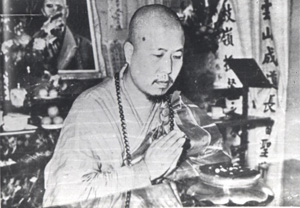
图片说明:上人瞻仰虚老舍利
《释迦如来应化事迹》一书问世久矣,为教门中之伟作,众生界之宝筏,人人乐读,个个愿观,容易明了;诚对机之善本,契理之妙论。
今为仰慕上虚下云老人道德、戒行、学问、智慧、苦行、愿力、实行、慈悲、喜舍、平等、布施、忍辱、精进、禅定诸波罗密门,一生之奇特事迹,堪为末法之指南,斯世纪之救星。故而不惜重资,聘专家绘画佛教人材,精美国画二百余幅。竭数寒暑之精思设计,今始告成问世。藉此将老人道德,推行于全世界。人手一编,家喻户晓,以此而发菩提心,以此而成无上道,以此而倒驾慈航,教化众生,皆得不退转于菩提觉位矣。
Preface
The Life Story of Shakymuni Buddha has long been circulating in the world, and it is considered a masterpiece within the Teachings, a precious raft upon which living beings can pass beyond this realm. Everybody likes to read it; one and all are delighted by the pictures that accompany the text. The book is easy to understand, truly a magnificent work that responds to potentials, a wondrous exposition that tallies with principle.
The author has long cherished a deep admiration for his teacher, Venerable Hsu Yun. This admiration extends to the Master's Way virtue, precept conduct, erudition wisdom, ascetic discipline, vow power and actual practice. It includes the Master's kindness, compassion, joy, and renunciation, his equanimity, giving, patience, vigor, Dhyana samadhi, as well as all the other Paramita doors. The numerous events that happened throughout his life can certainly act as a compass for those in the Dharma-ending Age, a saving force for this century.
Therefore, the author found an especially talented artist in Buddhist subjects, in preparing 200 scrolls, and after several years of careful planning and deliberation, this book has now been published. It is my hope that the Venerable Yun's virtuous conduct will be made known to the entire world. May many people through reading his life story be encouraged to bring forth the Bodhi resolve and accomplish the unsurpassed Way, and then, may they reverse the boast of compassion to come back and teach and transform living beings, so that together we attain irreversibility from the position of enlightenment.
重礼舍利报恩
丙申五十七岁。夏至金山助戒期。大定老和尚留过冬。丁酉五十八岁朝狼山礼大势至菩萨回四月通智法师。在焦山讲楞严经。听众千人命公讲偏座。因生不见母。再往育王拜舍利。日三千拜。
宣化偈曰:
生未见慈亲。育王礼真身。
日课三千叩。惟愿报母恩。
Bowing again to the Sharira to repay his mother's kindness
During the summer of his fifty-seventh year, the Master went to Gold Mountain to assist with the transmission of the precepts. The Venerable Abbot Ta Ting (Great Concentration) requested that he stay for the winter as well. When the Master was fifty-eight years of age, he made a pilgrimage to Lang (Wolf) Mountain, in order to bow to Great Strength Bodhisattva. Upon his return, during the fourth lunar month, Dharma Master T'ung Chih (Penetrating Wisdom) requested that the Master aid him in explaining the Shurangama Sutra at Chiao (Parched) Mountain to an assembly of over one thousand people. Because the Master had never seen his mother, he decided to go again to Ashoka Monastery where he bowed to the sharira of the Buddha more than three thousand times a day.
It was said:
From birth, he never saw his mother,
So at Ashoka Temple, he bowed to the True Body.
Every day, he made three thousand prostrations,
Only hoping to repay his mother's kindness.
法界佛教总会.DRBA/BTTS/DRBU
骑金龙见生母
忽一夜禅观中。似梦非梦。见一金龙飞至。长数丈。金光晃耀。公骑之。腾空至一山水秀丽花木清幽。楼阁宫殿。庄严奇妙。见母在楼阁上瞻眺。公大呼母亲。请你骑上龙来。到西方去龙降梦醒。
宣化偈曰:
飞龙在天见大人。空中楼阁幻即真。
请母同往西方去。梦醒依旧坐绳衾。
Riding a golden dragon and seeing his mother
One night, while absorbed in dhyana meditation, in a dream which wasn't a dream, the Master suddenly saw a flying golden dragon alight. It was several tens of feet long and glittered with golden light. The Master mounted the dragon and ascended through the sky to a dark green wooded area, which flourished with flowers of rare beauty. There were exquisitely adorned palaces and pagodas everywhere. He saw his mother gazing out from one of the pagodas and called to her, "come mount the dragon so we can fly to the West!" As the dragon descended, the Master suddenly returned to ordinary awareness.
The gatha says:
A flying dragon came from the heavens and spied a noble man.
Illusory pagodas and towers in empty space appeared to be real enough.
He invited his mother to accompany him to the Western Land.
When the vision was over, he was sitting as before -- alone on a mat of straw.
法界佛教总会.DRBA/BTTS/DRBU
扶疾燃指供佛
有拜舍利皆参加。众说非一。公初见如绿豆。紫黑色。至十月半。两藏拜完。再看大如前。变赤珠有光。再急拜。看舍利大如黄豆。黄白各半。始信因根境示现。十一月初。大病不能坐。十六日有八人约燃指。公决参加燃指。病亦愈。
宣化偈曰:
显亲宗亮大慈仁。助人燃指发道心。
夙愿克遂真快乐。本怀已畅喜雍容。
Despite his sickness,
Burning off his finger as an offering to the Buddha
The Master joined some people who were bowing to the Buddha's sharira. Each of them saw it differently. When he first observed it, it was the size of a green bean and magenta in color. However, by the middle of the tenth month, after bowing in respect to the two Pitakas, he again viewed the relic. This time it had grown in size and appeared as a glowing red pearl. The master was elated and began to bow. The sharira was now half yellow and half white and the size of a yellow bean. He was beginning to see how the same situation appears differently to each person according to his disposition. By the first day of the eleventh lunar month, the Master had become so ill he could not even sit up. He was one of a group of eight people, each of whom vowed to burn off a portion of finger as an offering to the Buddha on the sixteenth day of the month. The Master was determined to take part, and recovered form his illness!
The gatha says:
Bhikshu Hsien Ch'in (Apparent Relative) and Bhikshu Tsung Liang (Bright Honor)
were men of great compassion.
They aided those who burned their fingers to mark their resolve on the Way.
Enabled to fulfill his vow of the past, the Master was truly joyous.
His earnest wish thus completed, he became quite peaceful and calm.
法界佛教总会.DRBA/BTTS/DRBU
登云台而望东海
己亥六十岁应结森宝林。邀赴丹阳修仙台观。至句容。赤山法忍付茅蓬。庚子六十一岁。拟再朝五台。入终南修隐。先到杨州朝云台山。此山位于江苏山东昆连处。高入云际。故名云台。
宣化偈曰:
东海名山古云台。无边波浪入眼来。
烦恼众生何时度。菩提佛果力培栽。
Climbing Yun T'ai1 and viewing the sea
In the sixteenth year, the Master responded to the invitation of Dharma Masters Chieh Shen (Luxuriant Accumulation) and Pao Lin (Jeweled Forest) to come to Tan Yang (Red Sun) and help renovate Hsien T'ai Kuan (Immortals' Tower and Terrace) Temple. From there, he went to Chu Jung, where he used the hut of Dharma Master Fa Jen (Dharma Patience) of Ch'ih (Red) Mountain. When sixty-one years of age, the Master decided to make another pilgrimage to Wu T'ai (Five Peaks) Mountain, and then sequester himself on Chung Nan Mountain. He first went to Yang Chou to visit Yun T'ai (Cloud Terrace) Mountain, which lies on the border of Chiang Su and Shan Tung Provinces. Its height scales the clouds, which is why it was named Cloud Terrace.
The gatha says:
The famous mountain on the Eastern Sea, is the ancient cloud terrace,
Where boundless waves on the ocean are always on view.
When will the myriad afflicted beings all be crossed over?
They must steadily nourish Bodhi to attain the fruit of Buddhahood.
1: "Cloud Terrace"
法界佛教总会.DRBA/BTTS/DRBU
登泰山观天下
山东泰安县城北。高四十里之东岳泰山。乃五岳名山之一。亦为历代圣帝明君。登此山祭祀上帝玉皇。因陀罗王之地。山上古迹名胜不可胜数。有观世音菩萨庙〈俗呼娘娘〉。香会甚盛。
宣化偈曰:
云台朝罢登泰山。天下苍生颠倒颠。
惟请观音哀摄授。揭谛揭谛到彼岸。
Climbing Mount T'ai and observing the world
North of the cities of T'ai An (Peaceful) County, Shan Tung (Eastern Mountain) Province, lies the forty-li high Eastern range, or T'ai Mountain, one of the well known five sacred mountains of China. Through the ages, the emperors and enlightened rulers ascended this mountain and made their sacrifices to Lord God - the Jade Emperor, the God Indra - for this was where they offered up sacrifices. The ancient ruins on the mountain and the famous beautiful spots are uncountable many. There is the Temple of Avalokiteshvara (Kuan Yin) Bodhisattva - who is commonly referred to as a goddess - where many people come to offer incense.
The gatha says:
Having made a pilgrimage to Cloud Terrace Mountain, he ascended Mount T'ai.
Millions and millions of living beings are pitifully upside-down.
He sought the response of Avalokiteshvara to compassionately gather them in.
Gate, gate, Paragate, arrival at the other shore.
法界佛教总会.DRBA/BTTS/DRBU
朝访那罗延窟
大方广佛华严经云。震旦国有山名那罗延窟山。有无量菩萨。止住说法。即指此处。位于山东半岛尽头劳山。明高僧憨山老人。在此窟侧建海印寺。后被道士毁坏。毫无痕迹存在矣。
宣化偈曰:
大方广佛华严经。那罗延窟早说明。
无量菩萨正演法。有缘众生入化中。
Visiting Narayana Cave
The MahaVaipulya Buddha Avatamsaka (Great Means Expensive Buddha Flower Adornment) Sutra says: "There is a mountain in China called Narayana Cave Mountain where limitless numbers of Bodhisattvas who expounded the Dharma dwell." The place referred to in the Sutra is situated at the tip of the Shan Tung Peninsula, on Lao Mountain. Near the cave, the eminent Ming Dynasty Sanghan, the Venerable Master Han Shan (Silly Mountain), established Hai Yin (Sea Seal) Monastery, which was later completely ruined by the Taoists. Today, not so much as a trace of its remains.
The gatha says:
In the Maha Vaipulya Buddha Avatamsaka Sutra, very clearly.
The Narayana Cave was mentioned quite some time ago.
There, limitless numbers of Bodhisattvas right now proclaim the Dharma,
And living beings Who have the affinities enter into the Teachings.
法界佛教总会.DRBA/BTTS/DRBU
曲阜县瞻孔庙
儒教大成至圣。孔子庙。乃中国文化创始者。孔丘之纪念庙宇也。位于山东曲阜县。对于中国历史文化。具重要性之价值。公以仰慕。孔仲尼道德文章。故来此观礼。孔庙孔陵以示意。
宣化偈曰:
大哉孔子道德高。万世千秋皆师表。
三千门人从教化。七十学者入门墙。
Visiting the Temple of Confucius in Ch'u Fu County
The achievements of Confucius are extremely sagely and great, and Confucianism is an important element if Chinese civilization. The hall commemorating Confucius is located in Ch'u Fu County, Shan Tung Province, and it holds a very important place in history of the Chinese culture. The Master greatly admired Confucius' way virtue and scholarship, so he went there to view and pay his respects to the temple and tomb of Confucius in order to demonstrate these feelings.
The gatha says:
Great indeed is Confucius, whose virtue in the Way is high.
A myriad generations for thousands of years look to him as a teacher and model.
Of more than three thousand pupils whom this Master taught,
There were but seventy scholars who entered the door of his school.
法界佛教总会.DRBA/BTTS/DRBU
宿棺盖遇乞不惧
西行途中。夜宿破庙祇一棺。盖仰。知无人。宿盖上。半夜。棺中大动数次。有声曰我要出来。问你是人是鬼。曰是人。问是什么人。曰是讨饭的。公笑起。令出。状丑如鬼。小解复睡。天曙公行。
宣化偈曰:
性定魔伏朝朝乐。妄念不起处处安。
正大光明无所畏。待人如己有何分。
Spending the night on a coffin cover, meeting a beggar,
but not being frightened
The Master walked westward, and, at nightfall, he came upon a dilapidated temple in which there was nothing but a coffin, its cover upside down. Assuming that no one was inside, the Master slept on top. At midnight, however, he felt something moving around inside the coffin. "Let me out!" said a voice. The Master asked, "Are you a man or a ghost?" "I'm a man," was the answer. "Who are you?" asked the Master. "I'm a beggar," was the reply. The Master chuckled and got up, letting out a man who was ugly as a ghost. The beggar went out to urinate, and then went back to sleep. At dawn, the Master left.
The gatha says:
When the nature is in samadhi, the demons are quelled, and every day is joyful.
When false thoughts do not arise, every place is peaceful.
Bright and imposing was the Master's light - there was not a thing to fear.
If one treats people as oneself, what distinction is there?
法界佛教总会.DRBA/BTTS/DRBU
步康庄逢鬼兵弗惊
斯时义和团作乱山东各县。一日正行路中。遇一洋兵。以枪相向。问公怕死否。公曰倘予该死汝手。任便。洋鬼兵见公。神毫不动。不惊不怖。曰好的你去。公遂赶赴五台。行香毕。以乱故回平。
宣化偈曰:
卒然临之不恐惊。祇缘因果已分清。
杀人偿命毫不错。欠债还钱律不容。
Meeting mercenary on the highway but not being intimidated
Chaos prevailed in the counties of Shan Tung Province at this time due to the Boxer Rebellion. One day, the Master encountered a foreign soldier while walking down the road. The soldier pointed his gun at him and asked the Master: "Are you afraid of dying?" The Master replied, "If I am fated to die by your hand, Then proceed." When the foreign soldier saw that the Master was not flustered, and that he was not to be intimidated or scared, he said "Okay, you may go." The Master then quickly proceeded on to Wu T'ai Mountain. After offering up incense, he returned to Peking, due to the disturbance in Shan Tung.
The gatha says:
Suddenly accosted by the mercenary, the Master was unafraid,
Only because cause and effect is already clearly decided.
For killing someone, one repays with one's own life - it's not off in the slightest.
To have a long-time standing debt and yet refuse to pay is impermissible
法界佛教总会.DRBA/BTTS/DRBU
西域寺石刻藏经
河北省房山县。距离北京西南一百余里。乃著名古刹历代有圣僧应化清初圆通和尚主化其寺。山顶有石藏经洞。刻全部藏经。乃隋静畹法师创始。历唐宋元始竣工。礼拜者颇多。
宣化偈曰:
静畹刻经石壁间。唐宋元朝始全篇。
正法久住醒迷梦。般若恒明觉痴氓。
Paying homage to the stone carved Tripitaka at Hsi Yu2 Monastery
Over one hundred li southwest of Peking, in Fang Shan County, Ho Pei Province, there is a well-known ancient shrine, where past generations of sagely Sanghans made their appearances. During the first years of the Ch'ing Dynasty, Venerable Master Yuan T'ung (Perfect Penetration) headed the monastery there. On the mountaintop, there is a cave in the rocks, in which the entire Tripitaka is carved into the stone. The work was initiated by Dharma Master Ching Wan of the Sui Dynasty, and continued through T'ang, Sung and Yuan Dynasties until it was finished. The number of people who have gone there to worship is great indeed.
The gatha says:
Bhikshu Ching Wan carved the sutras on the walls of stone.
During T'ang, Sung, and Yuan times, the entire Canon was then completed.
The proper Dharma long dwells to rouse confused dreamers.
Prajna wisdom, constantly bright, awakens people form delusion.
2. Western Country
法界佛教总会.DRBA/BTTS/DRBU
戒台寺礼飞钵祖塔
至潭柘山访异行僧。戒台寺礼飞钵禅师祖塔。红螺参加念佛道场。相传明僧结茅隐太后见之。以金满盛钵中。钵即飞迹山中。欲建道场。飞钵入皇宫。回。得金修戒台寺。置沉香龙椅十座。
宣化偈曰:
飞钵化缘入皇宫。太后布施金满盈。
以此高筑戒台寺。沉香龙椅十师宗。
Paying his respects to the stupa of Patriarch Fei Po3 at Chieh T'ai4 Monastery
When he reached T'an Che Mountain, the Master called on Bhikshu Yi Hsing (Extraordinary Practice), and at Chich T'ai (Precept Platform) Monastery, bowed to the stupa of Patriarch Dhyana Master Fei Po (Flying Bowl). At Hung Lo (Red Conch), he participated in a Buddha recitation session. Legend has it this eminent Sanghan lived in a thatched hut on that mountain. Wishing to establish a Way place, he sent a flying bowl into the royal palace. When the Empress saw it, she filled the bowl to the brim with gold. The bowl then flew back to that Dhyana Master, who used it to build Chieh T'ai (Precept Platform) Monastery. He constructed dragon-thrones made of sink-in-water incense (aloeswood)5.
The gatha says:
The begging rounds of the flying bowl took it into the royal palace,
Where the Empress made a donation of one full bowl of gold.
Precept Platform Temple now stately stands
With its sink-in-water incense dragon thrones, one for each Master of the Ten Schools.
3. "Flying Bowl"
4. "Precept Platform"
5. A very rare and fragrant wood which sinks when placed in water, hence its name.
法界佛教总会.DRBA/BTTS/DRBU
大钟寺观古迹
大钟寺观明朝姚广孝。所铸八万四千斤铜钟。高于数层楼宇纽高七尺。径一丈四尺。外铸华严经全部。内法华经全部。尊胜咒全部以金刚经锁边。其纽楞严咒为永乐帝荐母而造也。
宣化偈曰:
缅甸虽有大金塔。支那更有大铜钟。
两者皆为历史物。神钟失而复得鸣。
Viewing the relics at Ta Chung6 Monastery
The Master viewed the eighty-four-thousand-pound bronze bell, which was cast by the Monk Yao Kuang Hsiao during the Ming Dynasty. It is several stories in height. Its crown is seven feet high, and it is fourteen feet in diameter. The entire Avatamsaka (Flower Adornment) Sutra is cast on the outside, and the Dharma Flower Sutra and the Tsun Sheng (Noble and Sublime) Mantra in their entirety are cast on the inside. The Vajra Sutra is cast on the lip, and on the crown, the Shurangama Mantra. It was offered by the Yung Le Emperor for the sake of crossing over his mother.
The gatha says:
Although in Burma one can see the magnificent Golden Stupa,
The colossal Bronze Bell of China is even greater yet.
Both of these are renowned historical objects.
The cherished bell has now been lost, but it will ring again.
6. "Great Bell"
法界佛教总会.DRBA/BTTS/DRBU
回城南龙泉寺住
五月团乱益炽。以扶清灭洋为号召。杀日使书记。德公使。太后纵之至十七日。下诏与各国宣战。京大乱。六月天津失。七月联军陷北京。时王公大臣。住龙泉者。乃劝公偕伊等。随扈跸西行。
宣化偈曰:
清运将末闹义合。八国联军入寇魔。
迫逼太后长安去。拥护圣驾有头陀。
Returning to Ch'eng Nan7 and staying at Lung Ch'üan8 Monastery
By the fifth lunar month, the Boxer Rebellion had intensified. Their motto was "Support the Ch'ing Dynasty, and eliminate the foreigners." The Empress Dowager had condoned the assassination of the secretary of the Japanese Consulate and the German Ambassador. On the seventeenth of the month, war was declared on the foreign powers by imperial mandate. The capital was in tumult. The following month, T'ien Tsin was lost, and a month later Peking fell to the allied troops. During that time, the princes and ministers who were staying at Lung Ch'uan (Dragon Spring) Monastery urged the Master to join the Imperial Retinue in its flight west.
The gatha says:
On the verge of ruin was old Ch'ing Dynasty, as the Boxers were embattled.
The allied armies of eight different countries invaded like plundering demons.
The Empress Dowager in dire straits fled to Ch'ang An in the west.
Protecting their royal majesties was a man of ascetic practice.
7. "Southern City"
8. "Dragon Spring"
法界佛教总会.DRBA/BTTS/DRBU
离北京赴长安
日夜兼程。艰苦万状。行至阜平县。始闻甘藩。岑春煊勤王兵至。护驾出长城。入山西雁门关。有云门寺一老僧。已一百二十四岁。帝赐黄绫及建坊。又西行至平阳。遍地饥荒。
宣化偈曰:
一人有庆兆民赖。万姓无辜多倒悬。
车驾西行亲经历。遍地饥荒太可怜。
Leaving Peking and heading towards Ch'ang An
Day and night, the forced march continued, despite the many difficulties and bitter sufferings. As they reached Fu P'ing County, the soldiers of Governor Ts'en Ch'un Hsuan of Kansu Province could be heard approaching to accompany the Monarch. They escorted their majesties past the Great Wall. After entering Yen Men (Wild Geese) Pass, Shanhsi Province, the Emperor met a one-hundred-twenty-four-year-old monk in Yun Men (Cloud Gate) Monastery, upon whom he bestowed some fine yellow robe-cloth. He also ordered the construction of an arch. The western march continued, and upon reaching P'ing Yang, they found that famine was widespread.
The gatha says:
If a single leader enjoys good fortune, all the people can rely on him.
The common people were not at fault, but still were suffering severely.
When their majesties fled to the west, they themselves experienced
The serious famine which prevailed - it was just too pitiful!
法界佛教总会.DRBA/BTTS/DRBU
祈甘露雨息灾
民以芋薯叶进。帝后食甘之。至西安。帝住抚院。有人食死尸者。谕禁之。四城设八施饭处。大小村镇亦然。抚台岑春煊。请公至卧龙寺。祈祷雪雨。息旱灾毕。东霞留住。公以嚣烦甚潜去。
宣化偈曰:
治世犬胜乱世人。造次颠沛显忠臣。
遍地荒旱民饥馑。抚台请公祷甘霖。
Praying for the sweet dew of rain to avert disaster
The local people offered taro and potato leaves for the Emperor and Empress to eat, which their majesties found quite good. At Hsi An, the Emperor stayed at the Provincial Governor's headquarters. During this period, people were so hungry that they were eating corpses, so a prohibitory edict was issued. Eight rice-lines were set up in the urban areas, in addition to those set up in the big and small towns and the outlying areas. Governor Ts'en Ch'un Hsuan asked the Master to go to Wo Lung (Reclining Dragon) Monastery to offer prayers for snow or rain to end the drought. At the conclusion of the prayers, Abbot Tung Hsia requested that the Master remain, but because of the clamor and din, the Master secretly left.
The gatha says:
One would rather be a dog during peaceful times than a person during times of chaos.
In the midst of roiling confusion and disorder appeared a loyal minister.
As the serious drought intensified, with the cropless masses starving,
The Provincial Governor asked the Master to pray for a lasting sweet rain.
法界佛教总会.DRBA/BTTS/DRBU
嘉五台狮子岩
十月上终南山。嘉五台狮子岩。结茅地幽静。为杜外扰计。改号“虚云”。山乏水化积雪为饮。种野菜为食。山中有本昌住破石山。妙莲住关地庙。道明住五华洞。妙圆。修圆。青山分住后山。
宣化偈曰:
万里终南隐圣贤。百千比丘聚长安。
公今更名居狮洞。专心致志苦修参。
Staying in Lion Cavern at Chia Wu T'ai Mountain
In the tenth lunar month, the Master climbed the Chung Nan Mountains to live in the wilds and stayed at the Lion Cavern of Chia Wu T'ai Mountain. The area was remote and still, and to avoid the annoyance of visitors, the Master changed his name to Hsu Yun (Empty Cloud). Since there was no water on the mountain, he melted snow to drink and gathered wild plants to eat. In the vicinity, Dharma Master Pen Ch'ang (Original Brilliance) was living on P'o Shih (Broken Rock) Mountain. Dharma Master Miao Lien (Wonderful Lotus) was dwelling at the Kuan Ti Temple. Dharma Master Tao Ming (Bright Way) was staying in Wu Hua (Five Flower) Cave. Also, Dharma Masters Miao Yuan (Wonderfully Complete), Hsiu Yuan (Complete Cultivation), and Ch'ing Shan (Blue Mountain), lived on different parts of the mountain in back.
The gatha says:
Ten thousand miles away, sequestered in Chung Nan, are the Worthy Sages,
While several hundreds of thousands of bhikshus in Ch'ang An gathered together.
The Master changed his name and took up residence in the Lion Cavern.
With single-minded concentration he practiced austerities and dhyana.
法界佛教总会.DRBA/BTTS/DRBU
自耕自食自修
青山师湘人。众尊之。与公住较近。来往自种。次年八月。复成。月霞。了尘三师至。诧曰几年不知你消息。竟睡在这里。公笑曰。这里且置。如何是那里。众吃芋毕。住破石山。云。法老厌烦欲来此。
宣化偈曰:
化城引月复戒师。翠微山上相地回。
公谓无靠向白虎。多凶少吉后果然。
Personally ploughing, personally eating, and personally cultivating
Dharma Master Ch'ing Shan (Blue Mountain) was a native of Hu Nan Province, and those in the mountains all respected him. Since he lived relatively close to the Master, they were naturally in contact. The Master planted his own vegetables. In the eighth lunar month of the following year, Dharma Masters Fu Ch'eng (Restored to Success), Yueh Hsia (Moon Mist), and Liao Ch'en (Finished with the Dust) arrived. They were all surprised and said to the Master, "We had no news of you for several years. We never expected that you'd be sleeping here!" The Master laughed and said, "Never mind about here; where is there?!" After a meal of taro, the Master joined the group and stayed at P'o Shih (Broken Rock) Mountain. It was said that Elder Master Fa Jen (Dharma Patience) had been troubled lately and wanted to come to the area.
The gatha says:
The Transformation City enticed Dharma Masters "Moon Mist" and Fu Ch'eng,
Who congregated on this stretch of green mountain area.
But the Master said it lacked support since it faced a white tiger9.
Quite adverse and not propitious - the result was just that way.
法界佛教总会.DRBA/BTTS/DRBU
行路中堕雪窟
冬至青山老人。嘱赴长安市物。返适大雪。上山至新茅蓬。石壁悬崖间。堕雪窟中。大号。近棚一全上人来救。衣内外湿。将夜恐雪封山连夜拨雪归。诣青师。见公狼狈。嗤不济。笑颔之。返度岁。
宣化偈曰:
为人服务堕雪窟。返被呵嗤不济徒。
任劳任怨任道远。证圣证果证祖师。
Falling into a snow cavity while walking
During the winter, the Master called on the Venerable Master Ch'ing Shan (Blue Mountain), who asked him to go to Ch'ang An for supplies. On the way back, the Master encountered a blizzard as he ascended the mountain. Nearing the new hut, he walked off an overhanging precipice and fell into a snow crevice. His loud hollering brought Dharma Master Yi Ch'uan (Oneness) from a nearby hut to his rescue. The Master's clothing was drenched and night was falling, but fearing that the snow would make the mountain inaccessible, he kept going on through the night. He finally reached Dharma Master Ch'ing Shan's hut, despite the snow. When Dharma Master Ch'ing Shan saw the Master's disheveled appearance. he laughed and told the latter he was useless. The Master smiled and returned to his hut to pass the New Year.
The gatha says:
When the Master was doing someone a favor, he fell into a snowy hollow.
Upon his return, he was laughed at and mocked as being a useless monk.
He tolerated toil and criticism - the road of his mission was long.
He was certified to the fruition of Sagehood, proving himself a Patriarch.
法界佛教总会.DRBA/BTTS/DRBU
入定半月已两年
辛丑六十二岁法忍老人率众至。后与土人。涉讼败。回南。盖风水故也。岁尽。一日煮芋待熟。趺坐定去。壬寅六三。邻棚复成师等。讶公不至。往贺年。见虎迹遍满。入见公定。以磬开静。问已食否。
宣化偈曰:
芋在釜中度已熟。启视霉长盈寸诸。
众讶入定竟半月。烹雪煮芋饱笑乎。
Entering samadhi for two weeks in two years
In the Master's sixty-second year, the Venerable Master Fa Jen (Dharma Patience) arrived with his following. He was soon involved in a civil suit, which he lost before returning south. All of this had something to do with the geomantic conditions of the area. The year was nearing its end. One day, while waiting for his taro to cook, Master Yun sat in the lotus posture and entered samadhi. The next year, Dharma Master Fu Ch'eng and others in neighboring huts were surprised to see that the Master had not come out to exchange New Year's greetings. They saw tiger tracks around his hut, and when they entered saw that the Master was in samadhi. Striking a small bell, they aroused him and politely asked if he had eaten yet.
The gatha says:
The cooking taro in the pot was already more than done.
When the pot was opened, the taro inside had grown an inch of mould!
He had been in samadhi for half a month. The others were taken aback.
Drinking snow and cooking taro, he was perfectly content.
法界佛教总会.DRBA/BTTS/DRBU
厌酬答乃宵遁
复师去后。遐迩僧俗。皆来观拜。公厌酬答。乃宵遁。一肩衣单。又向万里无寸草处去。先至太白山。居岩洞中。不久戒尘师踵迹至。相约朝峨嵋山。观佛光与鸡山无异。夜看万盏明灯与五台同。
宣化偈曰:
锡瓦宝殿礼真应。年逾耳顺领袖僧。
宗门知识参学饱。欢留数日又登程。
Weary of visitors, leaving by night
After Dharma Master Fu and the others had left, bhikshus and laypeople from far and near began coming to call on and bow to the Master. He soon became weary of receiving so many visitors, and so one evening, shouldering his clothes bag, he left for the distant wilderness where there is not even one blade of grass. Initially he went to T'ai Pai (Great White) Mountain and lived in a chasm, but it wasn't long before Dharma Master Chieh Ch'en (Guarding Against the Dust) arrived, following the Master's footprints. They decided to go together on a pilgrimage to 0-Mei Mountain. There the Buddha lights which the Master saw did not differ from the ones he had seen on Chi Tsu (Chicken Foot) Mountain. At night he observed a brilliance as bright as ten thousand lamps, similar to what he had seen on Wu T'ai (Five Peaks) Mountain.
The gatha says:
In the Jeweled Palace paved with tin tiles,
he bowed to the One Truly Worthy of Offerings.
The Master, whose age by now exceeded sixty years, had become a leading Sanghan.
As a well-known Advisor of the Ch'an School his learning and practice were complete.
He stayed happily there for a few days, and then was on his way.
法界佛教总会.DRBA/BTTS/DRBU
缆断流急堕水
下山循洗象池。大峨寺。长老坪。毗卢殿。峡江县。抵银村。通流沙河。早至午。候船到。众皆登。公让戒师登。以衣单递上。公欲登。缆忽断。流复急。公以右手攀船弦。舟人多侧。即覆。公不动浸暮。
宣化偈曰:
攀船从流度苦厄。衣湿足破血染河。
晒经关逢天寒雨。旅店不留僧伽耶。
Falling into a swift current when a rope breaks
Descending from the mountains, they passed by Hsi Hsiang (Washing Elephant) Lake, Ta-O (Great Mountain) Monastery, Chang Lao (Old Age) Plain, Vairochana Hall and through Hsia Chiang (Gorge) Prefecture. Upon arriving at Yin (Silver) Village, where they were to cross a river, they waited from morning till afternoon before the ferry finally arrived. Everyone had boarded, and the Master deferred to Dharma Master Chieh Ch'en, who boarded first. Handing the latter his bag, the Master was about to board when the rope suddenly broke. The current was swift, so the Master caught the gunwale of the boat with his right hand. Since the boat was overloaded, any slightest imbalance would have caused it to capsize. Therefore, the Master did not move, but remained in the water till the end of the day.
The gatha says:
Grasping the boat afloat in the flow, he crossed over suffering and misery.
His clothes were drenched, his feet were cut, and his blood stained the river.
Arriving finally at Shai Ching Pass, where it was cold and raining,
They went to an inn, but had to stay out in the cold, for Sanghans were not accepted.
法界佛教总会.DRBA/BTTS/DRBU
拒挂单宿戏台下
街外有庙。仅一僧住。求宿不纳。令宿门外戏台底。地潮衣湿。天寒肤冷。向僧买禾草。拖来两把湿杆。烧之。不着。忍之与戒师坐而待旦。买苦荞粑食而充饥。忍着足痛。仍然向前迈进也。
宣化偈曰:
火燃山上放红光。金沙江里一色黄。
普贤大士多奇妙。观音菩萨圣迹彰。
Bowing, being refused lodging, and spending the night under a stage
There was a temple a little ways from the street where only one bhikshu was dwelling, but he refused their request for lodging. They had to spend the night outdoors underneath a stage. The ground was damp and their clothes were wet. The freezing rain continued and the Master shivered. They purchased some straw from the monk in the temple, who gave them two wet bundles which wouldn't burn. The Master sat patiently with Dharma Master Chieh Ch'en until dawn, at which time they bought buckwheat groats to eat. The Master endured walking on his painful feet. still managing to make progress on their pilgrimage.
The gatha says:
Fire burning in the mountain emitted a red, glowing light.
The color of the Golden Sand river is a solid yellow.
The Great Bodhisattva Samantabhadra10 is very rare and wondrous,
And Avalokiteshvara Bodhisattva's sagely relics were seen.
10. Universal Worthy
法界佛教总会.DRBA/BTTS/DRBU
福兴寺公闭关
朝鸡足山。树下宿。复闻石门内鱼磬声。翌日。金顶进香毕。复念佛祖道场。衰败如斯。全滇僧规堕落。发愿结茅接众。又被子孙寺庙所禁。涕叹赴昆明。岑宽慈留住福兴闭关。戒师护度岁。
宣化偈曰:
癸卯公年六十四。迎祥放生有雄鸡。
性极好斗伤同类。公教念佛授三皈。
Going into seclusion at Fu Hsing11 Monastery
While making a pilgrimage to Chicken Foot Mountain, they spent the night under a tree, and the following morning, heard the sound of the wooden fish and large bell inside the stone gate. The next day, after offering incense on Golden Summit, the Master thought of how this Way-place of the Buddhas and Patriarchs had degenerated to its present state, and about the neglect of the Sangha's moral rules in all Yunnan Province. He wanted to make a vow to live in a hut and receive traveling Sanghans. but was prevented from doing so by the hereditary monastic system. The Master sighed tearfully and went on to K'un Ming. At the request of Upasaka Ts'en K'uan Ts'e, the Master stayed at Fu Hsing (Fortune and Prosperity) Monastery, where he went into seclusion with the aid of Dharma Master Chieh Ch'en and passed the New Year.
The gatha says:
The Master's age was sixty-four years in the cyclical year Kuei Mao.12
Liberated at Ying Hsiang13 Temple there was a dauntless cock
Whose nature was fond of fighting, and it injured those of its kind.
The Master taught it to be mindful of the Buddha, and it received the Three Refuges.
11. "Fortune and Prosperity"
12. 1903 A.D.
13. Welcome Good Luck
法界佛教总会.DRBA/BTTS/DRBU
皈依后念佛往生
后不斗。独栖树。不伤虫。不与不食。念佛立化。公铭曰。“好斗成性此鸡雄。伤冠拔羽血流红。知畏奉戒狂心歇。素食孤栖不害虫。两目瞻仰黄金相。念佛喔喔何从容。旋绕三扑奄然化。众生与佛将无同。”
宣化偈曰:
雄鸡念佛尚往生。吾人岂可不精勤。
念兹在兹不间断。一心不乱悟无生。
After a cock takes refuge,
it is mindful of the Buddha, and goes off to rebirth
After that, the cock no longer fought, but perched alone in a tree. It did not harm insects, and so if no one gave it food, it did not eat. One day, it died standing up, reciting the Buddha's name. The Master then wrote the following verse:
To be fond of fighting was the disposition of this dauntless cock,
Which injured fowl, pulling out their plumes, making their red blood flow.
But, knowing fear, it took the precepts; thereupon, its mad mind stopped.
Roosting alone and a vegetarian, it no longer injured insects.
Its eyes would gaze up and contemplate the yellow-golden images,
While it crowed reciting the Buddha's name without any difficulty.
After circling around and bowing three full bows, it peacefully passed away.
What difference can be found between beings and the Buddhas?
The gatha says:
Even the dauntless cock recited "Buddha," and then went off to rebirth,
So how can we who are people afford not to be diligent?
Being ever mindful, ever reciting without interruption,
Single-minded, without confusion, one enlightens to non-production.
法界佛教总会.DRBA/BTTS/DRBU
钵盂庵移巨石
公被各檀越。恳请出关讲经。法筵遍滇境。李提督福兴。留公住崇圣寺。公曰吾愿在鸡山。开挂单接众。遂令宾川办理。觅得钵盂庵。留单接众。而门右有巨石高九寸四宽七寸六主白虎不详。祷伽蓝率僧移去。
宣化偈曰:
招工百余石难移。公祈护法助神力。
怪石搬家众称异。盛德感格太妙奇。
Removing a huge rock at Po Yu14 Temple
Entreated by various protectors of the Dharma to end his seclusion and explain Sutras, the Master took part in many Dharma assemblies around Yunnan Province. After that, General Li Fu Hsing requested that the Master stay at Ch'ung Sheng (Honoring Sages) Monastery. The Master replied, "I have made a vow to set up a place on Chicken Foot Mountain to receive traveling Sanghans." The General thereupon ordered Pin Ch'uan to make a search. He found Po Yu (Bowl) Temple as a possible site where visiting Sanghans could be accommodated, but to the right of the temple was a large rock measuring eight feet tall and six feet wide. Since it was dominated by a white tiger15, it was quite inauspicious. The Master prayed to the Sangharama Spirits and led a group of bhikshus in moving the rock away.
The gatha says:
Over a hundred workers who were hired could not budge the rock.
The Master prayed to the Dharma-protecting Spirits to lend their power.
When the peculiar stone was moved away, everyone said, "How strange!"
His abundant virtue evoked a response - miraculous indeed!
14. "Bowl"
15. A term used in geomancy; see #121
法界佛教总会.DRBA/BTTS/DRBU
路遇禅修苦修道
公以修寺。急于募化。乃下山行至和木树。遇一僧修路。礼不答。晚对坐。次晨作饭。公为烧火。饭熟。不招呼。取钵食毕。僧荷锄。公负箕。同修路。十余日未造一语。相安同处止兴皆如是。
宣化偈曰:
粗荦数百路难行。楚僧禅修愿地平。
苦行数十永不退。高矣休哉叹奇逢。
Meeting Dharma Master Ch'an Hsiu16 who cultivated austerities
The Master immediately went to raise the money required to repair the broken-down temple. As he descended the mountain, upon reaching Ho Mu tree, he met a monk who was repairing the road. The Master bowed, but the monk did not respond. In the evening, they sat facing each other, and the next morning, the monk cooked some rice while the Master stoked the fire. When it was ready, the monk did not tell him to eat, but the Master did so anyway. The monk then shouldered his hoe and the Master carried the basket. They worked together in that way for more than ten days without exchanging a single word. Thus, in mutual harmony, they toiled and rested together.
The gatha says:
Rough and craggy for several hundred miles, the road was hard to travel.
The monk Ch'an Hsiu vowed to make it passable,
So he bitterly toiled for several decades, and never once retreated.
Eminent indeed was Hsiu! The Master sighed at this strange encounter.
16. "Ch'an Cultivation"
法界佛教总会.DRBA/BTTS/DRBU
对月论禅皆大笑
一夕月明为昼。公趺坐大石上。僧悄至背后。大喝曰。在此做什么。公徐启目。缓应曰看月。僧曰月在何处。公曰大好霞光。僧曰。徒多鱼目真难辨。休认虹霓是彩霞。公曰。光含万象无今古。不属阴阳绝障遮。
宣化偈曰:
彼此大笑一贯通。深夜请回睡蒙眬。
金山得一休歇处。终日平地不施功。
Discussing Ch'an in terms of the moon: both had a good laugh
Once, when the moonlit evening was as bright as day, the Master sat in meditation with crossed legs on a large rock. The monk silently approached from behind and shouted, "What are you doing here?!" The Master slowly opened his eyes, and unhurriedly replied "I'm looking at the moon." The monk then said, "Where is the moon?" The Master answered, "In its magnificent glowing light." The monk said:
Finding the pearls among fish eyes is difficult to do.
Do not mistake the rainbow for the spectrum of true light.
The Master then replied:
The light embraces the then thousand things but has no past or present.
Not defined by yin or yang, all obstructions are gone.
The gatha says:
This and that were strung through; the two of them shared a hearty laugh,
and everything was penetrated.
Late at night, he asked the Master to return and take his rest.
Back at Gold Mountain, he attained the One - the place of true rest.
All day long he leveled the ground and did not boast of his work.
法界佛教总会.DRBA/BTTS/DRBU
为和尚念经施食
往腾冲住湘会馆。行单未卸有服孝者。数人扣礼云。请大师念经。公答非应赴经僧。孝子云。为你们和尚念经。馆人曰。大师要去。来者为吴太史曾孙。太史乃善人。临终谓为僧。有高僧来度。
宣化偈曰:
念经施食满来复。阖邑官绅愿皈徒。
恳留腾越募缘急。踊跃乐捐钜款输。
Reciting sutras and bestowing food upon a monk
The Master then left for T'eng Ch'ung, where he stayed in the Hunan Provincial Association Hall. Before he could put down his bag, however, several mourners bowed and said, "We respectfully request that the Venerable Master recite Sutras for the deceased." The Master told them that he was not a monk who had come to recite Sutras. A mourner then said, "Surely you can recite Sutras for a fellow monk!" A man from the Association said. "The Venerable Master ought to go with them. These people are the grandsons of the Imperial Historian Wu, who was a beneficent man. Just before his death. he said that he wished to become a member of the Sangha. and that an eminent monk would soon arrive to rescue him."
The gatha says:
Reciting Sutras and bestowing food were rites well attended.
The entire town, officials and gentry, wished to become disciples.
They entreated him to stay in T'eng Yueh, but subscriptions were more important,
So in their joy, they happily pledge substantial contributions.
法界佛教总会.DRBA/BTTS/DRBU
弘法讲经槟城
回庵备粮传戒弘法。受瘴病。柳洞化。定如师至缅高万邦接待。礼金塔。搭船赴槟城。登岸被检验。有疫隔离于山。人皆放。留公以药毒之不死。得闽人救。至极乐寺病瘳。讲妙法莲华经。
宣化偈曰:
夷医存心颇狠毒。人本未死欲剖腹。
岂意大德佛呵护。虽服毒剂有若无。
Propagating the Dharma and explaining the sutras in Penang
The Master returned to the monastery with provisions. The precepts were transmitted, and the Dharma flourished. Later he contracted malaria, and at Liu Tung (Willow Cave), instructed Dharma Master Ting Ju (Still Suchness). Proceeding on to Burma, he was received by Upasaka Kao Wan Pang. After paying his respects to the Golden Stupa, he took passage to Penang by boat. Passing through the health inspection upon disembarking, all of the passengers were quarantined on a distant hill. Although everyone was subsequently released, the Master was left to die from the poisoned medicine he had been given. His life was saved by a native of Fukien Province. The Master then went to Chi Le (Ultimate Bliss) Monastery, where he recuperated, and lectured on the Wonderful Dharma Lotus Flower Sutra.
The gatha says:
The barbarious doctor harbored in his heart the poison of strong hatred;
Even when a patient had not yet died, he wanted to cut open his stomach.
But this Greatly Virtuous One the Buddha will protect,
So although the Master swallowed the poison, it was as if not there.
法界佛教总会.DRBA/BTTS/DRBU
回国挽救寺难
滇全体僧来电云。政府提寺产。寄禅约回国共图挽救。丙午六十七岁。春回国。船经台参观灵泉寺。至日参观各地佛寺。时中日暗交恶。两国僧人。亦不许自由活动。三月回国。抵沪上。
宣化偈曰:
妙老回国嘱讲经。法华药师继阐明。
吉隆灵山讲楞伽。前后皈依万余名。
Returning to China to save the monasteries
The Master received a telegram from the Yunnan Province Sangha Association, which said that the government was seizing monastery property. Dharma Master Chi Ch'an urged the Master to return to China where the problem could be collectively resolved. In the spring of 1906, the Master's sixty-seventh year, he departed for China. When the ship stopped at Taiwan, he visited Ling Ch'uan (Magic Spring) Monastery, and later in Japan, visited various Buddhist temples. At that time, communications between China and Japan were worsening, and members of the Sangha in both countries were forbidden freedom of movement. In the third lunar month, the Master returned to his country, arriving at Shanghai.
The gatha says:
The Venerable Miao returned to China and urged him to lecture Sutras.
The Dharma Flower and Medicine Master sutras he successively expounded clearly.
At Ling Shan (Magic Mountain) Temple in Kuala Lumpur, he explained the Lankavatara.
Altogether more than ten thousand people took refuge with the Master.
法界佛教总会.DRBA/BTTS/DRBU
一同进京请愿
与佛教会代表寄禅师等。同进京请愿。抵京住贤良寺。僧录司。法安龙泉寺。道兴观音寺。觉光诸师等亲自招待。备极优隆。彼此共商。如何进行挽救策略。此时若非公等。佛教不知。伊于胡底。
宣化偈曰:
三武灭佛佛不灭。一再护教教复兴。
进京请愿跋涉苦。留得功勋传古今。
Arriving in the capital to join a group in petitioning the government
The Master, Dharma Master Chi Ch'an, and the other representatives of the Buddhist Association, entered the capital to present their petition to the government. Upon arriving, they stayed at Hsien Liang (Good and Worthy) Monastery. The official Head of Sangha Affairs, Dharma Master Fa An of Lung Ch'uan (Dragon Springs) Monastery, Dharma Master Tao Hsing of Kuan Yin Temple, along with Dharma Master Chueh Kuang and others personally welcomed the Master, lavishly supplying him with all manner of provisions. All the Masters discussed among themselves how to rectify the situation and make plans for restoration. Had it not been for the efforts of the Master and the others, who knows what would have happened to Buddhism?
The gatha says:
Three Wu emperors persecuted the Buddhists, but Buddhism did not die.
The Teaching was protected and flourished once again.
Going to the capital to present their petition, they traveled a difficult path.
The story of their glorious merit has come down from past to present.
法界佛教总会.DRBA/BTTS/DRBU
王公宰官护法
时肃亲王。善耆。请公为其太福。晋说戒法。复有庚子岁。公随鸾驾。护帝后西行时。各王公大臣旧相知多来探视。策划上奏诸事宜。得各护法帮助甚力。诸事顺利进行。奏上。旋奉上谕。停。
宣化偈曰:
琉璃大王灭释种。频婆裟罗请目连。
肃亲王子为护法。遂心满愿奉谕还。
Receiving protection for the Dharma from princes, dukes, officials and the emperor
At that time, Prince Su Shan Ch'i requested that the Master explain appropriate precepts to his wife. Moreover, the princes, dukes, and ministers whom the Master had met while accompanying the Emperor and Empress and the Imperial Caravan during its westward flight in 190017 lent their influence in the formal presentation of the petition. Because of the profound power of the aid given by the Dharma Protectors, all went smoothly, and as a result, a prohibitory edict was proclaimed.
The gatha says:
The great and powerful Crystal King demolished the Shakyan clan.
And the King called Bimbisara had entreated Maudgalyayana.
At this time, there was Prince Su Shan Ch'i, who was also a protector of the Dharma.
In accord with their wishes, an Imperial edict was proclaimed.
17. See #118
法界佛教总会.DRBA/BTTS/DRBU
敕封佛慈洪法大师回山
钦赐龙藏。鸾驾全幅。敕命方丈。御赐紫衣钵具。玉印。锡仗。如意敕封住持虚云。佛慈洪法大师之号。奉旨回山传戒。护国佑民。内务府大臣。传知虚云。谨领各件回山。永镇山门。善为布教。官民一体虔奉。加意保护。毋得轻亵此谕。
宣化偈曰:
佛慈洪法尊。请愿志已伸。
奉旨回祝圣。布教化群伦。
Being conferred the title "Vast Dharma of the Buddha's Compassion" and returning to the mountain
The Emperor then bestowed upon the Master a set of Imperial Tripitaka, a complete Imperial carriage, as well as a purple robe, a bowl, a jade seal, a tin staff, and an as-you-will sceptre.
"The Venerable Abbot Hsu Yun is hereby granted the title 'The Great Master Vast Dharma of the Buddha's Compassion,' and it is hereby decreed that he is entrusted with returning to the mountain to transmit the precepts for the protection of the country and its people. The Secretary of the Interior is hereby instructed to inform the Venerable Abbot Hsu Yun of this edict, which provides that he receive the gifts and return to the mountain, where he can be ever protective of its monasteries, and continue to make known the Teachings. The public officials and citizens of the area should sincerely implement and protect this proclamation. Disregard for it will not be tolerated."
The gatha says:
The petition of the Honored One, Vast Dharma of the Buddha's Compassion,
Was now accepted.
By Imperial edict he returned to Chu Sheng Mountain
To spread the teachings and transform all classes of beings.
法界佛教总会.DRBA/BTTS/DRBU
戒源和尚妙老示寂
丁未六十八岁春。运经回山。抵厦接鼓山。电云妙莲老人于正月在龟山圆寂。公兼程回山建塔。连日滂沱。四月十日进塔。八日晴。十日官绅士庶络绎于道。供品百桌。上供念变食真言。时忽起旋风。吹至空中。塔放霞光。
宣化偈曰:
霞光贯塔透九霄。瞻仰称叹妙公高。
供毕回寺滂沱雨。感应道交不错毫。
Venerating Venerable Miao, source of the precepts master, upon his entering the stillness
The Master was sixty-eight in 1907. Transporting the Tripitaka back to the mountain, he reached Amoy in the spring, where he received a telegram from Ku Shan (Drum Mountain) informing him that the Venerable Miao Lien (Wonderful Lotus) had passed away on Kuei Shan Mountain in the first month of the year. The Master immediately left for the mountain to set up the stupa. It rained heavily day after day. On the tenth day of the fourth lunar month, a stupa was completed, and on the eighth of the following month, the weather was clear. On the tenth. the public officials, scholars and common people took to the roads in a continuous stream to the mountain. There were one hundred tables of offerings, and during the recitation of the food-transforming mantra, a sudden whirlwind arose and lifted aloft the offerings. A multi-colored light was seen coming from the stupa.
The gatha says:
Rainbow light came forth from the stupa penetrating to the Ninth Heaven.
All looked up with sounds of praise for the eminent Master Miao.
When the offering was over, he returned to the temple, pelted by torrents of rain.
The Way and response are intertwined and not off by a hair.
法界佛教总会.DRBA/BTTS/DRBU
洋人信佛供僧
奉藏及妙公灵骨。至槟城。迎者数千人。供念变食真言。旋风复起。霞光如前。妙公以建寺结缘。秘行难思。公讲心经。转船赴泰。有一英人来访。说国语。谈次乃知是英驻滇使。助洋三千。
宣化偈曰:
化行中外度洋人。乐助输将三千银。
若非至德焉如是。因缘恩及兽与禽。
Meeting a Westerner who believes in the Buddha and makes an offering to the Sangha
The Master proceeded on to Penang, Malaysia, with the Imperial Tripitaka, and the relics of the Venerable Miao. There were several thousand people who welcomed him upon arrival. During the ceremonies, when the food-transforming mantra was being recited, a whirlwind again arose, and multi-colored light was seen as before. The Venerable Master Miao had tied up conditions by establishing temples, and the profundity of his secret practices was inconceivable indeed. The Master expounded on the Heart Sutra, and then traveled by boat to Thailand. On board was an Englishman who spoke Chinese with the Master. The man turned out to be the British consul stationed in Yunnan Province. He contributed $3,000.
The gatha says:
Teaching and practicing in China and abroad, he also converted a Westerner,
Who gladly aided with his own contribution of three thousand dollars in silver.
If the Master's virtue had not been supreme, how could this event have happened?
His affinities and kindness extended to the birds and beasts as well.
法界佛教总会.DRBA/BTTS/DRBU
寂然禅定九日
一日寂然入定。经九日。哄动暹京国王大臣。男女善信咸来罗拜。出定讲经毕。王请至宫中。诵经。百般供养秉诚皈依。官绅士庶。皈依者数千人。呜呼。人皆好奇异。未定不识。已定乃知。
宣化偈曰:
国王皈依信三宝。大臣顶礼学一乘。
士人崇拜修无上。庶民同化入空门。
Being absorbed in dhyana samadhi for nine days
One day, the Master entered the stillness of dhyana samadhi, and nine days passed. The capital city of Thailand was greatly aroused because of this. The King and his ministers, as well as the faithful men and women, all came to bow to the Master. After the Master came out of samadhi, and after he had lectured a Sutra, the King requested that the Master recite Sutras in his court. There were one hundred different offerings, and many sincere people took refuge, including public officials and gentry, several thousand in all. Ah, everyone is fond of strange feats. Nobody recognized him before he entered samadhi; only after he entered samadhi did they know!
The gatha says:
The Emperor himself took refuge with and believed in the Triple Jewel.
His ministers all bowed in reverence to and studied the Single Vehicle.
The literati paid their respects and practiced the unsurpassed.
The masses were transformed together, and entered the door of emptiness.
法界佛教总会.DRBA/BTTS/DRBU
痲痹病迦叶入梦
定后足染痲痹。继全身枯木。不能执着。食人喂。眼不见。口难言。医无效。放下惟衣领逢缝汇票。无人知。为念因果。泪下。祈迦叶者加被。妙圆师在侧。取茶祷迦叶。服。入梦。见尊者云。衣钵不离。枕之愈。
宣化偈曰:
瞑眩忽汗愈沉疴。寄语妙师求药陀。
木栉夜明砂二味。再求赤豆作粥合。
Becoming paralyzed and
Seeing Mahakashyapa appear in a vision
After that samadhi experience, the Master's feet became numb, and as the numbness spread, his whole body withered. He couldn't even hold chopsticks, and he had to be fed by others. His sight was gone, and he experienced extreme difficulty in talking. The doctors who came were not effective The Master had put everything down, however except for a money order sewn into his collar about which no one else knew. He thought of the causes and results involved, and as his tears fell, he prayed to the Venerable Kashyapa for aid. Dharma Master Miao Yuan (Wonderous Perfection) was at the Master's side giving him tea, as he continued to beseech the Venerable Kashyapa. In a vision, the latter told the Master: "Bhikshu! Do not leave your robe and bowl - use them as a pillow, and you will be cured!
The gatha says:
With internal disturbance and sudden sweat, his serious illness was cured
A message was mouthed to Master Miao, to seek medicine from Hua T'ou18.
A prescription consisting of Mu Chieh and Yeh Ming sifted together appeared;
Then, together with red beans, they were made into a gruel.
18. A brilliant surgeon who developed the art of acupuncture at the end of the Han Dynasty (3rd Century A.D.)
法界佛教总会.DRBA/BTTS/DRBU
泰皇臣民拜送
病愈续讲起信论。槟极乐寺。派善钦宝月来接。泰皇及诸王。大臣护法善信。皆来送行。赠资款甚钜。暹皇复送洞里地三百顷。公即转送极乐寺。善庆和尚。设树胶厂。公偕二师。在厂过年。
宣化偈曰:
充实道德有光辉。圆修万行无伦比。
美大圣神儒推重。信住行向佛理微。
Being seen off by the emperor, ministers, and people of Thailand
When the Master was cured, he continued to explain the Shastra for the Awakening of Faith in the Mahayana. Dharma Masters Shan Ch'in (Good Reverence) and Pao Yueh (Jeweled Moon) were sent by Chi Le Monastery (Ultimate Bliss) in Penang to escort the Master there. The Thai King, princes, ministers, and faithful protectors of the Dharma all came to see him off. There were numerous donations. and the King himself gave three hundred ch'ing19 of land at Tung Li. The Master then turned over the land to Chi Le Monastery, where Dharma Master Shan Ch'ing (Wholesome Rejoicing) was to set up a rubber factory. The Master passed the new year on the plantation with the other two Dharma Masters.
The gatha says:
His full and genuine virtue in the Way shone with dazzling light.
He practiced to perfection the ten thousand conduct-he was without equal.
Beauty, greatness, sageliness, and spirituality are the qualities Confucianists extol.
The positions of the Faiths, the Dwellings, the Practices, and the Transferences are subtle principles within Buddhism.
19. Approximately 4,500 acres.
法界佛教总会.DRBA/BTTS/DRBU
槟城掩方便关
戊申公六十九岁春。公偕善和尚。至雪兰岷观音阁。乃庆老自建。旋至怡保。大小霹雳参观。往极乐寺。讲起信论。行愿品。信心皈依者众。经毕。即闭方便关。暂停讲。修禅。不会客。在寺度岁。
宣化偈曰:
热闹场中度春秋。舍己耘人不自忧。
诚恐后学堕此病。公故示现掩关修。
Expediently entering seclusion at Penang
In the spring of 1908, the Master's sixty-ninth year, he traveled to Kuan Yin Temple in Selangor with the Venerable Master Shan Ch'ing (Wholesome Rejoicing) who was its founder. They visited the great and small Pi Li Caves at Ipoh, and the Master subsequently stayed at Chi Le (Ultimate Bliss) Monastery, where he lectured the Shastra for the Awakening of Faith in the Mahayana and the Chapter on the Vows and Conduct of Universal Worthy. Many faithful devotees took refuge. When the Sutra lectures were over, he expediently entered into seclusion and temporarily suspended further lecturing. Cultivating dhyana samadhi, he did not receive any guests, and spent New Year's at the monastery.
The gatha says:
Toiling in the noisy fields he spent many springs and autumns.
He gave himself up to training people and never worried on his own behalf.
However, afraid that his pupils would fall into this illness,20
He purposely set an example of entering into seclusion to step up his cultivation
20. The illness of being overly involved in the hub-bub of noisy life and neglecting the cultivation of Ch'an.
法界佛教总会.DRBA/BTTS/DRBU
奉龙藏回国寺
己酉七十岁。公由槟运经。至仰光。万邦高居士接至家。月余。送瓦城。赠卧玉佛。到新街。寄观音亭。雇驮马三百余。人马同行。几达千众。经腾越。下关。各地方均有迎接。行数十日。甚平安。
宣化偈曰:
仰光护法高万邦。财力二施非寻常。
堪嗟末法人多障。再如高君竟无双。
Taking the Imperial Tripitaka back to the National Temple
In 1909, the Master's seventieth year, he traveled with the Imperial Tripitaka from Penang to Rangoon where he was received by Upasaka Kao Wan Pang at his home. The Master stayed there for over a month, and then was escorted by Upasaka Kao to Mandalay, where the latter donated a reclining jade Buddha. At Hsin Chieh, the Master enshrined the statue at Kuan Yin Pavilion, and later hired more than three hundred pack horses to carry the Tripitaka. along with men to lead them. Passing through T'eng Yueh and Hsia Kuan, and at each place along the way, there were people to welcome and escort the caravan, which consisted of about a thousand men and horses. They traveled for several weeks, and their journey was very peaceful.
The gatha says:
The Dharma protector from Rangoon, layman Kao Wan Pang,
Donated both his wealth and efforts - how rare a man was this!
Alas that in this sad Dharma-Ending Age, people have many obstructions.
You could not find another man like Kao.
法界佛教总会.DRBA/BTTS/DRBU
牛求救屠改业
当抵腾越。寓万寿寺。与提督张松林坐谈。忽来黄牛跪面前。眼垂泪。旋杨胜昌屠者多人至。公向牛曰汝欲生。须皈依三宝。牛点首。为说三皈依。牛主誓改业皈依长斋。军门召为店佣。
宣化偈曰:
以羊易牛宣王心。恩及禽兽政施仁。
孟轲闻此千里至。黄牛皈依万古新。
Helping an ox gain deliverance, and a butcher changes profession
Reaching the town of T'eng Yueh, the Master stayed in Wan Shou (Ten Thousand Years) Temple. One day, as he was sitting and talking with the Provincial Governor Chang Sung Lin, a yellow ox suddenly appeared. It knelt down before the Master, shedding tears. Following it was a butcher named Yang Sheng Ch'ang, and several others. The Master said to the ox, "If you wish to live, you must take refuge with the Triple Jewel." The ox nodded its head and was given the Three Refuges. The owner of the ox, the butcher, vowed to change his profession, took refuge, and became a vegetarian. The governor recommended him for a job in a store.
The gatha says:
Substituting an ox for a sheep, Emperor Hsuan showed a princely heart.
With empathy reaching to even the birds and beasts, he governed with humaneness.
If Mencius had heard about this event, he would have come a thousand miles.
A yellow ox had taken refuge - a rarity in ten thousand years!
法界佛教总会.DRBA/BTTS/DRBU
龙迎经官接旨
进大理府时。雷电交作。洱海波腾。云虹变幻作奇景。无雨至寺。行迎经大典安妥。乃大雨滂沱。每日仍晴。咸谓洱海龙王迎经。时云贵总督李经义。率官绅接旨迎藏。目睹斯异。叹佛法无边。
宣化偈曰:
一路平安无滴雨。千众浩荡有瑞云。
腊月三十正香会。欢腾万众得未曾。
Observing a dragon welcoming the Imperial Tripitaka, and public officials doing the same
Amidst lightning, crashes of thunder and great swells on Erh Hai Lake, they approached Ta Li Fu. The clouds and rainbows brought about unusual transformations of the scenery. No rain fell on the way to the monastery, but after a welcoming ceremony, when the Tripitaka was safe in the Great Hall, torrential rain fell. Afterwards, every day was clear, and it was said that the Dragon King of Erh Hai Lake was welcoming the Tripitaka. At this time, the Viceroy of Yunnan and Kueichow Provinces, Li Ching Yi, led a delegation of public officials who had received an Imperial order to welcome the Tripitaka. They personally witnessed the strange events described above, and marveled at the boundlessness of the Buddhadharma.
The gatha says:
The entire trip was very peaceful, without a drop of rain.
A host of thousands of people was protected by auspicious clouds.
On the thirtieth of the leap year month, an incense ceremony was held.
As the incense joyously rose, all in attendance experienced something they never had before.
法界佛教总会.DRBA/BTTS/DRBU
一念慈两封信
庚戌七十一岁。自前年禁提寺产及藏经回山。僧伽渐遵戒法。提倡青年教育。李帅家眷皈依。放禁僧。释罪囚。夏鼓山转家信两封。弹指五十年有诗云。祇此一生清白业。云云之句。
宣化偈曰:
一念慈悲万佛欢。六度修成众圣源。
九品莲花迎妙净。满轮明月照公岩。
Having one thought of compassion and receiving two letters
The Master was seventy-one in 1910. Because of the prohibition of selling monastery property, and the arrival of the Tripitaka on the mountain, the Sangha gradually came to honor the moral precepts again. The Master continued to promote education for young monks. Viceroy Li and his whole family took refuge, and monks and others still in jail were released. In the summer. the Master received two letters from home, forwarded from Ku Shan (Drum Mountain). In what seemed like a finger snap, fifty years had passed. The Master wrote a poem, which reads in part:
In this lifetime I have tried to purify my karma,
So that no other affairs hang in my mind.
The gatha says:
With a single thought of compassion, ten Thousand Buddhas smile.
When the Six Perfections are completed, that is the source of many Sages.
All nine grades of lotus flower usher in "Wonderful Purity,"
As the wheel-like brightness of the full moon shines down on the Master's mountain.
法界佛教总会.DRBA/BTTS/DRBU
老栗树开昙花
公应各僧伽及檀越。请讲楞严经。升座说法际。庭前老栗树。忽涌开优钵昙华数十朵。大如盆。形如芙蕖。色如黄金。含香吐蕊。中空体洁。盛开数月。而不萎谢。见者皆称奇异。叹未曾有。
宣化偈曰:
老树通灵献妙供。稚童仰首望仙华。
僧伽咸说奇华瑞。檀越皈敬胜菩提。
Witnessing Udumbara flowers bloom on the old chestnut tree
The Master responded to an invitation by various members of the Sangha and benefactors to explain the Shurangama Sutra. When the Master had ascended his seat and was speaking the Dharma, the old chestnut tree in front of the hall suddenly blossomed, sending forth several tens of clusters of Udumbara flowers. They were big as basins and had the form of peonies, with a golden-yellow hue. Rare fragrance exuded from them; and they were empty in the middle, reflecting their purity of form. They bloomed lushly for several months and did not wither. Everyone who saw them pronounced it a marvel and exclaimed that there had never been anything like it before.
The gatha says:
A little magic by the old tree brought forth miraculous offerings,
As the youngsters turned their heads to gaze at the supernatural blooms.
All the Sanghans together agreed on the flowers' propitious rarity,
While respectful donors took refuge with sublime Bodhi
法界佛教总会.DRBA/BTTS/DRBU
续慧命传佛戒
辛亥七十二岁。公以培植法器。造就青年僧材。春期传授千佛大戒。于祝圣寺。四方求戒者。恰满千人。于五十三天内。如法次第僧事。沙弥。比丘。菩萨。三坛大戒。圆满成就。新戒信受奉行。
宣化偈曰:
正法住世佛为师。像末当依木乂尸。
公续慧命传宝戒。吾侪法身灌溉时。
Furthering the life of wisdom and transmitting the precepts
By the year 1911, at seventy-two, the Master, wishing to mould Dharma vessels by educating young Sanghans, transmitted the Great Precepts of the Thousand Buddhas in the spring, at Chu Sheng Monastery. There were exactly one thousand people in attendance who came from all over, filling the monastery to capacity. In accordance with the proper sequence and method of this ceremony, the three great Platforms of Shramanera, Bhikshu, and Bodhisattva Precepts were completed in fifty-three days. The newly-precepted faithfully received them and vowed to offer up their conduct.
The gatha says:
When the Proper Dharma is in the world, the Buddha is the Master.
In Dharma Image and Ending Ages, rely on the Pratimoksha.
The Master extended the Life of Wisdom and transmitted the precious Precepts,
For this is when our Dharma bodies are actually anointed.
法界佛教总会.DRBA/BTTS/DRBU
继祖灯打禅七
公鉴祖道式微。宗风不振。故传戒而后。即举行禅七。四十九日。力倡宗风。注重坐香上殿过堂。威仪整肃。规约森严。以期由戒生定由定发慧。使佛祖心灯永照。菩萨法水常流。尽未来际。
宣化偈曰:
楞严大定妙总持。三摩禅那无所思。
若问直指西来意。狂心歇处即菩提。
Continuing the lamp of the Patriarchs and holding a dhyana session
The Master saw that the Way of the Patriarchs was declining and that the tradition and repute of the dhyana school was shaky. In an attempt to revitalize the Ch'an school, after the transmission of the precepts a forty-nine day dhyana meditation session was convened, during which the proper demeanor while sitting, as well as during the ceremonies of the formal meal offering, was emphasized. Awesome comportment was stressed, as well as strict adherence to monastic rules. In time, from precepts grows samadhi, and from samadhi is developed wisdom. The Master caused the lamp of the Buddhas and Patriarchs to shine forever, and the Dharma water of the Bodhisattvas to overflow to the very bounds of the future.
The gatha says:
In the Great Shurangama Concentration is a miraculous dharani.
Dhyana samadhi is without mentation.
If asked to point out directly the meaning coming from the West,
Just the place where the mad mind stops is itself enlightenment.
法界佛教总会.DRBA/BTTS/DRBU
根源协统毁佛寺
辛亥革命。宣统逊位。到处毁寺拆庙。灭像逐僧。滇省协统。李根源领导军队。毁像拆寺。杀僧屠尼。尤以公乃穷和尚。竟能深得民心。群众拥护。岂非怪事。故指名捕之。祸将不免。危乎哉。
宣化偈曰:
诸寺僧逃公不然。如属业报何避焉。
以身殉佛比丘志。众悦诚服愿患难。
Facing danger when Commander Ken Yuan begins to destroy Buddhist Monasteries
The Chinese Revolution started in 1911, and the last Manchu Emperor, Hsuan T'ung, abdicated the throne. Everywhere monasteries and temples were laid waste, images were destroyed, and members of the Sangha were expelled. The Yunnan Provincial Commander, Li Ken Yuan, led his infantry troops in the destruction of monasteries and statues, murdering bhikshus and butchering bhikshunis. That the Master, a poor monk, could profoundly win the heart of the common multitude and be venerated and protected by them, seemed very strange to Li. So, the commander ordered his arrest. A catastrophe was imminent - dangerous indeed!
The gatha says:
All the monks of the monasteries fled, but the Master did not do so.
From one's own karmic retribution how can one escape?
To sacrifice one's body for the Buddha is a bhikshu's aspiration.
The masses took delight in complying with him and willingly suffered hardships.
法界佛教总会.DRBA/BTTS/DRBU
数语化凶为吉
协统率兵驻悉檀寺。毁金顶鸡足大王铜像。诸天佛殿。公急下山见。卫兵识公。劝勿入。速逃。公迳入。见李与赵藩坐。公致礼。李怒曰佛教何用。有何益。公曰圣人设教。总以济世利民。语其初基。为善去恶。从古政教并行。政以齐民。教以化民。佛教教人治心。心为万物之本。本得其正。万物得以宁。而天下太平。李色霁以手指佛像。
宣化偈曰:
化凶为吉矣。
Changing misfortune to auspiciousness with a few words
The Provincial Commander stationed his troops at Hsi Tan Monastery. They proceeded to destroy the copper image of the Great King on Gold Peak of Chicken Foot Mountain, as well as the Buddhahall and other shrines. The Master urgently descended the mountain, and guards who recognized him urged him to go no further, but to quickly flee while he could. The Master entered anyway, and saw Commander Li with Chao Fan and greeted them. Li wrathfully asked, "What good is Buddhism? What benefit does it give?" The Master calmly answered, "The Sage established the Teachings to save the world and benefit the people by its primary principle of exhorting them to do good and turn away from evil. From ancient times, the government and the teachings have complemented each other in function, the former to set in order the masses, and the latter to transform them. Buddhism teaches people how to effectively govern their minds, which is the basis of the ten thousand things. If the foundation is properly ordered, the ten thousand things will be at ease, and there will be peace under heaven." At this, Li's fierce anger ebbed, as he held out a hand to the Buddha image.
It was said:
He changed misfortune to auspiciousness.
法界佛教总会.DRBA/BTTS/DRBU
片言改恶向善
又曰要这泥塑木雕。作么空费钱财。公曰佛言法相。相以表法。不以相表。于法不张。令人起敬畏之心耳。人心若无敬畏。无恶不作。无作不恶。祸乱以成。尼山塑圣。丁兰刻木。中国祠堂。各国铜像。无非令人心有所皈。起其敬心。功效不可思议。语其极则。若见诸相非相。即见如来。李现悦容。呼具茶点请坐谈。
宣化偈曰:
改恶向善矣。
Changing evil to good with a few more words
The Commander further asked, "What use are those statues made of clay and wood? Isn't it a waste of money?" The Master answered, "The Buddha said that the marks of Dharma are just its symbols, the latter being used to represent the Dharma. Without representation through marks, the Dharma would not develop. Moreover, its expression brings about an attitude of reverence and awe, without which there are no evil deeds from which people would refrain, and no good deeds which they would perform. Calamity and chaos would result. Consider how they carved the statues of the sage Confucius upon Ni Ch'iu Mountain and how Ting Lan sculpted a wooden image of his deceased parents21. These Images in the ancestral halls of China, as well as the copper ones from various other countries, serve as a place of reliance for the heart of man. They can foster an attitude of reverence, the effect of which is inconceivable. But in an ultimate sense, if one sees that all marks are no marks, one sees the Tathagata." Li was pleased and invited the Master to sit and chat, and called for tea and cakes.
It was said:
He changed evil into good.
21. Ting Lan was a famous filial son who lived in the Han Dynasty. His parents died when he was still too young to serve them. Upon growing up, Ting Lan fashioned wooden images of his parents and paid his respects to them through their statues. Morning and night he lit incense and bowed before the statues, as if they were his live parents. However, his wife got tired of this affair and one day, in jest, stuck a needle into the finger of one of the wooden statues. The wooden statue bled. When Ting Lan returned home, he saw to his dismay that the wooden statues were weeping tears. Upon questioning his wife, he found out the reason. Then he divorced his wife.
法界佛教总会.DRBA/BTTS/DRBU
聆教肃立敬礼
李曰奚如和尚不良何。公曰僧有圣凡。不能见一二不肖而弃。岂因一二不肖秀才。骂孔子。即先生统兵。虽军纪严明。其亦一一皆如先生之聪明正直乎。海不弃鱼虾。所以为大者也。
宣化偈曰:
佛法性海无不容。僧弘圣化用弥穷。
协统聆教肃然立。敬礼立正又鞠躬。
Moving the commander, who, upon hearing the teachings,
stood in awe and bowed
Li inquired, "But why are there monks who are not good?" "There are both sagely and common members of the Sangha," the Master answered. "One cannot see one or two who are worthless and then discredit the rest because of them. One cannot revile Confucius because there are one or two despicable scholars. You, sir, are a commander of soldiers, and although your military discipline is strict, your troops are individuals. Do you expect that all of them be as intelligent and forthright as you? The ocean does not reject a single fish or shrimp, and therein lies its greatness."
The gatha says:
In the sea-like nature of the Buddhadharma nothing is excluded.
The Sangha propagates the Sagely teaching, its workings infinite.
As the Provincial Commander heard the doctrines, he stood in reverence and awe.
He respectfully bowed, stood up erect, then bowed again.
法界佛教总会.DRBA/BTTS/DRBU
夜受教日自新
留公晚斋。秉烛谈由因果分明。说到业网交织。由业果因缘。说到世界相续。众生相续。言愈畅而理愈深。李时以温语接公。时以容貌礼公。卒乃谓然太息曰。佛法广大如此。吾已杀僧毁寺业重矣。奈何。
宣化偈曰:
公云风气时使然。极力保护功大焉。
李公大悦唯依教。同僧蔬食上殿参。
Having received the teaching in the evening, the commander renewed himself the next day
Li begged the Master to stay for a vegetarian meal. A candle was lit and the discussion turned to such topics as the clear discernment of cause and effect, the intricate weave of the net of karma, karmic retribution, causes and conditions, and the continuity of the world and living beings. The conversation was pleasant and the principles profound. Li's words revealed his gentle courtesy toward the Master, and his manner reflected great reverence for him. Suddenly, Li sighed deeply and said, "The Buddhadharma is extensive indeed, but I have killed Sangha members and ruined monasteries - my karma surely is heavy. What can I do about it?"
The gatha says:
The Master said it was due to the influence of these present times,
But if he ardently protected the Dharma, his merit would be great.
Commander Li was very happy, relying on the Teachings.
Together with the monks, eating pure food, he joined them in the ceremonies.
法界佛教总会.DRBA/BTTS/DRBU
忏悔皈依三宝
迨八月四日。山中忽大现金光。自山顶及麓。草木皆变金黄色。传山中有佛银金三光。佛光时有。金银仅数现。李益感动。执弟子之礼。皈依三宝。请公为鸡山总住持。率兵下山去。此役若非至德默化。岂能转其念于顷刻乎。舍公其谁可当。
宣化偈曰:
威武不屈大丈夫。毅然往见志何如。
堪笑怕死贪生辈。逃之夭夭在歧途。
Helping the commander repent and take refuge with the
Triple Jewel
Later, on the fourth day of the eighth lunar month, people observed a brilliant ray of golden light, which extended from the summit to the foot of the mountain. The flowers, grasses, and trees all turned a golden-yellow hue. It is said that on the mountain there are to be seen three types of light: Buddha Light, Silver Light, and Golden Light. Although the Buddha Light is occasionally seen, the Silver and Golden Lights rarely appear. Li was greatly moved by this occurrence, and seeking to become a disciple of the Master, took refuge with the Triple Jewel. He requested the Master to assume the general Abbotship of Chi Tsu (Chicken Foot) Mountain, and led his troops down the mountain. If it were not for the Master's eminent virtue in this quiet transformation, how could he have changed the man's thoughts in such a short period of time? Who else but the Master would have been capable of this?
The gatha says:
Martial sternness could not intimidate the great hero.
The Master boldly went to see him; this was his resolve.
Laughable are living beings who are greedy to live and afraid to die,
And who run amok on treacherous paths.
法界佛教总会.DRBA/BTTS/DRBU
至沪成立佛教总会
沪佛会。新章制。略与诸方抵触。电公住。晤寄禅。治开。普常。太虚。仁山。谛闲诸师。协商妥善。设佛教总会于静安寺。南京晤孙中山。商改订会章毕。复与寄禅至北京。晤袁世凯。寄公病于法源寺坐脱。公扶柩至沪。开佛教总会成立会。
宣化偈曰:
佛教总会设静安。滇黔藏文公带还。
印泉李公函介绍。蔡松坡等外护贤。
Going to Shanghai and establishing the Buddhist Association
Because of a new regime, the Buddhist organizations in Shanghai met with conflict on all sides, and telegraphed the Master, asking him to come. He met and discussed the situation with Dharma Masters Chi Ch'an, Chih K'ai, P'u Ch'ang, T'ai Hsu, Jen Shan, and Ti Hsien. It was agreed and arranged that a Buddhist Association would be established with headquarters at Ching An (Quiet Peace) Monastery. In Nanking, the Master conferred with Dr. Sun Yat-sen, and discussed the revising of the Association's by-laws. Later, he went to Peking with Dharma Master Chi Ch'an and met with Yuan Shih-kai. Dharma Master Chi Ch'an became ill at Fa Yuan (Dharma Source) Monastery, and left the world while sitting up. The Master returned to Shanghai with the coffin, and later convened the opening ceremonies for the Buddhist Association.
The gatha says:
The Chinese Buddhist Association was established at Ching An.
To Yunnan and Kueichow Provinces he brought the news in Tibetan.
Li Yin Ch'uan gave the Master letters of introduction.
Telling General Ts'ai Sung P'o and others to protect the holy.
法界佛教总会.DRBA/BTTS/DRBU
八哥鸟念弥陀
壬子七十三岁。公回滇后。即开办佛教分会。在文昌宫开成立大会。请了尘师设分会于贵州。藏喇嘛来者甚众。拟举办佛教学校。布道团。医院等慈善事业。有一人送一八哥鸟放生。能言。初食肉。皈依学念佛。吃素。一日被鹰捉去。
宣化偈曰:
飞至空中仍念佛。尽此报身生极乐。
胡为万物之灵者。人不如鸟恋娑婆。
Liberating a mynah that recited Amitabha
In 1912, when the Master was seventy-three years old, after returning to Yunnan Province, he began to set up branches of the Buddhist Association. At Wen Chang Hall, he convened a large meeting, at which he asked Dharma Master Liao Ch'en (Ending the Dust) to establish a branch in Kueichow Province. A large number of Tibetan Lamas took part, and it was decided to organize Buddhist schools, groups for spreading the Dharma, and hospitals, among other means of performing philanthropic works. Someone donated a mynah bird, which was to be set free. The bird could talk, and at first ate f1esh; but after receiving the Refuges, it learned to recite the Buddha's name, and became a vegetarian. One day, it was seized and carried off by an eagle.
The gatha says:
Carried off, flying through the air, it still recited the Buddha's name.
At the end of this retribution body, it was born in Ultimate Bliss.
If people are the magic essence of the ten thousand things,
Then how can we measure up to this bird if we linger on in the Saha World?
法界佛教总会.DRBA/BTTS/DRBU
冤魂索命报仇
癸丑七十四岁。为会务入京。见熊希龄内阁总理任可澄。甚维护佛教。甲寅七十五岁。回鸡山理工程。游藏十三大寺。乙卯七十六岁春。戒期毕。有邓川县。丁孝兼。女年十八。一日忽不省人事。及醒。变男声。大骂其父曰。汝恃势诬我为匪。至丧我命。我即董占彪。汝还记得否。今阎王准报八年之仇。语毕。持刀逐丁。
宣化偈曰:
因果不可逃。造业必受报。
今日鬼索命。往时心丧招。
An avenging spirit demands a life in repayment
The Master was seventy-four in 1913, and had gone to the capital on important Buddhist Association affairs. He spoke with Prime Minister Hsiung Hsi Ling and Minister of the Interior Jen K'e Ch'eng, whose efforts helped to protect Buddhism. In 1914, the Master, then seventy-five, returned to Chicken Foot Mountain, where he oversaw the repair of monasteries and temples. Traveling through Tibet. he visited thirteen great monasteries. The Master was seventy-six in 1915. After the transmission of the precepts in the spring, the eighteen-year-old daughter of an imperial scholar named Ting, a native of Teng Ch'uan county, suddenly lapsed into a coma. Upon waking, she spoke with a male-sounding voice, and angrily accused her father, saying, "You presumed upon your position to falsely accuse me of being a thief and are therefore responsible for my death. I am Tung Chan Piao; do you remember? King Yama has allowed me to avenge this eight-year grudge!" With that, she grabbed a knife and chased after Ting.
The gatha says:
Cause and effect cannot be escaped.
Making karma, you must receive the retribution.
If today a ghost demands your life,
It is because of your murderous mind in the past.
法界佛教总会.DRBA/BTTS/DRBU
解冤说戒拜忏
鬼日必来。女则变形态。家扰攘。乡里聚观苦之。时鸡山派素琴。素值二僧。往邓川公务。至丁家。群观鬼凶状。僧曰劝你不要这样。令地方不安。鬼曰你出家人。不要多事。僧曰本与我无干。我师父常曰冤家宜解不宜结。愈结愈深。何时得了。鬼思有顷曰。你师是谁。僧曰祝圣寺虚云和尚。鬼曰吾愿皈依受戒。
宣化偈曰:
亲送至鸡山。云公说戒坛。
从此解冤结。邓川结会忏。
Freeing a ghost, explaining the precepts, and
bowing in repentance
Each day, as the disgruntled ghost came, the girl's manner and behavior would drastically and abruptly change. Not only was her family disturbed, but the neighbors were affected as well. At that time, the two monks Su Ch'in and Su Chih were sent by Chi Tsu Mountain to Teng Ch'uan County on monastery business. As they passed Ting's house, they noticed a crowd of people observing the malign appearance. One of the monks said to her, "I urge you to curtail this disturbance of the peace."
The ghost said, "Why don't you monks mind your own business?"
The monk answered, "This may not be my concern, but my teacher often says that enmity should be ended, not perpetuated, because the longer it is continued, the deeper it becomes. When will it end?"
The ghost reflected a moment, and then asked, "Who is your teacher?"
"The Venerable Abbot Hsu Yun of Chu Sheng (Celebration of Sageliness) Monastery."
The ghost said, "1 wish to take refuge with him and receive the precepts."
The gatha says:
They escorted the ghost back to Chi Tsu Mountain.
Where the Venerable Yun explained the Precept Platform.
From this, the bonds of enmity were sundered.
In Teng Chuan County, repentance ceremonies were held.
法界佛教总会.DRBA/BTTS/DRBU
横逆相加囚缧绁
丙辰七十七岁。高万邦所送玉佛。存供观音亭已数年。公欲请回。并闻夷族多信佛者。乃往掌达蛮绵窝等地观风。到缅讲经。附船抵新街。被检验。诬为革命党。囚之不准动。早六时。至晚八时。有皈依弟子洪盛祥。以五千元一人保释六僧。盖手印放出。至盛祥商店。留度年。助料理运玉佛事。
宣化偈曰:
诬为革命党。补房囚六僧。
囹圄共患难。佛国同化生。
Being bound and incarcerated for no good reason
It was 1916, and the Master was seventy-seven. Several years had passed since he had intended to bring back the jade Buddha donated by Upasaka Kao Wan Pang, which was being stored at the Kuan Yin Pavilion in Penang, Malaysia. Moreover, the Master had heard that there were many natives in that area who believed in the Buddha, so again he set out for the countries of the South Seas to visit various places there. In Burma, he lectured a Sutra. Later, arriving by ship in Singapore, the Master was questioned and falsely accused of being a revolutionary. He was detained from 6 a.m. to 8 p.m., when finally a disciple, Hung Sheng Hsiang, who had previously taken refuge with the Master, arrived and paid the bail of five thousand dollars each for the party of six monks. The seal was affixed, and they went to Sheng Hsiang's place of business, where he entreated the Master to stay until after the New Year. Materials for the transportation of the jade Buddha back to China were donated.
The gatha says:
Falsely accused of being revolutionaries,
The six Sanghans were incarcerated.
Enduring hardships together in prison.
They'll be born by transformation in Buddhalands.
法界佛教总会.DRBA/BTTS/DRBU
举巨石服群众
丁己七十八岁春。由观音亭起运玉佛。雇八工人畀之。送至鸡山。行数十日。山岭崎岖。人迹未到处。一日行至野人山。工人疑玉佛内有金宝。置佛于地。言力不胜。起价。善言不听。似有不利者。瞥见巨石。数百斤重。公指谓佛与石孰重。曰二三倍之。公力举石。工者畏服。曰老和尚活佛也。送佛至山。厚赏之去。
宣化偈曰:
护法默助也。
Moving a boulder and winning workmen's respect
The Master's seventy-eighth year was 1917. In the spring, eight workers were hired to transport the jade Buddha from Kuan Yin Pavilion to Chicken Foot Mountain in China, a journey of quite a few days over treacherous mountain paths and places where no people had previously gone. One day while passing through Yeh Jen (Wild Men) Mountain, the workers got the idea that there were gold and gems inside the Buddha, which they consequently refused to carry further, saying that they had no strength to do so. They raised their fee and would not listen to reason, as if someone were taking advantage of them. The Master noticed a boulder of several hundred pounds to which he pointed and said, "Is this rock not heavier than the Buddha?" The workers agreed that it was two or three times heavier. The Master then raised the boulder over his head, and the workers were completely awed. They said, "This Venerable Master is a living Buddha!" They carried the Buddha image through the mountains and were generously rewarded by the Master upon arrival at their destination.
It was said:
The Dharma Protectors silently lent their aid.
法界佛教总会.DRBA/BTTS/DRBU
水陆感应祥瑞
戊午年七十九岁。唐继尧督军。礼请赴昆明。作佛事。公偕徒修圆往。途遇匪。说服。至滇见唐。云欲行三事。〈一〉作一场大佛事。求佛加被。消灾免难。超荐亡灵。〈二〉建大丛林。宏扬佛法。〈三〉办一完善大学。教育青年。公曰我亦定三事。禁屠。大赦。赈济。皆照办。己未八十岁法会开始。烛皆献莲花。霞彩夺目。七七圆满。送圣。空中献幢幡宝盖。
宣化偈曰:
感应难思。
Performing a "Water and Land" ceremony, which brought auspicious omens
In 1918, when the Master was seventy-nine, the Military Governor T'ang Chi Yao respectfully invited him to come to Kunming to perform Buddhist ceremonies. The Master set out with a disciple named Hsiu Yuan (Perfect Cultivation), but enroute they encountered bandits whom the Master convinced to desist. Arriving in Kunming, he met with T'ang, who stated his three intentions, as follows: 1) to convene a large Buddhist assembly to seek the support of the Buddhas in eradicating disasters and misfortune, and in crossing over the spirits of the dead; 2) to establish a large monastery in order to propagate the Buddhadharma; and 3) to set up a college for the education of the young. The Master told him, "I also have three suggestions: 1) Prohibit the slaughter of animals for meat; 2) proclaim a general amnesty; and 3) send relief for those in distress." It was done, and in 1919, when the Master turned eighty, the Dharma assembly began. The flames of the candles took on the shape of lotus blossoms, and their rainbows of colors dazzled the eye. At the completion of forty-nine days, during the Sages Ceremony of Sending Off, jeweled canopies appeared in the sky, along with banners and flags.
It was said:
An inconceivable response!
法界佛教总会.DRBA/BTTS/DRBU
双鹅念佛往生
庚申八十一岁。唐督请公住华亭寺。唐赴港。张拙仙以雌雄二鹅。送云栖寺放生。请说皈依。俯首静听。说戒毕。作喜状。随人上殿。诵经。绕佛。如是三年。雌鹅于佛前。又绕三匝。屹立蜕去。不久雄者亦然。毛形不萎。盛以木盒。葬之一冢。
宣化偈曰:
一切众生有佛性。百千三昧证菩提。
万物原来本一体。三界无私任自适。
Two Geese, mindful of the Buddha, go off to rebirth
The Master was eighty-one in 1920, and Governor T'ang invited him to stay in Hua T'ing (Flower Pavilion) Monastery. Later, T'ang went to Hong Kong. One day Chang Ch'ou Hsien brought a pair of geese, one male and one female, to be set free at Yun Ch'i (Cloud Abode) Monastery. He requested the Master speak the refuges for them. The geese lowered their heads and quietly listened, and after the precepts were explained, they appeared happy. For the subsequent three years, they followed along with the assembly during the ceremonies, Sutra recitation, and circumambulating of the Buddha. Then one day, the female goose walked around the Buddhas to the right three times, stood up straight and left her body. It was not long after that the male followed along. At death, their feathers did not wilt, but remained fresh. The geese were placed in small wooden boxes, and buried.
The gatha says:
Every single living being has the Buddha nature.
In hundreds of thousands of different samadhis they are certified to enlightenment.
The source of the ten thousand things is but a single substance.
To be devoid of self in the three phases of time is to gain complete self-mastery.
法界佛教总会.DRBA/BTTS/DRBU
救溺女度二姓
辛酉八十二岁。顾品珍督滇。涝旱疫疾喉病频。一切暂缓进行。一日公赴滇。回憩树下。拾一包裹。开视。金玉钏环表等。滇币八千。法币万余。复包。俟人取。已晚暂回至海。有女投海拯救之。询乃朱姓。嫁孙师长。以受气故。携款逃而然。公化双方家皈依受戒。
宣化偈曰:
失金欲自杀。恰遇活菩萨。
拯救离苦海。孙朱共献花。
Saving a drowning girl and rescuing two families
In 1921, the Master's eighty-second year, Ku P'in Chen was the governor of Yunnan Province. During that year a flood, a drought, and a diphtheria epidemic followed in close succession, and all progress was slowed considerably. One day, when the Master was resting under a tree on his way back from the city, he found and opened a package. It contained gold and jade bracelets, a watch as well as eight thousand Yunnan dollars, and over ten thousand dollars in French francs among other things. Closing the package, he waited for the owner to come and claim it. But since it was late, he decided to return the next day. Upon reaching the lake, the Master saved a girl who had cast herself into the water. The girl later revealed that her name was Chu, and that she had married an army commander named Sun. Because she had been mistreated, she had fled with her valuables and belongings. The Master converted the families of both the husband and wife, transmitting to them both the Refuges and Precepts.
The gatha says:
Having lost her money, she wanted to commit suicide.
But luckily encountered a live Bodhisattva
Who pulled her out of the sea of suffering.
Then Sun and Chu together offered flowers.
法界佛教总会.DRBA/BTTS/DRBU
拾遗金赈灾黎
壬戌八十三岁重修华亭寺。乃阿育次子。见碧凤一群。而名碧鸡山。掘土得碑。有云楼二字。又于后山林中。拾一包袱。内有金银币等。二十余万元。众议欲归常住。公则主张献与政府。赈济鳏寡孤独。灾难困苦百姓。众称善。
宣化偈曰:
路不拾遗古圣时。财当义取斯人知。
饥馑布施能济众。舍己从善大德师。
Contributing gold to aid those stricken by disaster
The remodeling of Hua T'ing (Floral Pavilion) Monastery began in 1922, the Master's eighty-third year. In ancient times, the second son of King Ashoka had seen a flock of jade phoenixes there, which is why the mountain was named Jade Bird Mountain. During the process of excavating for the reconstruction, an ancient stone tablet was found, upon which were carved the words "Yun Ch'i" (Cloud Abode). Also, in the mountain forest behind the monastery, a parcel of more than 200,000 dollars in gold and silver was found. The community was intending to donate it to the Eternally Dwelling, but the Master proposed giving it to the government instead in order to aid widowers, the destitute, orphans and the solitary. That way the disasters and suffering of the masses would be relieved. Everyone agreed.
The gatha says:
What was left behind was not picked up in the time of the ancient sages.
The Master knew propriety and did not keep the treasure.
He turned it over to the famine's victims to relieve the suffering masses.
Forgetting himself and pursuing the good. he was a greatly virtuous Master!
法界佛教总会.DRBA/BTTS/DRBU
暮春祈雪消喉疾
滇连年灾异迭兴。喉病大作。数月不雨。死亡军官民无数。群思唐公政德。议决复请唐回任督滇。唐诣寺请公设坛祈雨。果大雨三日。而喉疾未除。须雪治方可。时在暮春。唐乃请公祈雪治喉。设坛日。果大雪盈尺。众信佛法难思。
宣化偈曰:
暮春瑞雪纷纷飘。消除喉疫救同胞。
唐公善政天心转。长老慈愿佛力昭。
Praying for snow near the end of spring to end diphtheria
Yunnan Province had seen serious disasters for several years in a row. The diphtheria epidemic continued, and there had been no rain for several months. Members of the military, public officials, and citizens perished in large numbers. Remembering the excellent administration of ex-governor T'ang, the community met and invited him to return and resume his former duties. T'ang came to the monastery and requested the Master to set up an altar to pray for rain, and as a result, it poured for three days. The diphtheria epidemic continued, however, because only a snowfall could bring it to an end. Spring was drawing to a close, and Governor T'ang requested that the Master pray for snow to end the disease An altar was set up, and when a large snowfall ensued, all the people believed in the inconceivability of the Buddhadharma.
The gatha says:
Towards the end of spring, auspicious snow floated everywhere.
It totally stopped the diphtheria and saved our countrymen.
The honorable T'ang was good at governing, influencing heaven to change its mind.
The Buddha's strength lends its aid to the Elder Master's compassionate vows.
法界佛教总会.DRBA/BTTS/DRBU
荒年割稻与民食
癸亥八十四岁。时现李氏化莲。道明蚁塔。具行自化。生西等异迹。甲子八十五岁。修诸塔寺。乙丑八十六岁。传戒讲经。起长七。丙寅八十七岁。近年滇境。多兵劫民畏。稻熟而不敢收。公向官请以僧领收。勿阻。故千人聚食。始饭。继粥糠水等。共甘苦。民德之。
宣化偈曰:
始则同食饭。继而饮粥浆。
终至糠和水。僧俗共蒸尝。
Reaping rice during a barren year and feeding the people
In 1923, the Master was eighty-four. At that time, several strange events were witnessed: a transformational lotus appeared upon the cremation of Mrs. Li; a pagoda was made by ants for Bhikshu Tao Ming; and Bhikshu Chu Hsing transformed himself and attained birth in the West. Next year, 1924. the Master was eighty-five, and spent time rebuilding various shrines and temples. In 1925, when the Master was eighty-six. he transmitted the precepts, explained sutras, and held long meditation sessions. The Master was eighty-seven in the year 1926. In the ensuing few years, large numbers of soldiers plundered Yunnan Province, frightening the people. The rice was ripe, but they did not dare harvest it. The Master, therefore, asked the Army commander not to allow his troops to obstruct the harvest, which was subsequently carried out by the monks. Because of the lack of food, one thousand peasants gathered at the monastery to take their meals. At first, rice was eaten, then gruel, then chaff, and finally just water was all that remained. The people appreciated the fact that the monks underwent the same hardships of life along with them.
The gatha says:
At first they all ate rice alike, and then drank thin rice gruel.
Finally they took just chaff and water, the monks and the peasants eating together.
法界佛教总会.DRBA/BTTS/DRBU
菜梅开莲兆瑞
公住持云栖寺。备材鸠工。亲操劳役。建筑僧坊。完成后。每年皆传戒法。讲经教。坐禅香。丙寅戒期中。殿前老枯梅树。开白莲花数十朵。前后菜圃中。青菜皆开青莲花。华中皆有化佛。俨然如。我今卢舍那。方坐莲华台。周匝千华上。复现千释迦。
宣化偈曰:
枯梅开莲华。主林神助发。
诸佛来加护。千叶千释迦。
Witnessing the auspicious omen of greens and plum trees blooming with lotuses
As the Abbot of Yun Ch'i (Cloud Abode) Monastery, the Master prepared construction materials, assembled workmen, and himself joined in the painstaking labor of reconstruction. A new monastery was built. Upon its completion, the precepts were transmitted every year, the teachings of the sutras were explained, and there was practice of dhyana meditation. During the precept ceremony of 1926, the old and withered plum trees in front of the main hall blossomed with a large number of white lotus flowers. Throughout the vegetable garden, the greens bloomed into green lotuses. In each of the flowers was a majestic transformational Buddha. re-enacting the following Sutra passage:
Now I, the Buddha Nishyanda, sit here atop the lotus dais.
All around, upon a thousand flowers, appear a thousand Shakyan Lords.
The gatha says:
The withered plum trees bloomed with lotuses
Appearing through the aid of the forest-ruling spirits.
Buddhas came to protect the location.
There were thousands of Shakyamunis upon thousands of lotus petals!
法界佛教总会.DRBA/BTTS/DRBU
赴香港传鼓山
丁卯八十八岁。建幽冥钟楼等工程。戊辰八十九岁。为募佛像款。同王九龄居士至香港。时陈真如主粤政。派员接公至广州。游白云山。陈拟留公住持南华寺。重振曹溪道场。公却之回闽。至鼓山。讲经毕。赴育王拜舍利朝普陀。
宣化偈曰:
为募善缘涉山川。普令同伦种福田。
有缘即栽无漏果。当面错过万劫难。
Going to Hong Kong and Ku22 Mountain
The bell tower for the dead and other construction projects were completed in 1927, the Master's eighty-eighth year. The following year, in order to raise money for the making of Buddha images, the Master went to Hong Kong accompanied by Upasaka Wang Chiu Ling. At that time, Ch'en Chen Ju, head of the Kuangtung Provincial Government, sent his representative to escort the Master to Canton. They passed by Pai Yun (White Cloud) Mountain, and later, Ch'en urged the Master to stay and assume Abbotship of Nan Hua Monastery23, to restore the famous Bodhimanda at Ts'ao Hsi (Creek). The Master declined, and returned to Drum Mountain in Fukien Province where he lectured a sutra. When it was completed, he bowed to the Buddha's sharira at King Ashoka Temple and made a pilgrimage to P'u T'ou (Potala) Mountain.
The gatha says:
In order to set up wholesome conditions he crossed the mountains and rivers,
Universally causing everyone to sow the field of blessings.
By nurturing such affinities, beings can reap the fruit of no outflows.
If we miss this opportunity when it presents itself, it will be difficult to encounter in ten thousand kalpas.
22. "Drum"
23. The monastery of the Venerable Master Hui Neng, the Sixth Patriarch in China.
法界佛教总会.DRBA/BTTS/DRBU
就任涌泉寺住持
己巳九十岁。正月在沪。起程回鼓山。礼祖塔墓。有闽主席。兼海军部长杨幼京〈树庄〉。与前任主席方声涛。率官绅僧俗。居士护法等。留公住持鼓山丈席。公以鼓山乃薙染初地。缅怀祖德。义不容辞。责难推诿。遂允就任。整理寺风。
宣化偈曰:
涌泉古刹唐代兴。高僧龙象度群萌。
云公飞锡驻石鼓。整顿宗风教化行。
Becoming abbot of Yung Ch'uan24 Monastery
The Master was ninety years old in 1929. During the first month of that year, he left Shanghai for Ku (Drum) Mountain, where he bowed to the stupas of the Patriarchs. Yang Yu Ching (Shu Chuang), the Chief Executive of Fukien Province and Secretary of the Navy, and Fang Sheng T'ao, the former Chief Executive, headed a group of public officials, scholars, monks, laymen, and other protectors of the Dharma to urge the Master to become Chief Abbot of Drum Mountain. This was where the Master first shaved his head and donned the monk's robes. As he recalled with strong sentiment his virtuous predecessors, he could not neglect his duty or retire from his responsibility. He accepted their request and set about restoring the monastery to its former glory.
The gatha says:
The ancient shrine of Bubbling Spring flourished during the T'ang.
There High Sanghans - dragons and elephants - crossed over the multitudes.
The tin staff of Master Yun was planted in a drum of stone,
As he restored the School's renown, through his teaching and cultivation.
24. "Bubbling Spring"
法界佛教总会.DRBA/BTTS/DRBU
丹墀双铁树开花
庚午九十一岁。所有一切就绪。春戒期。请文质和尚为羯磨。讲梵网经时。方丈室前丹墀中。两株铁树盛开花朵。据传此树。乃闽王与圣箭祖师各手植一株。甚难生长。千年始开华一次。以彰其瑞。公有偈志。优昙钵罗非凡品云云。
宣化偈曰:
菩萨演法众护持。放光现瑞正及时。
空中传报龙天赞。铁树开华世稀奇。
Witnessing a pair of cycad trees blooming in the courtyard
At ninety-one years of age in 1930, the Master continued to transmit the precepts in the spring as he had done every year. He requested the Venerable Master Wen Chih to be the Karmadana, While he was lecturing the Brahmajala (Brahma Net) Sutra, two feathery palm trees in the courtyard in front of the Abbot's quarters bloomed with many lush blossoms. Tradition states that both the king of the state of Min and Patriarch Sheng Chien (Sagely Arrow) had each planted one of the trees. Their growth had been very slow, for it normally takes that kind of tree one thousand years to bloom. Because of the auspiciousness of the event, the Master wrote a verse, one line of which says:
Udumbara flowers are not at all a common sight.
The gatha says:
The Bodhisattva proclaims the Dharma; the masses protect and maintain it.
An auspicious appearance emitting light - the time for it was ripe.
The news was communicated in the sky; the dragons and gods praised it.
The cycad trees bloomed with flowers - strange and rare indeed!
法界佛教总会.DRBA/BTTS/DRBU
重戒律开办学院
辛未九十二岁。公为宗门泰斗。提倡向上一法。教外别传。直指人心。见性成佛。不立文字。以心印心之法。复以末法僧伽。不重戒律故。创办戒律学院。作育佛教新青年。绍隆正法。请慈舟律师。为主讲法师。学僧六七十人众。
宣化偈曰:
提倡木乂造僧材。十方学者归去来。
主讲律师委慈老。大阐尸罗金刚戒。
Establishing an academy for intensive Vinaya
The Master was ninety-two in 1931, and was esteemed as the leader of the Ch'an school of Buddhism. He taught that the method of attaining the One lay in the "special transmission outside the teaching; direct pointing to the heart; seeing the nature and becoming a Buddha; a method which is not dependent on language, but which is the mind-to-mind transmission." Moreover, because the Sangha in these Dharma-ending times did not lay emphasis on the moral code, the Master organized a Vinaya Academy to educate young Buddhists in accord with the Proper Dharma. Vinaya Master Tz'u Chou (Compassionate Boat) was invited to he the senior lecturer. Some sixty to seventy monks enrolled.
The gatha says:
He promoted the Pratimoksha and developed Sangha talent,
And students from the ten directions returning home, arrived.
The Venerable Tz'u was chosen as chief-lecturing Vinaya Master.
He clearly explained the Shila Code, that is, the Vajra Precepts.
法界佛教总会.DRBA/BTTS/DRBU
老龙神受宝戒
壬申九十三岁。春戒期中。有一老叟。须发雪白。面貌清奇。直入丈室。跪公前。言来求戒。问其姓氏。云闽南台桥人。姓杨。时有新戒妙宗。亦南台人。询之不识此老者。菩萨戒毕。即失踪。妙宗回南台。进龙王庙。神像俨然受戒老者。
宣化偈曰:
龙王求戒化老翁。菩萨戒毕影无踪。
妙师经过龙神侧。戒牒端然在手中。
Transmitting the jeweled precepts to an old dragon spirit
During the Spring Precept Transmission period of 1932, when the Master was in his ninety-third year, an old man with snow-white hair and beard and an unusual manner arrived and went directly to the Abbot's quarters. Kneeling before the Master, he said he had come to seek the precepts. When asked his name, he replied that he was called Yang, and was a native of Nan T'ai Chiao in Fukien Province. At that time, there happened to be a newly precepted monk from Nan T'ai named Miao Tsung in residence. When asked, the latter said he did not know the old man, who disappeared after the transmission of the Bodhisattva Precepts. Dharma Master Miao Tsung returned to Nan T'ai, and upon entering the Lung Wang (Dragon King) Temple, was startled to discover that the image of the majestic spirit showed he was none other than the old man who had just received the precepts!
The gatha says:
The Dragon King, seeking the precepts, turned into an old man.
The Bodhisattva Precepts once transmitted, he was gone without a trace.
But when Dharma Master Miao himself passed by the Dragon Spirit,
The latter held right in his hand a precept certificate!
法界佛教总会.DRBA/BTTS/DRBU
虽乱世犹海单
癸酉九十四岁。日本进入山海关。民心慌慌。兵乱纷纷。到处不宁。十九军在闽举事。全省寺院均止单。惟鼓山公住持故。仍留海单。十方海众。云水僧人。云集于鼓山者。数达千五六百之多。斋粮困难。然仍维持一粥一饭水准。
宣化偈曰:
佛教己任担如来。僧伽饥渴身受怀。
患难颠沛必于是。世变流离更宜栽。
Despite the unrest, still receiving visitors by sea
In 1933, the Master was ninety-four. The Japanese Army occupied Shan Hai Kuan and caused great trepidation among the people. Soldiers were reckless and unruly. Unrest was widespread. In Fukien, the Nineteenth Army started an uprising. All the other temples and monasteries in the province stopped receiving visitors. However, because the Master was Abbot, Ku (Drum) Mountain continued to receive monks coming by sea. Wandering bhikshus from the ten directions gathered in large numbers at Drum Mountain. Supplying adequate food for all as difficult, since there might be as many as fifteen or sixteen hundred, and rationing permitted just one bowl of gruel and one bowl of rice per day per person.
The gatha says:
Personally bearing the Buddha's teaching, he carried it on into the future,
While bodies of the Sangha members were subject to hunger and thirst.
Times of trouble and difficulty are a certainty,
So wandering through this changing world is the best place to cultivate.
法界佛教总会.DRBA/BTTS/DRBU
三梦六祖来召
甲戌九十五岁。春戒邀应慈法师。讲梵网经。二月一夕于趺坐时。若梦非梦。见六祖大师至。曰“时至矣汝当回去。”翌日语弟子观本。慰之。四月间一夕。又三梦六祖催去。公觉甚异。未几有粤主席李汉魂。派吴钟石等持书请。允之。
宣化偈曰:
六祖三梦催速回。百官万民迎法驱。
宝林道场重光日。苦行老僧挑土时。
Seeing the Sixth Patriarch arrive three times to summon him
in 1934, the Master, now ninety-five, invited Dharma Master Ying Tz'u to explain the Brahmajala (Brahma Net) Sutra during the spring Precept period. One night, in the second lunar month, while sitting cross-legged in meditation, as if in a dream and yet not at all in a dream, the Master saw the Sixth Patriarch arrive and tell him, "The time has come for you to return." The following day, the Master told his disciple Kuan Pen about this vision. The latter consoled him. One evening, in the fourth lunar month, he again on three occasions saw the Sixth Patriarch who urged him to go. The Master thought this event quite strange. Shortly thereafter, General Li Han Yun of Canton sent Wu Chung Shih arid others with an invitation for the Master, which the Master accepted.
The gatha says:
Appearing thrice, the Venerable Sixth Patriarch urged him to quickly go back.
A hundred officials and ten thousand citizens welcomed the embodied Dharma.
The bodhimanda at Jeweled Grove again shone like the sun,
Because it was time for the old ascetic monk to carry earth once more.
法界佛教总会.DRBA/BTTS/DRBU
人受戒虎皈依
冬诸护法坚请受戒。颓垣破屋。不能住众。加搭葵蓬。竹屋住客。粤韶官绅眷属。来数百人。带兵保卫。皈依者甚众。冬月十七日入夜说菩萨戒时。虎来皈依。大众哗然。公为说皈戒。三叩首驯然。公曰虎识皈依佛。正性无两样。人心与兽心。同一光明藏。
宣化偈曰:
兽王礼法王。皈依护戒坛。
年年来朝拜。月月持戒香。
Giving precepts to the people and letting a tiger take refuge
During the winter, the Dharma protectors persistently requested that the Master transmit the precepts; but the walls of the buildings had collapsed, and the dwellings were all but destroyed. They were uninhabitable, so makeshift structures of thatched palm and bamboo were put up for the guests to stay in. The gentry of Canton and Shao Chou arrived with their households, several hundred people in all, bringing soldiers for protection. A large number of people took refuge. On the seventeenth day of the eleventh lunar month, during the transmission of the Bodhisattva Precepts, night had fallen when suddenly a tiger arrived to take refuge. Everyone was aghast, but the Master transmitted the refuges and the precepts to him. The tiger bowed its head three times and was very tame. The Master said, "This tiger knows enough to take refuge with the Buddha. There are no two ways about it: the hearts of humans and the hearts of animals are equally endowed with a treasury of brilliance."
The gatha says:
The King of Beasts bowed down to the King of Dharma,
Taking refuge and protecting the Platform of the Precepts.
Every year it came to prostrate itself in reverence,
Month after month being perfumed with the fragrance of holding Precepts.
法界佛教总会.DRBA/BTTS/DRBU
枯柏欣欣向荣
乙亥九十六岁。春汉魂李公。调任东区。兴建乏人相助。戒期后。应港东华三院请。建水陆。毕。转鼓山。请圆锳法师任住持。公回南华修祖殿。观音堂。寮房工程。冬月寺后。伏虎亭北。卓锡泉南。有老柏三株。宋代植。枯数百年。忽发新枝。
宣化偈曰:
枯柏欣欣又向荣。生气勃勃乐意浓。
笔者亲睹斯奇迹。至德感物靡不应。
Joyously witnessing the revival of withered cypresses
The Master turned ninety-six in 1935. In the spring, General Li Han Yun was transferred to regions in the east, and so there was a lack of people to aid with the reconstruction projects. Following the precept period, the Master responded to an invitation by the Tung Hua Institution of Hong Kong to lead ceremonies to benefit those who had died on land or water. Upon its completion, he returned to Ku (Drum) Mountain and asked Dharma Master Yuan Ying to replace him as Abbot. Upon his return to Nan Hua Monastery, the Master renovated the Hall of the Patriarchs, built a new Kuan Yin Hall, and also some dormitories. Around the eleventh lunar month, three ancient cypress trees north of Fu Hu Pavilion and south of Cho Hsi Spring, which had been planted during the Sung Dynasty and had been dead for several hundred years, suddenly sprang to life.
The gatha says:
The withered cypresses once again gloriously revive,
Flourishing in a burst of life, exuding joyfulness.
The author personally witnessed this strange and wonderful event:
The Master's ultimate virtue always evoked responses from all living things.
法界佛教总会.DRBA/BTTS/DRBU
白狐皈依守戒
丙子九十七岁。春乃传戒。后有国府主席林公子超。居院长正。蒋公中正等来寺助修各工程。时曹溪驻防。十六团长林国赓。携一白狐至。送放生。公为说皈依竟。放之山中。不去。如家犬守于寺中。后被车伤腿。公为说偈超度。
宣化偈曰:
白狐皈依更灵通。蒋公骤至远相迎。
入丈引公出见客。彼此握手笑盈盈。
Letting a white fox take refuge and uphold the precepts
In the spring of 1936, the precepts were transmitted as usual. The Master was ninety-seven. Later, the Chief of State Lin Tzu Ch'ao, House Speaker Chu Cheng, and General Chiang Kai-shek, among others, came to the monastery and lent their aid to the renovation. At that time, the Sixteenth Route Army was garrisoned at Ts'ao Hsi, and its leader, Lin Kuo Keng, brought a white fox to the monastery to be set free. The Master explained to the fox the meaning of taking refuge, and it was released in the mountains. Refusing to leave, it remained in the monastery area like a pet dog. Later on it was injured by a cart, and the Master spoke a verse to cross over its spirit.
The gatha says:
A white fox receiving the Triple Jewel is truly magical,
General Chiang arrived from afar, and was heartily welcomed.
The Master came out to greet his guests,
Shaking hands all around and laughing heartily.
法界佛教总会.DRBA/BTTS/DRBU
西藏活佛皈敬
丁丑九十八岁。春戒毕。公应广州居士林请。赴穗讲经。时有西藏活佛。荣增堪布金刚上师。与罗格更桑等。十余人慕道德而来皈依。佛山诸僧众护法等。请赴佛山。为仁寿寺宝塔开光。回南华寺。仍修造各院宇工程。经营料理。
宣化偈曰:
广开法筵度含识。大阐教义化氓蚩。
西藏活佛来皈敬。东震比丘第一枝。
A Tibetan Lama respectfully requesting to take refuge
After the spring Precept Period of 1937, the Master, now ninety-eight, responded to an invitation by the Laypeople's Association of Canton to go there and explain a sutra. At that time, a Tibetan lama, Vajra Master Jung Tseng K'en Pu, arrived, accompanied by Lo Ke Keng Sang and ten others. Admiring the Master's virtue in the Way, they came to receive refuge. Later, members of the Sangha and protectors of the Dharma invited the Master to go to Fuo (Buddha) Mountain and conduct the Opening of the Light Ceremony at the Jeweled Pagoda at Jen Shou (Humane Age) Monastery. Returning to Nan Hua Monastery, the Master then continued to oversee the tasks of reconstruction there.
The gatha says:
Setting forth a vast Dharma feast, he crossed over many beings.
Clearly expounding the teaching's meaning, he transformed the ignorant masses.
A Lama from Tibet respectfully received the refuges.
The land of China produced an exceptionally first-rate bhikshu.
法界佛教总会.DRBA/BTTS/DRBU
减食过午赈灾
戊寅九十九岁。仍传戒。讲经。赴港作大悲法会。秋回南华。乙卯一百岁春戒期。各处兵难。新戒益多。十方来聚。公提倡每日礼忏二小时。以息灾劫而超度抗日战争。阵亡将士。大众吃午。减省晚食。余粮献与政府赈灾。众赞成。
宣化偈曰:
慈善为怀赈灾民。须达长者给孤贫。
老人方外念赤子。减食节衣救群伦。
Eliminating the evening meal to relieve disaster victims
The Master was ninety-nine in 1938, and continued his annual transmission of the Precepts and lecturing of Sutras. In Hong Kong, he led a Great Compassion Dharma Assembly and then returned to Nan Hua in the fall. In 1939, the Master's one-hundredth year, there was widespread hostilities during the spring Precept Period. The new preceptees were many in number, arriving from all parts of the country. The Master recommended that everyone bow in repentance for two hours each day in order to end the disastrous plundering of the country, and also to cross over the many soldiers who had died in the war against the Japanese. He further suggested that the people in the monastery not eat after noon and turn over the food saved from their not eating dinner to the government to be used for relief. Everyone approved the Master's proposals.
The gatha says:
He cherished compassion and benevolence and aided the endangered people,
Just like the Elder Sudatta who provided for orphans and the poor.
The grand old man of Buddhism, ever thinking of the masses,
Urged the reduction of food and clothing to save his fellow beings.
法界佛教总会.DRBA/BTTS/DRBU
助赈饥不蓄财
庚辰一百有一岁。春戒后。广州沦陷。军民两政各机关。迁于曲江。十方僧侣。源源而来。乃重修曲江大鉴寺。为南华下院。又修月华寺。以广接众。辛巳一百有二岁。春戒后。尽速完成。各工程。将所收果资。二十余万元。交政府赈饥。
宣化偈曰:
大地众生有佛性。大德高僧菩萨心。
大舍布施周法界。大喜寂然入定中。
Helping relieve the starving by not keeping any wealth for himself
The Master was one-hundred-and-one in 1940. After the spring Precept Period, Canton had already fallen, and the military and civilian governmental offices moved operations to Ch'u Chiang. Members of the Sangha arrived in large numbers from all over, and the Master had Ta Chien (Great Brightness) Monastery of Ch'u Chiang renovated and operated as a branch of Nan Hua Monastery. Yueh Hua (Moon Flower) Monastery was also repaired to receive the large numbers of wandering monks. in 1941, the Master was one hundred and two years old. After the spring Precept Period, the construction was completed with utmost speed. The Master turned over more than two hundred thousand dollars from the donations he had received for reconstruction to the government in order to relieve those who were starving.
The gatha says:
Every living being on earth has the Buddha nature.
The greatly virtuous and eminent Sanghan had a Bodhisattva's heart.
His magnanimous renunciation pervaded the Dharma Realm.
With great joy. and vet quite still, he entered into samadhi.
法界佛教总会.DRBA/BTTS/DRBU
樟树神求受戒
壬午一百有三岁。春戒期中。有一男子。自称张氏子。世居曲江。年卅四岁。来出家求戒。问其剃度师是谁。曰无。问其有备三衣钵具否。曰无。公赐以法名为常辱缄默勤谨。三坛戒竟。失踪矣。次年入梦。索戒牒。公知其为樟树。
宣化偈曰:
老樟求戒亦奇缘。既无钵具少师傅。
公开方便赐法号。三坛受毕竟杳然。
Being aware that a camphor spirit sought the precepts
During the Spring Precept Period of 1942, the Master's one-hundred-and-third year, a man who called himself the Son of Chang, who was a native of Ch'u Chiang and thirty-four years old, came to seek transmission of the precepts. When asked under whom he had shaved his head, he said that he did not have a Master. When asked if he had the requisite three robes and bowl, he answered that he did not. The Master then supplied him with all of the requisite items and gave him the Dharma name Ch'ang Ju (Tolerating Insult). He was quiet, diligent, and attentive. After the Three Platforms of Precepts had been transmitted, he disappeared without a trace. The following year, the Master had a vision of him asking for his Precept Certificate and immediately knew that he was in reality the spirit of a camphor tree.
The gatha says:
The old camphor spirit sought the precepts by a strange affinity,
But since he had no bowl or robes, no teacher would accept him.
The Master opened the door of expedients and gave him a Dharma name.
All three groups of precepts once transmitted, he was gone mysteriously.
法界佛教总会.DRBA/BTTS/DRBU
敌机自撞焚毁
秋修无尽庵。有敌机空中八架飞翔。久之。是时政府要员多人来寺。会议国策。敌侦察上空不去。公令一切人等及僧众。归寮勿动。自至大殿。拈香趺坐。敌机投弹于寺外。河边林中。而自向撞毁。两机焚烧。此后敌机不复来矣。
宣化偈曰:
敌机轰炸势猛凶。南华寺上探军情。
佛力护持惊无险。全凭老僧定化功。
Watching enemy aircraft collide and be demolished
In the fall, the Master renovated Wu Chin (Inexhaustible) Convent. One day, eight enemy bombers soared overhead. During this period, many senior government officials had been convening at the monastery to discuss national strategy. However, enemy intelligence had found this out, and now the bombers were hovering above the monastery and didn't go away. The Master told everyone, including the monks, to return to their rooms and not to move. He then went to the main hall, lit some incense, and sat in meditation. An enemy plane dropped a bomb which exploded outside the monastery complex on a riverbank in the grove. Then two of the bombers collided, crashed, and burned. The enemy planes never came back again.
The gatha says:
The enemy planes' exploding bombs were a violent, evil force.
In the halls of Nan Hua Monastery the military meetings had been discovered.
Under the Buddha's aiding protection, they were frightened, but not in danger.
For all depended on the elder monk, whose samadhi transformed a response.
法界佛教总会.DRBA/BTTS/DRBU
韦陀示梦发心
冬十一月。林主席暨各官员。派屈映光。张子廉。请公赴重庆。建救国息灾法会。癸未一百有四岁。政府各官请斋。三月回南华。有潮籍郑子嘉居士来寺。云经商于港。日寇陷港梦金甲武士。指其逃难方向。今至南华。见韦陀菩萨。即所梦指示方向之神也。
宣化偈曰:
子嘉梦韦陀。感恩欲报德。
请愿修寺庙。首助海会舍。
An account of gaining determination due to the appearance of Wei T'ou Bodhisattva
In November, Chief of State Lin, among other government officials, sent Upasakas Ch'u Ying Kuang and Chang Tzu Lien to invite the Master to Ch'ung Ch'ing to hold a Dharma assembly for the welfare of the nation. In 1943, the Master was one-hundred-and-four, and various high government officials invited him for meals of pure food. In the third lunar month, he returned to Nan Hua Monastery. Upasaka Cheng Tzu Chia of Ch'ao Chou arrived, and explained that he was a merchant in Hong Kong. When the enemy took the city, he saw a golden armored knight, who pointed out a way for him to escape the besieged city. Now he had come to Nan Hua Monastery, and upon seeing the statue of Wei T'ou Bodhisattva, realized that the one who had helped him escape was none other than Wei T'ou.
The gatha says:
Wei T'ou appeared to Tzu Chia,
Who wished to repay his gratitude.
Making a vow to repair monasteries,
He first helped out the Hai Hui25 Cottage.
25. Sea-Assembly
法界佛教总会.DRBA/BTTS/DRBU
黑龙怪归正法
甲申一百有五岁。江西谢双湖医生。送新戒尼演慧来求戒。一日过堂绕佛。忽晕厥。须臾醒。三坛毕。跪云有黑龙怪缠身。现因得戒。龙莫能近。亦请求受幽冥戒。改邪归正。并借身画一黑龙像。龙首人身。令演慧擎而受戒。公允之。
宣化偈曰:
黑龙作祟乱女贞。虽然出家仍旧侵。
南华受戒祈圣者。一同受戒远离身。
Allowing a black dragon spirit to turn to the Proper Dharma
It was 1944, the Master's one-hundred-and-fifth year, and Dr. Hsieh Shuang Hu of Chiang Hsi arrived with the newly ordained Bhikshuni Yen Hui to seek the precepts. One day, while they were circumambulating the Buddhas, a vaporous mist appeared for a moment around Yen Hui. After the transmission of the three sets of precepts, she knelt before the Master and said that a black dragon spirit had been possessing her. But now, because she had received the precepts, the dragon could not get in, and it now sought the precepts for those of the underworld. It promised to change its evil ways and to turn toward the proper. The dragon had borrowed her body and drew a picture of a black dragon with the body of a person and a dragon's head. Then the Master let Yen Hui hold up the dragon's portrait while he bestowed the precepts on the dragon's behalf.
The gatha says:
The jet-black dragon was a spirit which possessed the virgin girl.
Although she had gone forth from home, it still possessed her as before.
At Nan Hua Temple, she received the precepts and prayed to the Sage in residence.
Both she and the dragon received the precepts, and then the dragon left her body.
法界佛教总会.DRBA/BTTS/DRBU
山蜂聚土匪来
夏南华建水路。前一月。有山蜂无数。巨大如拇指。结果于法堂两廊。工精巧。公偕岑学吕等视之。曰人头蜂也。不常见之物。殆将有事乎。至十一月。日占韶。匪抢劫南华。去后半小时顷。公派人来接岑赴云门。足见公格物先知之妙。
宣化偈曰:
山蜂结巢土匪来。四方蜂动乱世态。
预言先兆语果中。待至有事接汝回。
Observing the bees swarm as the enemy arrives
During the summer, a ceremony to cross over those who had died on land or at sea was held at Nan Hua Monastery. During the previous month, a large swarm of bees, each as large as a thumb, nested in both corridors of the dining hail. They were very clever workers. The Master pointed them out to Ts'en Hsueh Lu, and said that the bees, who had miniature human heads, were a very rare sight indeed, and that their appearance meant that danger was imminent. By the eleventh lunar month, Ch'ao Chou (Swatow) was occupied, and the enemy had attacked and desecrated Nan Hua Monastery. They left after half an hour, and the Master sent people to escort Ts'en to Yun Men Monastery. One can plainly see the wonder of the Master's accurate predictions.
The gatha says:
The giant bees swarmed at the temple and the enemy arrived.
The movement of bees from all four directions revealed the world's turmoil.
The Master uttered a prediction.
Expecting there would be trouble, he sent Tsen back to Yun Men.
法界佛教总会.DRBA/BTTS/DRBU
民逃难工免薪
乙酉一百有六岁。粤北已陷。被日寇占据。逃难来寺者甚多。初食饭粥。后食木薯粉。在乱兵万难之际。公自民国卅二年。由李汉魂诸公送驻锡云门山大觉寺。百废俱兴。现虽时局不安。仍进行修建工程。而木泥瓦等匠人。亦暂不领工资。
宣化偈曰:
离乱兴工倍艰巨。更加难民增负担。
愿同甘苦与患难。再奇工者不支钱。
Witnessing people fleeing from trouble; workers forego wages
In 1945, the Master was one-hundred-and-six. Northern Canton Province had been invaded by and fallen to the Japanese. People fled the stricken areas, and came in large numbers to the monasteries. At first, everyone ate rice gruel, and later on just potato flour. During this very difficult period of chaos and military action, the Master had been escorted by General Li Han Yun and others to Ta Chueh (Great Enlightenment) Monastery on Yun Men (Cloud Gate) Mountain in the thirty-second year of the Republic (1944). He began to take care of the previously neglected monastery, and despite the unpeaceful times, he still went ahead with reconstruction projects. Bricklayers, stonemasons, and carpenters who were temporarily at the monastery donated their labor.
The gatha says:
Despite the chaos, the work began amidst redoubled vicissitudes.
The Master continued to aid the people; his heavy burden increased.
They vowed to undergo sweetness and suffering and those difficult times together.
What is more, the workers there did not ask for wages.
法界佛教总会.DRBA/BTTS/DRBU
六榕绯桃瑞应
丙戌一百有七岁。二次世界大战停。各省复员工作。南华仍开戒。讲经。政府通令全国。各寺庙诵经。超度战争忠魂。公应穗官绅邀请主法设坛于净慧寺。而时在九月十七日。寺内绯桃着花。重台璀璨得未曾有。十余万人。
宣化偈曰:
有情无情皆随喜。善人恶人尽参观。
绯桃九月放花蕊。龙华三会愿相逢。
Recording the auspicious portent of peach trees blossoming at Liu Jung26 Monastery
The Master was one-hundred-and-seven in 1946; World War II had ended, and provincial officials returned to work. The Master transmitted the precepts at Nan Hua Monastery and explained the sutras as usual. The government requested that monasteries throughout the nation recite sutras for the welfare of the spirits of patriotic war victims. The Master responded to an invitation by Canton public officials to host the Dharma and set up an altar at Ching Hui (Pure Wisdom) Monastery. At that time, on the seventeenth day of the ninth lunar month, the peach trees inside the monastery compound prolifically blossomed with lustrous flowers. Everyone was surprised, and over a hundred thousand people came to see the rare occurrence.
The gatha says:
Those with sentience and those without joyously followed along.
People, both good and evil, came to investigate.
The peach trees were blooming out of season with clusters of buds and flowers;
Everyone vowed to meet each other in the Dragon Flower' s three assemblies27
26. "Six Banyan Trees"
27. A reference to the three Dharma assemblies to be held under the Dragon Flower Tree when Maitreya, the Buddha of the future, will enter the wrold.
法界佛教总会.DRBA/BTTS/DRBU
安慈万里拜云公
丁亥一百有八岁。赴南华传戒。讲经后赴港。澳。中山。石岐等地作法会。戊子一百有九岁。万里以外之双城。安慈。号度轮者。来亲近公。语次。公知为法器。印证工夫。见地咐嘱心印妙理。命为戒学院教务职。藏器待时。
宣化偈曰:
云公见我言如是。我见云公证如是。
云公与我皆如是。普愿众生亦如是。
Receiving the monk An Tz'u28 who had traveled ten thousand li to pay his respects
In 1947, the Master was one-hundred-and-eight and returned to Nan Hua Monastery for the transmission of the precepts and to explain the sutras. Later, he went to Hong Kong, Macau, Chung Shan County, Shih Ch'i and many other places for Dharma assemblies. In 1948, the Master's one-hundred-and-ninth year, the monk An Tz'u (Peaceful Kindness), whose other name is To Lun (Wheel that Crosses Over), traveled more than ten thousand Ii from Shuang Ch'eng County to draw near to the Master. During their subsequent conversations, the Master recognized that the monk An Tz'u was a Dharma vessel, formally verifying his spiritual skill, charged him with the wonderful principle of the Mind-Seal. The Master told him to assume the directorship of the Vinaya Academy, storing away the vessel until the time was ripe.
The gatha says:
The Venerable Master Yun saw me, saying, "It is thus."
I saw the Venerable Master Yun, and verified, "Thus it is."
The Venerable Master Yun and myself together are both thus
And vow that beings everywhere realize they, too, are thus.
28. "Peaceful Kindness"
法界佛教总会.DRBA/BTTS/DRBU
詹宁士来皈依
春戒毕。赴穗港弘法。冬有美国居士。阿难陀詹宁士。自美飞华。就有道而证焉。初居士父为天主教神父。夫亦教徒。自研神教。二十余年知非究竟。改习佛义。在印掩关四年有悟慕公禅风。而来南华。皈依法名宽弘。举行禅七毕。公与詹暨度轮禅人摄影纪念。
宣化偈曰:
弟子满大千。恒沙数不完。
今举詹宁士。略以表一端。
Accepting Ananda Jennings to take refuge
After the annual Spring Precept Period, the Master went to Canton, and then Hong Kong, to propagate the Dharma. In the winter, an American woman named Ananda Jennings flew from the United States to China seeking to verify her understanding of the Way. This laywoman's father was a Catholic priest and she herself had studied religion as a devotee for more than twenty years. But, realizing that the goals of Catholicism were not ultimate, she changed and began to practice Buddhist principles. Later, during a four-year stay in seclusion in India, she experienced an awakening, and hearing about the Master's reputation in Ch'an practice, very much wanted to see him. So she went to Nan Hua Monastery, where she took refuge under the Master, and received the Dharma name K'uan Hung (Broad and Vast). At the conclusion of the ensuing Ch'an meditation week, the Master, Upasika Jennings, and Ch'an Master To Lun were photographed together as a memorial.
The gatha says:
His disciples filled up thousands of worlds,
More than the number of sands in the Ganges River.
Here we bring up the case of Ananda Jennings,
Who was but one of the many taught by him.
法界佛教总会.DRBA/BTTS/DRBU
无畏精神挽教难
乙丑一百有一十岁。春戒后。回云门。装修全堂圣像。八十余尊。赴港讲经。一日遇岑学吕。谈次问曰。世变至此。我将安适。曰学道人随处都是家乡。放下便是道场。居士安心罢。岑留公居港弘法。曰弘法自有人。我责在维护数万僧伽。
宣化偈曰:
维护教难救僧伽。誓报佛恩赴汤火。
无畏精神奋三昧。有为行愿越万劫。
Rescuing the teaching with fearless vigor
The Master was one-hundred-and-ten in 1949, and following the annual Spring Precept Period, he returned to Yun Men (Cloud Gate) Monastery, where he had crafted a full set of more than eighty sacred images. Later, he went to Hong Kong to expound Sutras, and one day met Ts'en Hsueh Lu29, who asked, "Where can I go to attain peace in this ever-changing world?" The Master answered, "For a student of the Way, wherever he goes is his home. Letting go of everything is just the Bodhimanda. Don't worry about it so much." Ts'en insisted the Master stay in Hong Kong to propagate the Dharma, but he said, "There are already people here who can do so. My responsibility lies in holding together the several tens of thousands of bhikshus on the Mainland."
The gatha says:
To hold together and protect the Teaching, he saved the Sangha members.
Vowing to repay the Buddha's kindness, he would go through scaldings and fire.
With fearlessness and unfledging vigor, his samadhi was energetic.
The practice of his magnanimous vows extends through thousands of kalpas.
29. See #187.
法界佛教总会.DRBA/BTTS/DRBU
云门骤变受奇刑
庚寅一百有一十一岁。仍赴南华传戒。回云门。禅堂长期打禅七。有开悟者。辛卯一百有一十二岁。春戒中。云门骤变。农历二月廿四日。突来百余持武器者。将寺围困驱僧众于禅堂。不许自由活动。禁云公于丈内。断绝便溺饮食。恣意搜索。翻天覆地。打骂交加。
宣化偈曰:
拷打索金银。众僧不知云。
毒迫僧中瑞。血流肋断根。
As Yun Men suddenly changes, undergoing cruel punishment
The Master again went to Nan Hua Monastery to transmit the precepts in his one-hundred-and-eleventh year, 1950. He later returned to Yun Men Monastery and held several weeks of Ch'an meditation, during which some people gained awakenings. In 1951, the Master was one-hundred-and-twelve, and during the Spring Precept Period, Yun Men was invaded without warning. On the twenty-fourth day of the second lunar month, more than one hundred armed men suddenly appeared, surrounded the monastery, and confined the Sangha to the Dhyana Hall. No one was allowed to move. The Master Yun was detained in the Abbot's room. He was denied food and drink as well as the opportunity to relieve himself. The hoodlums ransacked the entire grounds, turning heaven and earth upside down, and subjected the residents to violent physical assault and verbal insult.
The gatha says:
They tortured the Master, looking for gold and silver.
The Sangha did not know what to say.
Hoodlums malevolently attacked the propitious monk:
The Master's blood flowed over his broken ribs.
法界佛教总会.DRBA/BTTS/DRBU
见慈氏归去来
三月初三。伤势严重。仍趺坐。不视。不言。不食。不饮。侍者法云。宽纯在侧。而围者履施楚鞭将死。至十一日。则吉祥卧。气绝脉停而体温。十二日复苏。语梦至兜率内院。庄严瑰丽非世有。弥勒菩萨座上说法。有志善。紫柏等。阿难作维那。公位第三。
宣化偈曰:
唯心识定法。慈氏亲口宣。
业缘暂回去。事竟再复还。
Seeing "the Kindly One" and then returning,
In the first three days of the third lunar month, the Master's condition was critical due to his injuries. He still sat in the meditation posture, but could no longer see, speak, eat, or drink. Two attendants, Fa Yun (Dharma Cloud) and K'uan Ch'un (Broad and Pure), were at his side, but his captors repeatedly flogged him without mercy to the point of death. By the eleventh, the Master had assumed the Auspicious Resting Posture30; his breath and pulse had stopped, but his body was still warm. On the twelfth, he regained consciousness and said that he had been to the inner court of the Tushita Heaven. It was adorned in the extraordinary beauty of another world. Maitreya Bodhisattva was on a throne speaking the Dharma, and Dharma Masters Chih Shan (Utmost Goodness) and Tzu Pai (Purple Cypress) were present among others. The Venerable Ananda was the wei-no, and the Master was shown to the third seat.
The gatha says:
Mind only is the method of samadhi,
As Maitreya himself told the Master, saying:
"Temporarily return, due to karmic conditions.
When affairs are over, you will be able to come back here."
30. The position in which the Buddha entered Nirvana.
法界佛教总会.DRBA/BTTS/DRBU
经调查同斩柴
至此僧众。仍无自由。即食饭亦受监视。五月事传至北京。当局派要员及省委等。来寺调查询问。公曰无事。不过耳聋目瞆而已。云门灾难告平息。但食已尽。公曰余业累大众。受苦无食。请各方便去留。众不去。斩柴购米。煮粥同食。功课照常。
宣化偈曰:
登山斩柴薪。赴市换白米。
既无你我他。和合真一体。
Going through an investigation and joining others in gathering firewood
After these events, the Sangha was denied its freedom - even their food was subject to stringent examination. In the fifth lunar month, the news of the seizure reached Peking, and the government sent public officials and county authorities to conduct an investigation at the monastery. When asked, the Master told them that nothing had happened. However, he had become deaf and blind. The seizure of Yun Men Monastery gradually relaxed, but the food supply was entirely gone. The Master commented, "Because my karma has involved all of you, now you must suffer going without food. You are now free to come or go." But the community refused to go. They sold firewood to buy rice, which everyone ate together. The work went on as usual.
The gatha says:
Climbing the hills to gather firewood,
They went to the market and exchanged it for rice.
Since there is no you, me, or others,
True harmony of single substance prevailed.
法界佛教总会.DRBA/BTTS/DRBU
出云门进北京
壬辰一百有十三岁。春公伤病稍瘥。领众安禅行道。整残局。正月至三月。北京四次电。请公北行。专员护送。公告众曰时机至矣。为挽教难。义当如此。乃书联云“坐阅五帝四朝。不觉沧桑几度。受尽九磨十难。了知世事无常。”四月初四日偕四侍者北上。
宣化偈曰:
公愿赴北平。挽教救尼僧。
十方大团结。一致力实行。
Going to Peking from Yun Men
The Master's injuries improved slightly in 1952, his one-hundred-and-thirteenth year, as he led the assembly sitting in dhyana meditation, practicing the Way, and readjusting to the aftermath. The government in Peking telegraphed four times between the first and third lunar months, requesting the Master to come to Peking. Officers were sent to accompany him, and he told the community: "The time has come for me to go, for the Teachings are in difficulty..." He composed a matched couplet, which reads:
Five emperors and four dynasties have passed me by,
And yet the changes gone with them, I know not how to measure.
Completely worn through by the nine tribulations and ten difficulties,
I thoroughly know the impermanence of worldly affairs.
On the fourth day of the fourth lunar month, he headed north with four attendants.
The gatha says:
The Master vowed to go to Peking
To rescue the Teachings and the Sangha,
To join the groups of the ten directions,
Through the strength of united cultivation.
法界佛教总会.DRBA/BTTS/DRBU
三佛寺观音七
抵韶州时。千余善信。迎于十里之外。住大鉴寺。参礼者塞途。初十日附粤汉车北上。至武昌。住三佛寺。楚疮发。陈真如为理医药。稍瘥。应鑫和尚请。建观音七。皈依二千余人。法事竟。将扶病北行时。众请摄影留为纪念。
宣化偈曰:
老病跋涉为众忙。壮志浩然凌霄壤。
途经三佛留道影。丹心一点报法王。
Leading a Kuan Yin session at San Fo Monastery
When they arrived at Ch'ao Chou, more than a thousand faithful people welcomed the Master ten li outside the city. He stayed at Ta Chien (Great Brightness) Monastery, and people who wished to bow to him clogged the roads. On the tenth, they took the Canton Hankow train north, and stayed at San Fo (Three Buddhas) Monastery when they arrived at Wu Ch'ang. Ch'en Chen Ju arranged for a doctor to treat the Master's painful wounds, and his condition improved slightly. He agreed to Abbot Hsin's request that he hold a Kuan Yin session, during which more than two thousand people took refuge. When the ceremonies ended, he continued north, despite his illness. The assembly requested that a group photograph be taken as a memorial.
The gatha says:
Old and infirmed, he still made the trip to help the great assembly.
His great resolve was strong indeed, connecting heaven and earth.
Passing through Three Buddhas Monastery, their picture was taken.
With a heart of utmost loyalty, he sought to repay the Dharma king.
法界佛教总会.DRBA/BTTS/DRBU
抵京驻锡广济寺
公题诗云。“业风吹送到武昌。老病驰驱累众忙。三月淹留三佛寺。一场灾难一惭惶。无心欲跨楼头鹤。有愿同登选佛场。尚想玉泉关壮缪。能于言下悟真常。”七月廿八日附京汉车北进。抵京。诸山长老。各团体。李任潮。叶退庵等迎接。先住广化。后移锡广济寺。
宣化偈曰:
末法人心危。圣僧道心微。
千古垂功勋。万世仰光辉。
Arriving at the capital and staying at Kuang Chi31 Monastery
The Master wrote a verse which says:
The karmic wind arises now and blows me to Wu Ch'ang,
Where my advancing illness and age inveigles everyone else.
Tarrying long for three full months at Three Buddhas Monastery,
I feel embarrassed at all this misery.
I have no desire to surpass the crane32 on a high rooftop;
My vow is that we together ascend the Way Place where Buddhas are selected,
As I ever think of Jade Spring Mountain and General Kuan Chuang Niu33,
Who awakened to the genuine truth at the fall of a single word.
On the twenty-eighth day of the seven lunar month, they took the Peking-Hankow train north to the capital. All of the elders from the monasteries, various Buddhist groups, and others, such as Upasaka Li Jen Ch'ao and Yeh T'ui An, were there to welcome the Master. At first he stayed at Kuang Hua (Vast Influence) Monastery, and then moved to Kuang Chi (Extensive Aid) Monastery.
The gatha says:
The mind of man is in danger during this Dharma-ending age,
But the heart of the Sagely Sanghan's Way was subtle.
He was steeped in a thousand years of merit,
And ten thousand generations will look up to his resplendent light.
31. "Extensive Aid"
32. A symbol of longevity
33. A well-known general of the Three Kingdoms Period in China (A.D. 222-265), who received the Precepts from Great Master Chih Che (Wise One).
法界佛教总会.DRBA/BTTS/DRBU
代全国接受三宝
由圆锳等。在广济寺。成立中国佛教协会筹备处。拟举公为会长。公以老病辞。乃任名誉会长。上书当局〈一〉无论何地。不许再拆寺院。毁像焚经。〈二〉不许强迫僧尼还俗。〈三〉寺产收归公有后。仍应按僧配给田亩若干。自种生产。许之。代表接受。锡兰赠三宝。
宣化偈曰:
佛陀舍利子。贝叶达磨经。
菩提道宝树。我师亲手迎。
Accepting three gifts on behalf of the nation
Along with Dharma Master Yuan Ying and others, the Master formed the Chinese Buddhist Association at Kuang Chi (Extensive Aid) Monastery. The Master was nominated for the office of President, but he declined because of old age and ill health and assumed the title of Honorary President. The following resolutions were proposed to the government: 1) In all places, further destruction of monasteries and temples, the desecration of images, and the burning of sutras shall immediately cease; 2) the intimidation of bhikshus and bhikshunis to force their return to lay life will not be tolerated; and 3) all monastery property shall be returned forthwith, and there should be returned to the Sangha enough arable acreage to make the monasteries self-supporting. The petition was approved. The Master then represented the Association in receiving three gifts from a Buddhist delegation from Sri Lanka.
The gatha says:
The Buddha's sharira,
A sutra written on a palm leaf,
The jeweled tree of the path of Bodhi:
Our teacher personally received.
法界佛教总会.DRBA/BTTS/DRBU
世界和平大法会
十月沪发起祝愿。世界和平法会。众议请公主法派方子藩等迎请十二月十一日抵沪执旗献花者。千余众。法会定农历十月廿六日。启建水陆并请应慈静权等。十大德副之。僧众七十二人。至十二月十四日圆满。参谒者如潮。
宣化偈曰:
法会祈求世和平。道场殊胜各安宁。
消灾免劫弥戾气。增福延寿降吉星。
Hosting a Great Dharma Assembly for world peace
In the tenth lunar month, the people of Shanghai decided to convene a Dharma assembly for world peace. They met and requested the Master to be the Dharma Host. Fang Tzu Fan and others were sent to invite and escort him. They returned to Shanghai on the eleventh, and more than a thousand people waving flags and offering flowers welcomed the Master. The meeting was set for the twenty-sixth day of the tenth lunar month, and ceremonies for the welfare of creatures both on land and in the water were held. Dharma Masters Ying Tz'u and Ching Ch'uan, among ten eminent monks, were requested to assist, and seventy-two other monks took part. The assembly lasted until the fourteenth of the twelfth lunar month and participants swarmed the Way-place.
The gatha says:
The purpose of the Dharma Assembly was to pray for peace in the world.
The Bodhimanda was most supreme, and all in it were at ease.
Ending disaster and stopping war, they did away with violence.
Blessings increased and lives were lengthened - an auspicious star had descended.
法界佛教总会.DRBA/BTTS/DRBU
皈依供众名刹僧
法会皈依者。四万余人。有全国各省县。千里之外者。分设十席报名登记。分班给牒。所收果敬。尽交法会当局。自己分文不受。概拨与四大名山供众。计有普陀山。五台山。九华山。峨嵋山。八名刹。天童。育王。高旻。灵岩。涌泉。观宗七塔地藏等古道场。
宣化偈曰:
博施能济众。孔曰惟圣当。
供养古名刹。功德永流芳。
Accepting a collective offering made by those taking refuge for the Sangha and for the preservation of ancient shrines
More than forty thousand people took refuge during the Dharma Assembly, coming thousands of miles from every province all over the country. Ten divisions were formed so that people could register and subscriptions be entered. The Master refused to accept any offerings himself, and all the donations were turned over to the leaders of the Dharma Assembly, who in turn allocated the funds to the four famous shrines for the benefit of all, namely: P'u T'ou Mountain, Wu T'ai Mountain, Chiu Hua (Nine Flower) Mountain, and O-Mei Mountain, in addition to eight well-known holy sites:
T'ien T'ung (Heavenly Youth), Yu Wang (King Ashoka), Kao Mm, Ling Yen (Magic Grotto), Yung Ch'uan (Bubbling Spring), Kuan Tsung (School of Contemplation), Ch'i T'a (Seven Stupas), and Ti Tsang (Earth Store), among other ancient Bodhimandas.
The gatha says:
Liberal gifts can help relieve the masses.
Confucius said that only a Sage could make that happen.
Making offerings to ancient holy shrines,
Creates merit that flows ever-fresh.
法界佛教总会.DRBA/BTTS/DRBU
苏杭法会重重
癸巳一百一十四岁。在玉佛寺。正月初九日。起禅七两个后。杭州佛教团体派杜伟来请。赴杭主持法会。住静慈寺。皈依者数千。又应妙真之请。赴苏州举行法会毕。游虎邱。礼绍隆祖塔。见已毁。发起令人重建之。以重名胜。
宣化偈曰:
赴杭事毕至姑苏。法会重重不休休。
虎邱再礼绍祖塔。毁而复兴绪千秋。
Hosting Dharma Assemblies at Su Chou and Hang Chou one after another
In 1953, at one-hundred-and-fourteen years of age, the Master began a two-week meditation session on the ninth day of the first lunar month at Yu Fo (Jade Buddha) Monastery. Upon its conclusion, the Hang Chou Buddhist Group sent Tu Wei to invite the Master to go to Hang Chou and take charge of a Dharma assembly. He accepted and stayed at Ching Tzu (Pure Kindness) Monastery, where several thousand people took refuge. Again, the Master responded to a request by Dharma Master Miao Chen (Wonderful Truth) that he hold a Dharma assembly. When it was over, the Master proceeded to Hu Ch'iu (Tiger Mountain), and bowed to the stupa of Patriarch Shao Lung. Seeing that it had been desecrated, he saw to its reconstruction, and it again became a famous site.
The gatha says:
When affairs in Hang Chou were completed the Master went to Ku Su,
Conducting Dharma assemblies one after another, never stopping to rest.
At Hu Ch'iu he once again bowed to the Stupa of Patriach Shao Lung
(Propagate and Glorify).
It had been destroyed, hut he now rebuilt it to last for a thousand seasons.
法界佛教总会.DRBA/BTTS/DRBU
参云岗石佛
公应南通请。于狼山主持法会。各地皈依均数千人。三月晦回沪。四月接北京电请进京。仍居广济。各地佛教代表亦至。中国佛教协会正式成立。大会议决各要案后。公赴山西大同。参礼云岗大石佛窟。诚美化伟大。艺术雕刻。
宣化偈曰:
艺术精雕云岗佛。举世皆称伟大作。
我师最后尤朝礼。率身垂范勿空过。
Visiting the Stone Buddhas at Yun Kang
The Master responded to the invitation of Dharma Master Nan T'ung (Penetration to the South) to head another Dharma assembly at Lang Shan (Wolf Mountain) Monastery, where several thousand people from all over took refuge. He returned to Shanghai in the third lunar month, and the next month received a telegram from Peking requesting his presence in the Capital. The Master arrived and stayed at Kuang Chi (Extensive Aid) Monastery. Representatives of various Buddhist groups also were present, and the Chinese Buddhist Association was officially inaugurated. After a plenary meeting in which important policies were decided, the Master went to Ta T'ung in Shanhsi Province and bowed to the large stone Buddhas in the stone grottos at Yun Kang. They were quite imposing and magnificently carved.
The gatha says:
The Buddhas at the Yun Kang (Cloud Ridge) Caves are skillfully and finely made.
They are known throughout the world and acclaimed for their inspiring grandeur.
Our Master Yun especially made a pilgrimage to bow there.
Conducting himself as an exemplar of the rule, he never wasted a moment.
法界佛教总会.DRBA/BTTS/DRBU
念祖公重建古刹
旋离京。赴武昌。源成师请于宝通。主禅七两期毕。至卢山。住东林寺。六月有数禅人。自永修云居来拜。言日寇时。将真如寺焚毁。仅存毗卢遮那佛。铜像巍然坐于荒烟漫草中。公凄然念。自唐元和。道容祖师开山。倍出宗匠。当重兴之。
宣化偈曰:
云居真如云公居。慈悲三昧慈母悲。
祖师道场誓重建。菩萨行愿无已时。
Mindful of the Patriarch's merit, reestablishing an ancient shrine
After leaving the capital, the Master traveled to Wu Ch'ang, where Dharma Master Yuan Ch'eng (Source Formation) invited him to head a two-week Ch'an meditation session in Pao T'ung (Jeweled Penetration) Monastery. When it was over, the Master visited Lu Shan Mountain, staying in Tung Lin (Eastern Grove) Monastery. In the sixth lunar month, several Dhyana monks from Yun (Cloud Abode) Mountain in Yung Hsiu came to bow in reverence to the Master. They told him that, during the invasion, the Japanese had burned and destroyed Chen Ju (True Suchness) Monastery, leaving only a bronze image of Vairochana Buddha majestically sitting amidst the waste of ashes and overgrown grass. The Master sadly recalled how, during the Yuan Ho Reign of the T'ang Dynasty (806 A.D.), the Patriarch Tao Jung (Acceptance of the Way) had established the monastic community there. So the Master craftsman of Buddhism undertook yet another renovation.
The gatha says:
The Master Yun dwelt on Yun Chu34 Mountain at Chen Ju35
The compassion of his lucid samadhi was like a mothers deep concern,
As he once again vowed to restore the Patriarch's Bodhimanda.
The practice and vows of a Bodhisattva never end!
34. Cloud Adobe
35. True Suchness Monastery
法界佛教总会.DRBA/BTTS/DRBU
云居结茆而居
七月初五日。入云居山。居于牛栏。九月间有粤徒众至。十方海众。已五十余人。十月各处僧伽。禅和源源闻风而至益多。食宿两餐。幸得简玉阶施助。甲午一百十五岁。公即筹建僧坊数楹。法堂一幢。大殿等。十一月牛栏焚。结茆而居。起禅七。
宣化偈曰:
结茆安居心地广。古石趺坐性天宽。
云公至此全放下。不休休时亦休休。
Staying in a shack on Yun Chu Mountain
On the fifth day of the seventh lunar month, the Master arrived at Yun Chu (Cloud Abode) Mountain, and stayed in a cow shed. During the ninth lunar month, several left-home disciples from Canton arrived among the more than fifty monks from all over the country. By the tenth lunar month, word had spread far and wide, and monks arrived in large numbers. They ate twice a day and were fortunate enough to receive a donation from Upasaka Chien Yu Chieh. In 1954, the Master was one-hundred-and-fifteen and was in the process of repairing several dwelling quarters, the Dharma Hall, and the Main Hall of the monastery complex. In the eleventh lunar month, his cow shed burned down, but he had it rebuilt and remained living there. A meditation session was then held.
The gatha says:
Living peacefully in a shack, the ground of his mind was vast.
Sitting full lotus on an ancient rock, his faculties expanded.
The Master Yun had reached the point where he had put down everything;
Even though he never rested. still, he took a rest.
法界佛教总会.DRBA/BTTS/DRBU
示现病相卧吉祥
乙未一百一十六岁。建香积厨。五观堂等工程。起禅七一期。丙申一百十七岁。函编者令赴云居未往。建大殿天王殿等工程。海灯接住持。讲经起禅七二期。丁酉一百十八岁。各堂工竣。造佛像百余尊。讲经起禅七三期。住僧二百余。戊戌一百十九岁。詹励吾助建海会塔。己亥一百二十岁。夏秋病剧。
宣化偈曰:
化竟放下归去来。
Becoming ill and assuming the auspicious resting posture
In 1955, the Master, at one-hundred-and-sixteen, had completed the Accumulation of Fragrance Kitchen, the Five Contemplations Hall, and other construction projects, and held another meditation session. In the next year, the Master's one-hundred-and-seventeenth, he wrote a letter to the composer of this book, asking the latter to return to Yun Chu which, however, was impossible. The Great Hall and the Hall of the Heavenly Kings were completed, in addition to other monastery buildings, and Dharma Master Hai Teng (Sea Lamp) became Abbot. The Master continued to lecture Sutras and held a two-week meditation session. In 1957, when the Master was one hundred and eighteen, all of the work was completed, and more than one hundred Buddha images were cast. The Master continued to lecture the Sutras and held a three-week meditation session. There were now more than two hundred monks living at the monastery. At one-hundred and nineteen, in 1958, the Master was aided in the establishment of the Hai Hui (Sea-vast Assembly) Stupa by Chan Li Wu. In 1959, the Master's age was one-hundred-and-twenty, and he became ill during the summer and fall.
It is said:
"His teaching ended, he put it all down and returned."
法界佛教总会.DRBA/BTTS/DRBU
大般涅槃证无生
农历九月十二日。预知时至。嘱咐后人。努力精进。勤修戒定慧。息灭贪瞋痴。为法忘躯。互相敬爱。而说偈曰。“蚂恤蚁命不投水。吾慰水族身掷江。析诸受我身愿供。同证菩提度众生。请各法侣不必忧虑。生死循业。如蚕缚茧。贪迷不休。囚闲忧喜。欲除此患。努力修炼。妙契无生。明通心地。断爱憎情。脱轮回险。参净三学。坚持四念。誓愿圆成。质幻露电。证悟真空。万法一体。离合悲欢。随缘泡水。吾死后。化身毕。请各位将吾骨灰。碾成细末。以油糖麦共骨灰和好。做成丸果。请送放河中。以供水族。满吾所愿。感谢无尽。还债人虚云顶礼。”入涅槃于己亥年。甲戌月。戊辰日。未时也。
宣化偈曰:
百廿归去般涅槃。千万再来度忍堪。
一切有情皆翘首。垂民无愿不重瞻。
祈公满众愿。
His Parinirvana: Certification to Non-Production
On the twelfth day of the ninth lunar month, he knew that the time had come. The Master instructed his successors to earnestly and vigorously apply themselves to the cultivation of precepts, samadhi, and wisdom, in order to counteract greed, anger, and stupidity. Telling them to forget themselves for the sake of the Dharma and to mutually cherish and respect one another, he then spoke the following gathas:
A shrimp on land, covered with ants, does not jump back into the water.
As I wish to make water creatures happy, toss me into the river.
I would be pleased if they would receive my body as an offering,
So that together they'll be certified to Bodhi and save living beings.
※ ※ ※ ※
Companions and friends in the Dharma, please do not worry, set your minds at ease.
Life and death arise from karma just as the silkworm is trapped in its own cocoon.
If you do not lessen greed and confusion, then you are imprisoned by worry and joy,
If you want to get out of this tribulation, work very hard at our own cultivation.
Wonderfully mesh with non-production; with bright understanding, penetrate to the mind-ground.
Cutting off feelings of love and of hate, Escape from the wheel before it's too late.
The triple non-outflow study must be attained36, And the Four Applications of Mindfulness strictly maintained.37
Vow to protect the precepts, too, Even though all is illusory lightning and dew.
Be certified as enlightened to true emptiness, and the ten thousand dharmas' oneness.
The sorrow and joy of coming and going, are just causes flowing, like bubbles shifting on water.
After my death, have my body cremated. Take the ashes of my bones and grind them into a fine powder. Add oil, sugar, flour, and mix. Please form them into pellets and deposit them in the rivers as an offering for the creatures therein. This will fulfill my vow, and towards all of you I will feel unlimited gratitude.
Hsu Yun, one who repays his debts,
bows in reverence.
※ ※ ※ ※
The Master entered Nirvana on the day Wu Ch'en of the month of Chia Hsu, in the year Chi Hai38, between 1:00 and 3:00 p.m.
The gatha says:
After one hundred and twenty years, he entered Parinirvana.
For thousands of years into the future, Please, under all circumstances,
come again to save those in the Saha.
All sentient beings together raise up their heads in admiration;
None of the masses could have enough of gazing up at him.
May the Master fulfill the multitude's wishes!
36. Precepts, samadhi, and wisdom.
37. Four Application of Mindfulness: a) to contemplate the body as impure; b) to contemplate feelings as suffering; c) to contemplate thoughts as impermanent; d) to contemplate dharmas as being devoid o f self.
38. October 13, 1959
法界佛教总会.DRBA/BTTS/DRBU
建大般若法会回向
度轮九月十五日闻讯。十六日召集全体护法开会。议决十七日起念佛七三期。四众参加者甚众。十月初十日起七。诵大般若经六百卷。为期一百四十日。越年三月初一日圆满。坛设跑马地成和道。一号A愉园大厦。十二楼。佛教讲堂。四众随喜踊跃。又派人迎请舍利。建塔供养。
宣化偈曰:
痛我天人师上师。成彼净土圣中圣。
惟望怜悯生有生。再来度化情无情。
On the fifteenth day of the ninth lunar month, Dharma Master To Lun received the news of the Master's Parinirvana and called a meeting of all protectors of the Dharma on the sixteenth. It was decided that starting on the seventeenth, a three-week Buddha recitation session would be held. The session was very well attended by bhikshus, bhikshunis, upasakas, and upasikas. On the tenth day of the tenth lunar month, a session in which the Six Hundred Chapter Great Prajna Paramita Sutra was continuously recited for one hundred and forty days. It was completed on the first day of the third lunar month of the following year. A memorial altar was set up at the Buddhist Lecture Hall, 31 Wong Nei Chung Road, 11th Floor, Suite A, of the Yu Yuan Building in Hong Kong. Many people joyously took part, and a person was sent to bring back the Master's sharira to enshrine in a stupa for veneration.
The gatha says:
To the sorrow of all people and gods, our master-surpassing Master
Is now dwelling in the Pure Land, a Sage among the Sages.
May he take pity on all living beings,
And come again to teach and save both sentient and insentient beings!
法界佛教总会.DRBA/BTTS/DRBU
虚云老和尚画传集(下卷)(宣化上人讲述)下载
《虚云老和尚画传集(下卷)》由宣化上人讲述,全书 105 节、约 14 万字。以下四种格式皆为完整全文(非节选),可下载到本地收藏。